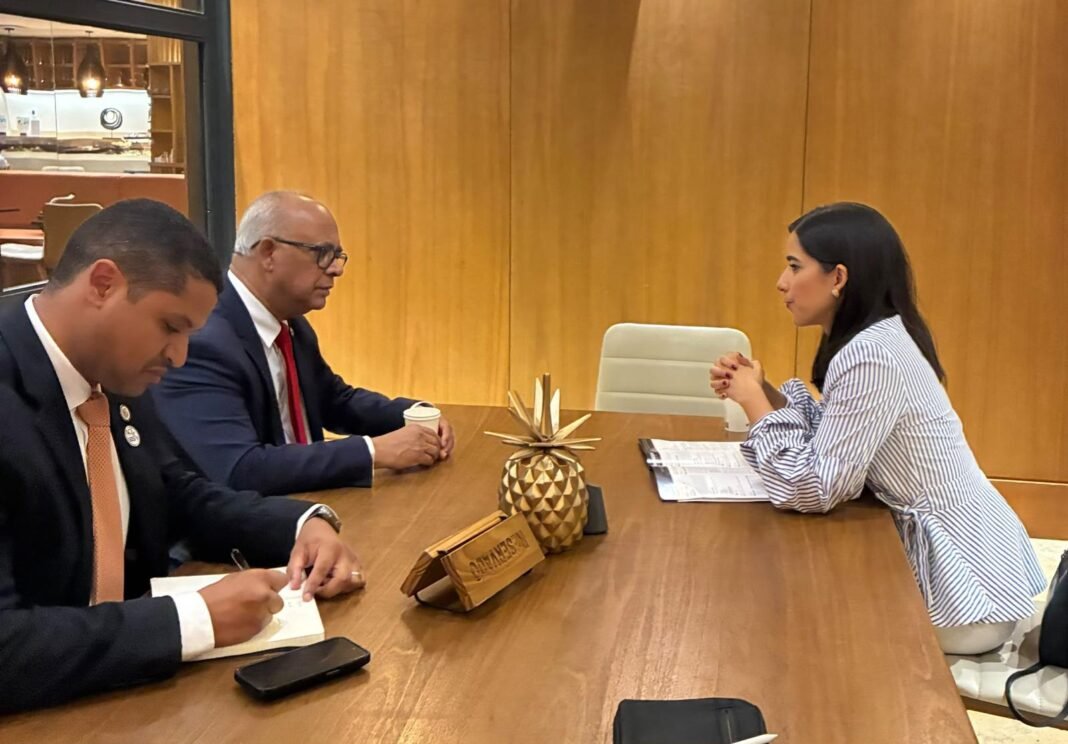
Details in a press release show that The Colombian Ministry of Foreign Affairs announced on September 28th, 2026, a meeting between Vice-Minister of Multilateral Affairs, Daniella Restrepo, and the Secretary General of the Organization of American States (OEA), Albert Ramdin. The meeting’s core purpose was to discuss the hemispheric agenda and Colombia’s relationship with the OEA, particularly concerning the ongoing Anti-Personnel Mine Action (APMA) program and preparations for the 2028 OEA General Assembly scheduled to be held in Colombia. This event matters because it signals a continued commitment from the Colombian government to address the enduring legacy of landmines in the country, a persistent challenge impacting communities and hindering development efforts.

Background
This meeting builds upon previous collaborations. In March 2026, Vice-Minister Restrepo Duarte strengthened cooperation with the United Nations Human Settlement Programme (UN-Habitat), the United States Embassy, and the United Nations Mine Action Service (UNMAS), as detailed in a separate Ministry announcement. This established history demonstrates Colombia’s proactive approach to multilateral engagement on humanitarian and security issues. The 24th Americas Competitiveness Exchange (ACE) event, which served as the backdrop for the meeting, further underscores Colombia’s commitment to regional partnerships and economic integration. Furthermore, the statement does not mention any specific timelines or milestones associated with the APMA program’s continuity.
Analysis
The Colombian government’s stated interest in maintaining the APMA program’s continuity reflects a pragmatic approach to national security and stability. The focus on knowledge transfer and the development of local institutional capabilities aligns with a strategy to reduce reliance on external assistance and bolster Colombia’s own capacity to address this challenge. The emphasis on strengthening relationships with the Caribbean and Anglophone countries within the hemisphere suggests a broader strategic calculation, positioning Colombia as a key facilitator of dialogue and cooperation. The statement does not address the specific mineral resources impacted by landmines or the potential for economic development arising from their removal. The meeting’s timing, coinciding with preparations for the 2028 OEA General Assembly, indicates a strategic effort to secure international support and coordinate efforts within the region. This suggests a longer-term vision for Colombia’s role within the OEA.
Implications
For policymakers, the continued dialogue with the OEA represents a valuable channel for securing technical assistance and financial support for the APMA program. This collaboration could bolster Colombia’s efforts to meet its international obligations regarding mine clearance and victim assistance. The strategic positioning of Barranquilla as a regional hub has implications for trade and security, potentially facilitating increased engagement with key partners. Should the visit yield positive outcomes regarding the 2028 OEA General Assembly, it could elevate Colombia’s profile within the organization and strengthen its influence on hemispheric affairs. The statement does not address the potential impact on Colombia’s trade relations with countries affected by the mine situation.
Outlook
If the visit yields a commitment to continued funding for the APMA program, and should the OEA’s participation in the 2028 General Assembly be successful, Colombia will be better equipped to meet its commitments. However, should the OEA’s support falter, or if funding remains insufficient, the program’s sustainability will be jeopardized. The Colombian government’s continued emphasis on a pragmatic foreign policy, as expressed by Vice-Minister Restrepo, suggests a willingness to adapt its approach based on evolving circumstances. The statement does not address the potential for new funding mechanisms or partnerships.
Conclusion
The meeting in Barranquilla represents a procedural step in a long-standing relationship, but it does not resolve the fundamental challenges posed by landmines in Colombia. The continued need for sustained international engagement and a clear roadmap for the APMA program remain crucial, leaving open the question of how Colombia can effectively leverage its strategic position to achieve lasting security and stability.