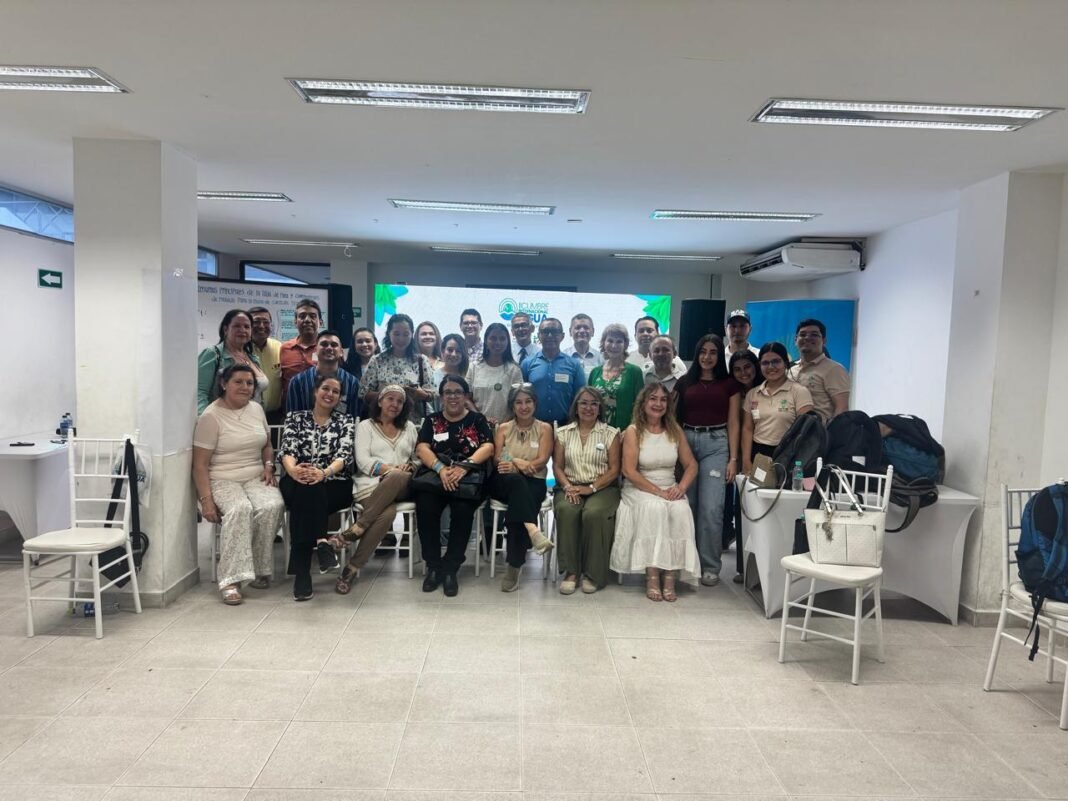
Cúcuta, Norte de Santander, 15 of October, 2026 – The Colombian Ministry of Foreign Affairs participated in the II International Water Summit, “Water Connects Us,” to contribute to the construction of a regional roadmap that articulates the action of various actors in order to promote knowledge, experience and capabilities around transboundary basins. This space was oriented to strengthen water governance and cooperation for the sustainable management of shared territories. The statement does not address the specific funding or scale of this roadmap. — the full statement has further detail.

Background
The II International Water Summit, “Water Connects Us,” was led by the governors of Norte de Santander and Santander, with the regional articulation of the RAP El Gran Santander. This summit’s focus was on bolstering water governance and sustainable management of shared territories. The Ministry’s involvement aligns with a broader effort to address the complex challenges of managing water resources across borders – particularly within the Gran Santander region, a zone of significant ecological and economic importance. The statement does not mention the history of prior attempts at regional cooperation in this area.
Analysis
The government’s action reflects a strategic prioritization of regional cooperation on water management, a critical issue given Colombia’s extensive river systems and shared borders. The establishment of a regional roadmap represents an attempt to consolidate fragmented efforts and align diverse stakeholder interests – encompassing government entities, academic institutions, and local communities – around a common goal. The emphasis on “learning collaborative” and “institutional articulation” suggests an awareness of past shortcomings in coordination and a desire to move beyond purely top-down approaches. The initiative’s success hinges on the willingness of regional governments – Norte de Santander and Santander – to genuinely commit to the framework and to effectively integrate the knowledge and expertise generated within the technical tables. If implemented as described, the initiative could represent a meaningful step towards more sustainable water resource management, but the statement does not address the potential for competing national priorities or differing regional development agendas to undermine this effort.
Implications
For policymakers, the launch of this regional roadmap signals a commitment to multilateralism and a recognition of the interconnectedness of water resources across borders. This initiative has implications for regional stability, particularly in the Gran Santander region, where water scarcity and competition for resources are already significant drivers of tension. The roadmap’s success will be crucial for fostering trust and cooperation between Colombia and Venezuela, given the shared hydrological basin. Furthermore, the initiative could impact trade and investment flows if it contributes to more predictable and sustainable water management practices. The statement does not address the potential for this framework to influence broader regional trade agreements.
Outlook
Should the visit yield a fully operational roadmap with clearly defined roles and responsibilities for all participating actors, it would represent a significant achievement. However, if the regional governments prove resistant to integrating the technical tables’ recommendations into their respective planning processes, the roadmap’s effectiveness will be severely limited. If the Ministry of Foreign Affairs is able to secure sustained funding for the initiative, it could provide a critical foundation for long-term sustainable water management. If the cooperation between the governing bodies of Norte de Santander and Santander remains weak, the initiative will likely fail to achieve its stated goals.
Conclusion
The Colombian Ministry’s launch of this regional water governance plan establishes a framework for cooperation, but the ultimate success rests on the willingness of regional governments to genuinely embrace a collaborative approach – a question that remains open as the roadmap moves from concept to implementation.