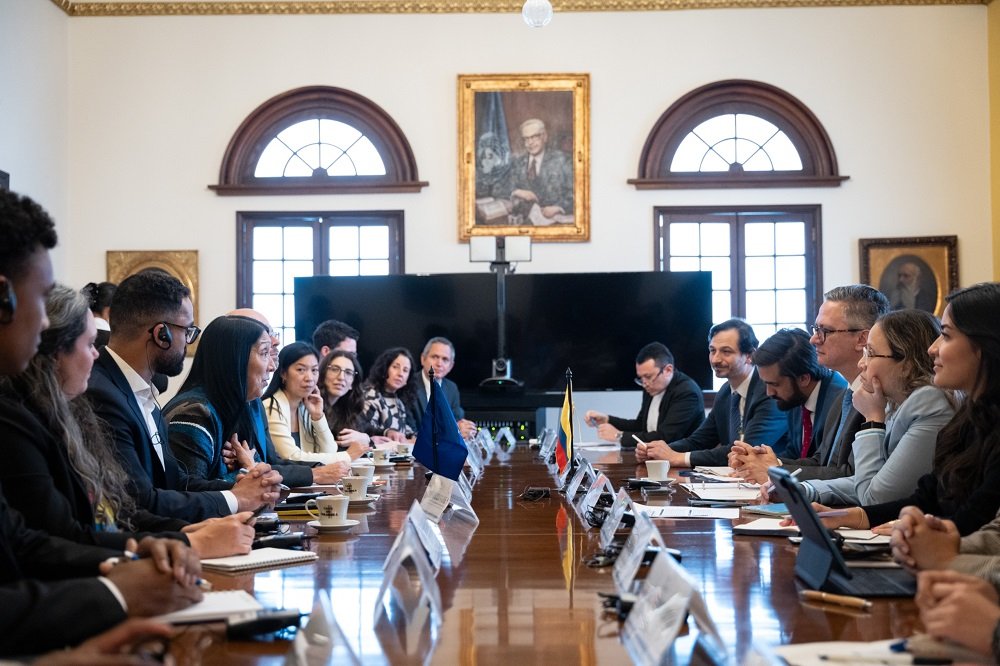
The Colombian Ministry of Foreign Affairs announced on October 22nd a strengthened alliance with the United States and the International Organization for Migration (IOM) to bolster migration management, humanitarian assistance, and sustainable development. This initiative, driven by the immediate aftermath of the August 10th earthquake, centers on a USD 26 million contribution from the United States. This figure, crucially, includes USD 5 million channeled through the IOM to provide emergency shelter, food aid, sanitation, protection, and humanitarian support to communities impacted by the disaster – a response directly linked to the seismic event of the past month. The statement does not address the long-term implications of the earthquake or ongoing displacement within Colombia.; see the full statement.

Background
The collaboration builds upon previous efforts to formalize the relationship between Colombia, the United States, and the IOM. In December 2024, the Ministry signed the “Estrategia País OIM-Colombia 2025-2028,” a five-year strategy utilizing migration as a driver for development and aligning with the United Nations’ Agenda 2030. The ministry’s earlier statement of October 20th, 2026, described the formal presentation of the new structure of the Viceministerio de Asuntos Migratorios, Consulares y Protección Internacional to the consular body accredited in Colombia. Similarly, in October 16th, 2026, the Ministry highlighted the role of Colombian nationals abroad, with the viceministerial representative, Pedro Agustín Roa Arboleda, reaffirming the entity’s commitment to coordinated and modern migration management. The appointment of Juan Gonzalo Ospina Serrano as the new Colombian Ambassador to Belgium, announced on October 15th, 2026, further strengthens this network of diplomatic engagement, as outlined by the Ministry.
Analysis
The agreement reflects a strategic dependence on external support for Colombia’s migration management challenges. The earthquake’s impact has undoubtedly exacerbated existing pressures, including displacement, irregular migration flows, and the need for integration programs. The involvement of the IOM highlights the recognition that Colombia lacks the full capacity to address these issues independently. The prioritization of the OIM’s role – as a “socio estratégico” – suggests a deliberate strategy to leverage international expertise and resources. The statement does not address the ongoing concerns regarding the potential for increased irregular migration due to the crisis. The continued focus on the 2025-2028 strategy indicates a long-term commitment, but also a reliance on a pre-defined plan that may not fully account for evolving circumstances. The inclusion of US funding, particularly through Sean Mariano García and Angélica Getahun, demonstrates a direct engagement between the US government and Colombian authorities on humanitarian response and migration policy.
Implications
This enhanced collaboration has significant implications for regional stability. Colombia’s ability to manage migration flows and address the humanitarian needs of displaced populations directly impacts neighboring countries. The increased US involvement suggests a deepening strategic partnership, potentially influencing regional security dynamics. The agreement also carries implications for trade and investment, as a stable and well-managed migration environment can contribute to economic growth. The commitment to aligning with the OIM strategy could impact Colombia’s broader development priorities, potentially diverting resources towards migration-focused initiatives.
Outlook
Should the visit yield further funding and technical assistance, Colombia could strengthen its capacity for governance, socio-economic integration, and the return of migrants. If the earthquake continues to displace populations, the reliance on international aid will likely persist, potentially delaying the implementation of long-term solutions. The continued focus on the OIM strategy, if successfully executed, could contribute to achieving the objectives outlined in the 2025-2028 plan. However, if the US contribution is contingent on specific policy reforms, Colombia may face challenges in securing sustained funding and implementing necessary changes.
Sources & Further Reading
- Official press release
- Foreign ministry source
- Cancillería presenta ante el cuerpo consular acreditado en Colombia, el Viceministerio de Asuntos Migratorios, Consulares, y Protección Internacional (2026-10-20)
- Cancillería destacó el papel de los colombianos en el exterior, durante Encuentro Regional Centro Sur en Ibagué (2026-10-16)
- Juan Gonzalo Ospina Serrano se posesionó como nuevo embajador de Colombia en Bélgica (2026-10-15)