
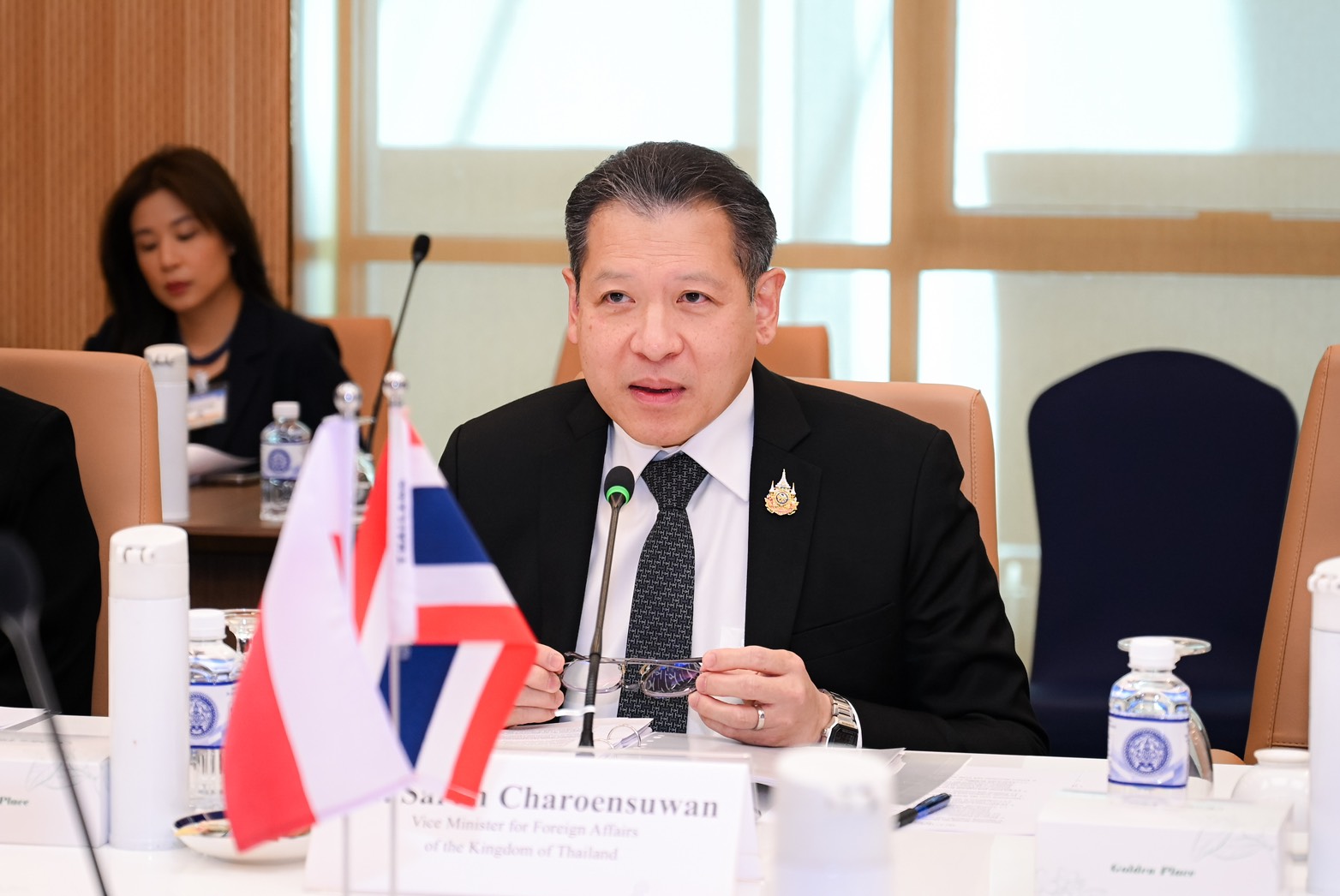
On 21 July 2026, H.E. Mr. Sarun Charoensuwan, Vice Minister for Foreign Affairs, and H.E. Mr. Artur Harazim, Undersecretary of State at the Ministry of Foreign Affairs of the Republic of Poland, co-chaired the 3rd Thailand – Poland Political Consultations at the Ministry of Foreign Affairs of Thailand. This meeting, attended by representatives from key Thai ministries including Defence, Agriculture and Cooperatives, and Livestock Development, underscores a deliberate effort to deepen bilateral relations built over five decades. The stated intent – reaffirmed through discussions encompassing defence cooperation, agricultural partnerships, tourism promotion, digital infrastructure development, and technology innovation – highlights Poland’s growing interest in Thailand’s strategic economic positioning within Southeast Asia. — the full statement has further detail.
Background
The 3rd Thailand – Poland Political Consultations represent the continuation of a formalized dialogue initiated to foster deeper engagement between the two nations. The statement references previous meetings, indicating an established framework for ongoing diplomatic interaction. Furthermore, the upcoming visit of the Deputy Prime Minister and Minister of Foreign Affairs of Poland is explicitly linked to the convening of the 1st Thailand-Poland Strategic Dialogue, suggesting a step towards more structured collaboration beyond routine consultations. The reference to the “5S Foreign Affairs Masterplan” – a 20-year strategic direction for Thai foreign policy – indicates this engagement aligns with broader national ambitions.
Analysis
The breadth of topics discussed—defence, agriculture, tourism, education, digital infrastructure, technology and innovation—signals Poland’s ambition to diversify its international partnerships. The inclusion of the Department of Livestock Development suggests a potential area for collaboration reflecting Thailand’s agricultural strengths. The simultaneous exploration of trade and investment opportunities indicates a desire by both sides to enhance economic ties. Notably, the discussion surrounding the Thailand–EU Free Trade Agreement (FTA) negotiations reveals Poland’s interest in leveraging its access to the European market through Thailand. The inclusion of regional issues – developments in the Thailand-Cambodia border situation, Myanmar, ASEAN, the Middle East, the Indo-Pacific, and Ukraine – demonstrates a recognition of Thailand’s engagement within complex geopolitical landscapes. This suggests a desire for shared perspectives on global challenges.
Implications
The resumption of direct flights between Bangkok and Warsaw by LOT Polish Airlines, scheduled to commence in October 2026, represents a tangible benefit for both countries, facilitating increased people-to-people exchanges. The discussions regarding the Thailand–EU FTA negotiations could significantly impact Thailand’s trade relations with Europe, potentially opening new avenues for exports. The focus on digital infrastructure and technology innovation suggests potential investment opportunities and technological transfers. Furthermore, the engagement in regional dialogues – particularly concerning Myanmar and Ukraine – positions Thailand as a key interlocutor within ASEAN and broader international forums.
Outlook
Should the visit of the Polish delegation yield positive results regarding defence cooperation, Thailand would be strengthening its security posture amidst ongoing regional instability. If the discussions on the FTA negotiations progress successfully, Thailand could gain preferential access to the European market, boosting its export sector. If the Thailand-Poland Strategic Dialogue is formally established and convened as planned, it would represent a significant commitment to long-term collaboration across multiple sectors. Should the resumption of direct flights occur as scheduled, increased tourism flows between the two countries are anticipated.
Conclusion
The 3rd Thailand – Poland Political Consultations highlight a strategic recalibration in Thai foreign policy – expanding engagement beyond traditional partners and embracing new opportunities for collaboration across diverse sectors. The underlying question remains: will this intensified dialogue translate into concrete outcomes that substantively address Thailand’s evolving security and economic priorities?