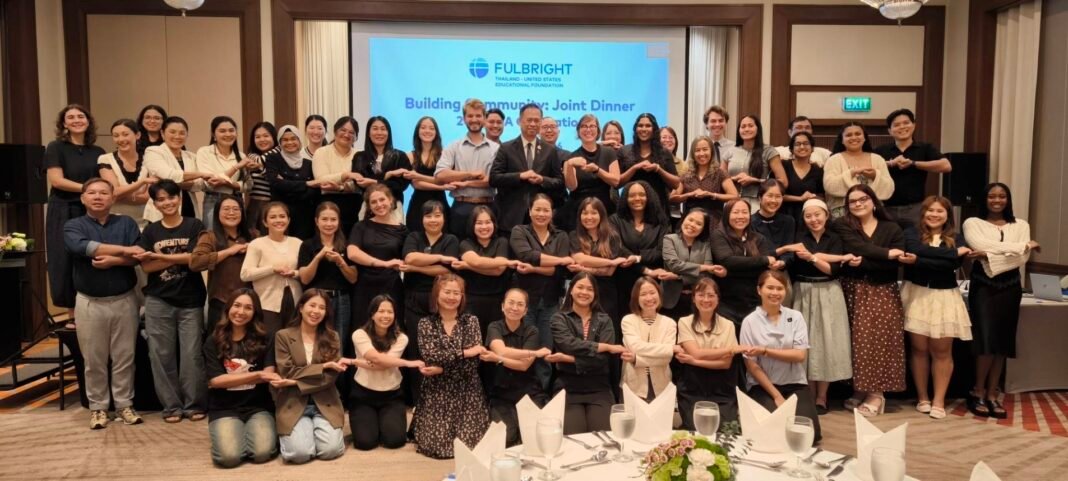
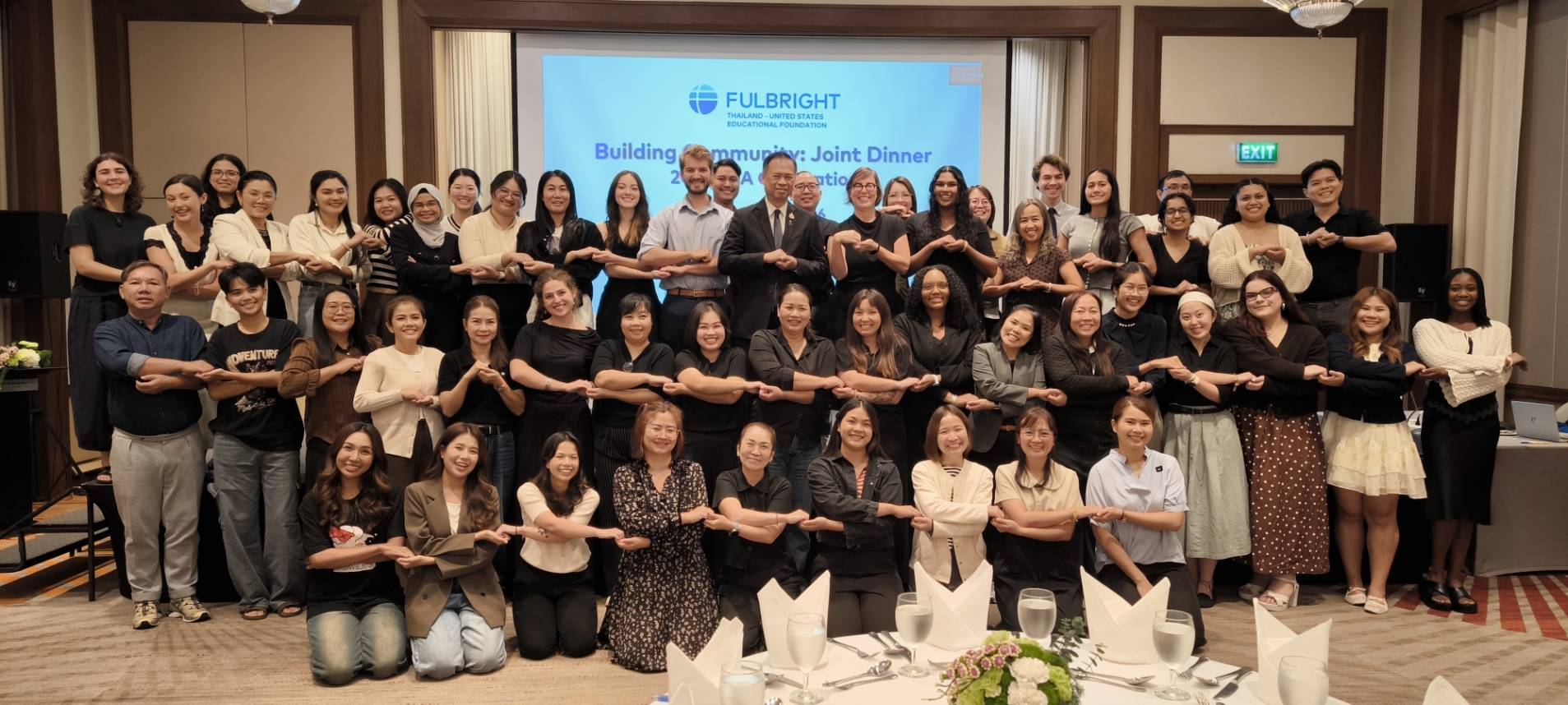
Per the government announcement, On 21 October 2026, H.E. Mr. Vijavat Isarabhakdi, Vice Minister for Foreign Affairs and Chairman of the Thailand-United States Educational Foundation (TUSEF), presided over and delivered opening remarks at a reception welcoming the 2026 cohort of American English Teaching Assistants (ETAs). The ETAs will soon take up teaching assignments at schools in provinces across Thailand. The statement does not mention the number of ETAs participating in this cohort. The event was attended by representatives of the United States Embassy in Bangkok, Thai host teachers, and Fulbright alumni. This event, as detailed in the ministry’s press release, marks the continuation of a program established in 1950, a period reflecting Thailand’s ongoing engagement with the United States, and the statement does not address the specific objectives of the 20-Year “5S” Foreign Affairs Masterplan in relation to this initiative.
Background
The Thailand-United States Educational Foundation (TUSEF) was established on 1 July 1950 under an agreement between the Ministry of Foreign Affairs of Thailand and the United States Department of State to promote mutual understanding between the two peoples through educational and cultural exchange. The Fulbright English Teaching Assistant Program is one of its key mechanisms for advancing educational cooperation and further strengthening people-to-people ties between Thailand and the United States. The press release references three prior statements by the Vice Minister for Foreign Affairs: one from 5 September 2026 concerning the Fulbright Dialogue, another from 19 September 2026 regarding the 15th ASEF Journalists Seminar, and a third from 6 October 2026 concerning the Day of German Unity 2026 Reception. These earlier statements, while indicative of a sustained diplomatic engagement, do not offer insight into the strategic rationale behind the ongoing support for the Fulbright program or the specific metrics used to evaluate its success. The statement does not address the current budgetary allocation for TUSEF or any recent adjustments to the program’s scope.
Analysis
The Vice Minister’s emphasis on “people-to-people ties” as the foundation of Thailand-U.S. relations speaks to a long-held diplomatic narrative, one that prioritizes cultural exchange and mutual understanding as key instruments of foreign policy. This framing, however, offers little concrete detail about the program’s actual impact or the criteria used to assess its effectiveness. The statement’s focus on “bridges” and “broadening perspectives” reflects a traditional approach to international engagement, one that emphasizes soft power and cultural diplomacy. The absence of discussion regarding measurable outcomes – student learning gains, teacher development, or community engagement – suggests a continued reliance on qualitative assessments, a common feature of educational exchange programs. The program’s longevity, stretching back to 1950, indicates a sustained commitment, but the statement does not address whether this commitment aligns with evolving Thai foreign policy priorities, particularly in the context of the “5S” Masterplan which, according to the ministry, aims for “Security, Stability, Sustainability, Synergy and Sovereignty”.
Implications
The continued support for the Fulbright program carries significant implications for Thailand’s educational landscape and its broader diplomatic relations with the United States. Should the program continue to operate at its current scale, it will likely contribute to the ongoing development of English language skills among Thai students and teachers. The program’s success, however, depends on continued U.S. government funding, which is subject to shifts in U.S. foreign policy priorities. The program’s focus on “people-to-people ties” aligns with Thailand’s broader strategy of promoting regional cooperation and engagement, but the statement does not address how the Fulbright program contributes to this strategy beyond fostering goodwill. The program’s impact on Thailand’s trade and security relations – areas explicitly mentioned in the “5S” Masterplan – remains largely undefined.
Outlook
If the visit yields a commitment to increased funding for TUSEF, as suggested by the ongoing program, the Ministry of Foreign Affairs would likely prioritize expanding the program’s reach to include more provinces and a larger cohort of ETAs. Should the U.S. government reduce its financial support, the program’s sustainability would be at risk, potentially leading to a scaling back of its activities. The statement does not address the possibility of alternative funding sources or the development of partnerships with other international organizations. The program’s continued success hinges on its ability to adapt to evolving educational needs and Thailand’s broader foreign policy objectives.
Conclusion
The welcoming of the 2026 Fulbright Teaching Assistants represents a continuation of a longstanding bilateral initiative, but the Ministry’s pronouncements offer little in the way of a forward-looking strategy for the program’s role in Thailand’s evolving foreign policy landscape. The key question remains: will the program’s focus on “people-to-people ties” translate into tangible benefits for Thailand’s economic and security interests, or will it remain a primarily symbolic gesture of goodwill?
Sources & Further Reading
- Official press release
- Foreign ministry source
- Vice Minister for Foreign Affairs presides over the 2026 Fulbright Dialogue (5 Sep 2026)
- Vice Minister for Foreign Affairs delivers the closing remarks for the 15th ASEF Journalists Seminar (19 Sep 202)
- Vice Minister for Foreign Affairs attends the Day of German Unity 2026 Reception (6 Oct 2026)