
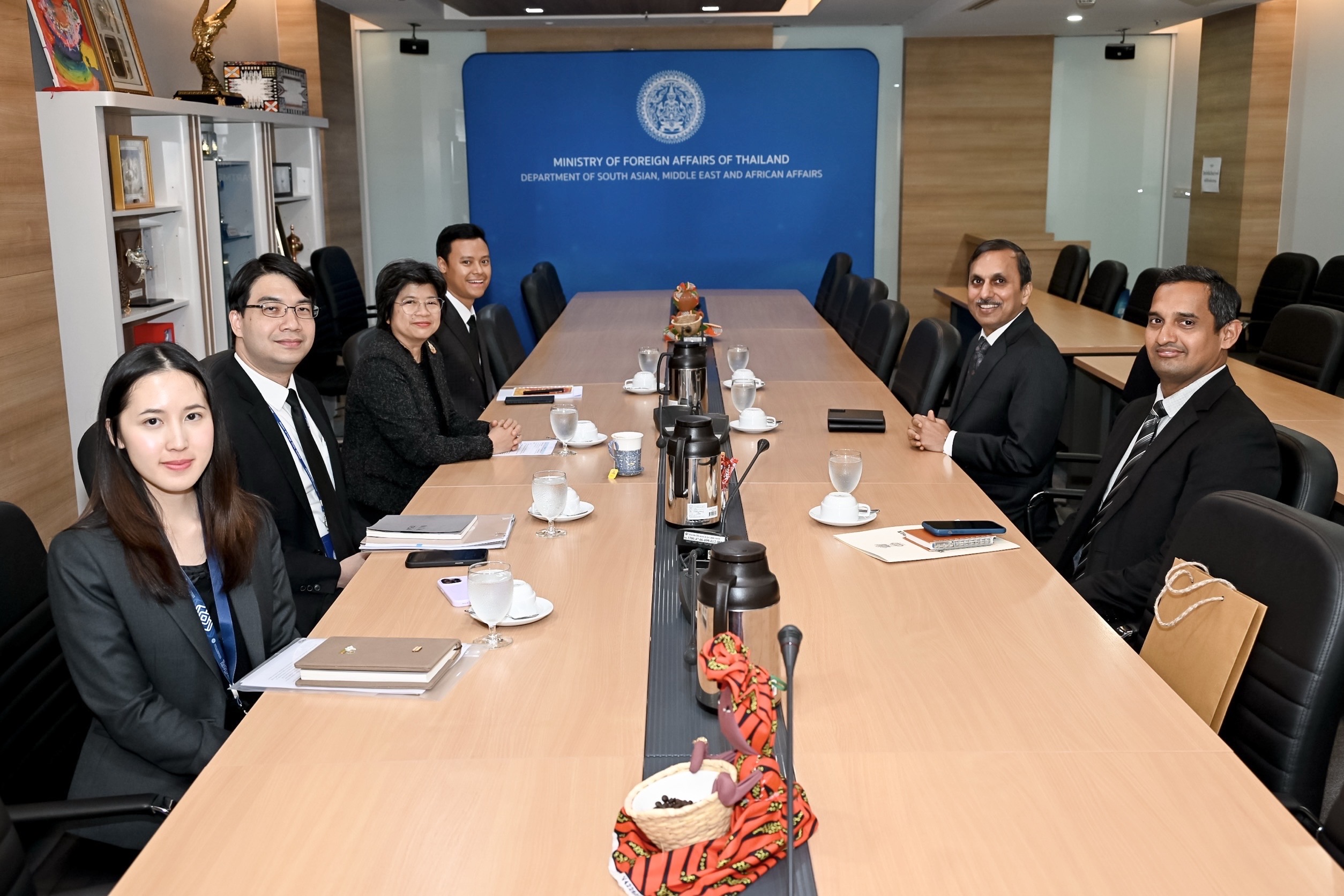
Background: The 20-Year “5S” Foreign Affairs Masterplan, outlined by the Thai Ministry of Foreign Affairs, emphasizes strategic partnerships across South Asia, the Middle East, and Africa – a framework that now incorporates India as a core element. Prior meetings between Thai officials and Indian counterparts have largely focused on broader geopolitical alignment within ASEAN frameworks. The establishment of this dedicated dialogue signifies a move towards more targeted engagement, reflecting an acknowledgement of India’s increasingly prominent role in regional security debates and economic development. Furthermore, the Ambassador’s arrival coincides with heightened anxieties surrounding transnational crime, particularly online scams – a matter explicitly addressed during the discussions.
Analysis: This meeting underscores Thailand’s strategic calculations regarding its relationship with India. The emphasis on trade and investment suggests a recognition of India’s potential as an alternative market and supply chain partner, particularly given ongoing tensions within Southeast Asia. The inclusion of “clean energy” indicates a shared interest in addressing climate change – a topic increasingly central to bilateral discussions. However, the statement does not address Thailand’s broader strategic alignment with other major powers like China or the United States, creating an ambiguity about Bangkok’s overall foreign policy posture. Furthermore, the focus on combating online scams – while important – is presented without context regarding Thailand’s existing legal frameworks or collaborative efforts within international law enforcement bodies. The implicit acknowledgement of this issue suggests a potential vulnerability to exploitation and highlights a gap in Thailand’s capabilities.
Implications: Should the visit yield productive outcomes in trade and investment, it could significantly benefit Thailand’s manufacturing sector and bolster its economic diversification strategy. However, the stated commitment to “joint efforts in combating online scams” requires substantial investment in cybersecurity infrastructure and law enforcement capacity – resources that remain a persistent constraint for the Thai government. The renewed engagement with India carries implications for regional stability, particularly if Bangkok leverages its relationship with New Delhi to influence ASEAN dynamics concerning maritime security or border disputes. This strengthened partnership could also create new opportunities for collaboration within parliamentary friendship groups, potentially fostering greater transparency and accountability in both countries’ governance structures.
Outlook: If the visit yields a framework for increased trade flows, Thailand’s economic growth will be bolstered – provided it can successfully navigate potential regulatory hurdles and ensure fair competition. Should the agreement on clean energy prove fruitful, this could unlock significant investment opportunities and contribute to Thailand’s ambitious sustainability goals. Conversely, should the discussions remain largely symbolic without concrete deliverables in these key sectors, it signals a continued lack of strategic alignment between Bangkok and New Delhi – a situation that could exacerbate existing economic vulnerabilities. The statement does not address the potential impact on Thailand’s broader diplomatic posture within ASEAN or its relationship with China; therefore, future engagement will depend heavily on Bangkok’s ability to manage these competing interests.
Conclusion: The meeting represents an initial step in what is likely to be a sustained effort to deepen ties between Thailand and India. However, the discussion’s limited scope – focusing primarily on trade and security concerns – leaves fundamental questions about Thailand’s long-term strategic alignment unresolved; whether Bangkok can leverage this engagement to secure broader geopolitical advantages remains to be seen.