
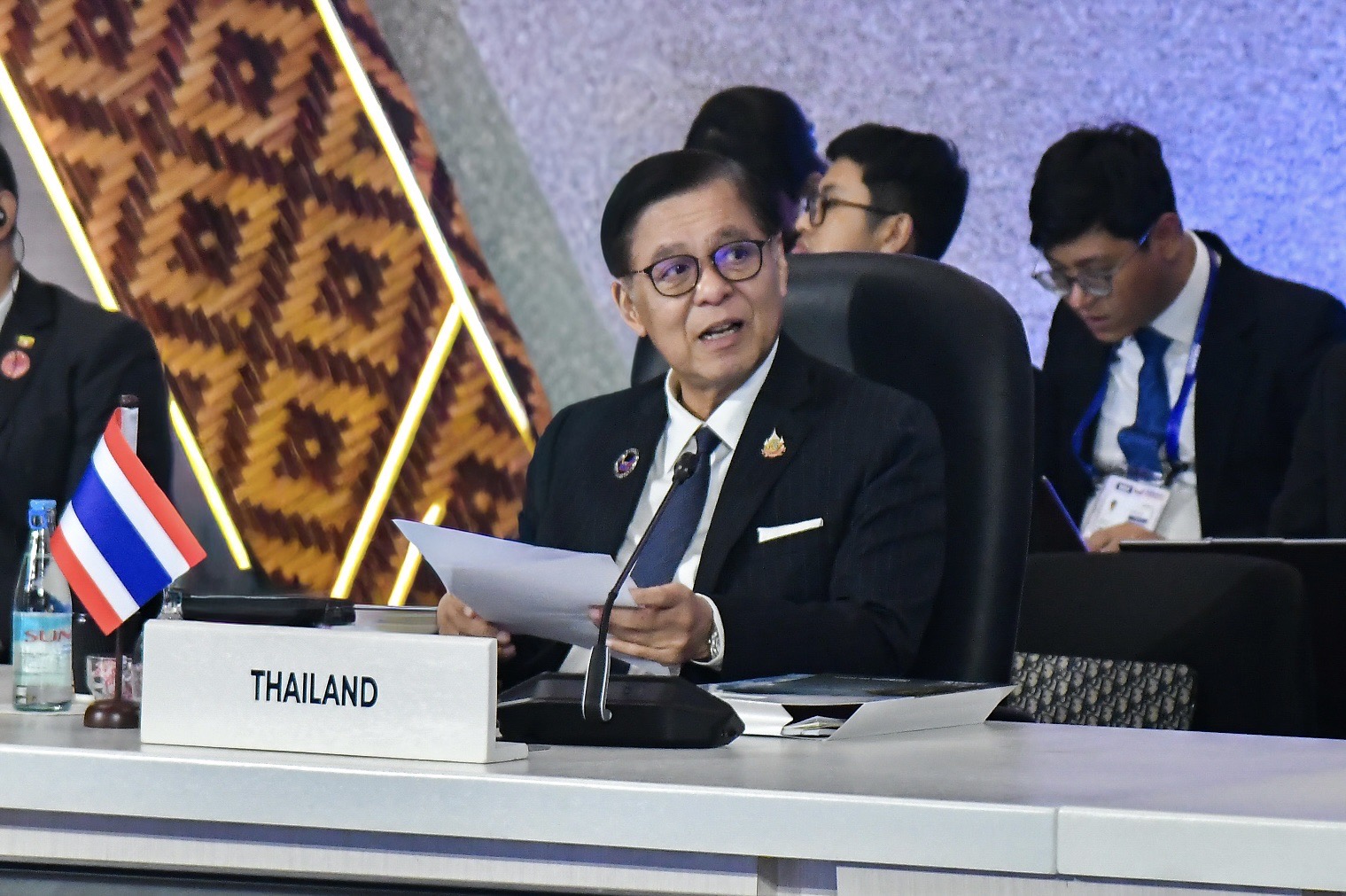
A ministry communiqué confirms that On 23 July 2026, Deputy Prime Minister and Minister of Foreign Affairs Sihasak Phuangketkeow attended the 16th East Asia Summit Foreign Ministers’ Meeting in Manila, the Philippines. This event, coinciding with the 59th ASEAN Foreign Ministers’ Meeting, highlights Thailand’s ongoing engagement within regional frameworks – a commitment underscored by the Ministry of Foreign Affairs. The stated purpose is to address ‘regional challenges,’ a term deliberately broad and indicative of an evolving geopolitical landscape without clearly defined parameters. The significance lies in Southeast Asia’s positioning amidst accelerating shifts in global power dynamics, particularly given ASEAN’s centrality as Thailand seeks to maintain its influence within the region.
Background
The 20-Year “5S” Foreign Affairs Masterplan, outlined by the Ministry of Foreign Affairs, serves as the overarching strategic framework for Thailand’s diplomatic efforts. This masterplan prioritizes Security, Stability, Sustainability, Service, and Strategy – a reiteration of core objectives. The East Asia Summit (EAS), established in 2002, represents a key forum for dialogue on strategic issues involving ASEAN members plus Australia, China, India, Japan, New Zealand, and South Korea. This meeting follows the annual ASEAN Foreign Ministers’ Meeting, signaling Thailand’s continued participation within this multilateral architecture, further cementing its commitment to ‘ASEAN centrality’ as defined by the Ministry. The statement does not address any specific outcomes of the meetings or the composition of attendees beyond the Minister himself.
Analysis
The Deputy Prime Minister’s focus on strengthening the EAS reflects a perceived need for this forum to remain relevant. This suggests Thailand recognizes a potential decline in the EAS’s effectiveness given evolving regional dynamics – the statement does not specify which challenges are driving this assessment. The emphasis on ‘preventive diplomacy’ indicates a proactive approach to managing potential conflicts, particularly as described by the Ministry through the term “rapidly evolving landscape.” The proposal for ensuring the EAS remains relevant is conditional; it depends on the continued willingness of all participants to engage in dialogue. This underscores Thailand’s role as a facilitator within ASEAN – this suggests an attempt to maintain influence and shape regional norms. The statement does not address any potential tensions between member states or Thailand’s own foreign policy priorities regarding security, trade, or investment.
Implications
The participation in the EAS carries implications for regional stability. If implemented as described, this suggests a desire to proactively engage with China and India – key players within the EAS – on issues of strategic importance. For Thailand, consistent engagement strengthens its diplomatic network and provides a platform for advocating its interests within ASEAN. The focus on ‘preventive diplomacy’ could be interpreted as an attempt to mitigate risks related to maritime security in Southeast Asia, though the statement does not explicitly mention specific threats or areas of concern. The event reinforces Thailand’s commitment to trade relations with key partners, although the statement does not address any potential shifts in trade agreements or investment flows.
Outlook
Should the visit yield continued dialogue on regional issues, Thailand’s strategic priority remains maintaining ASEAN centrality – this suggests a recognition of the organization’s enduring importance despite external pressures. If the Deputy Prime Minister’s proposals are adopted by EAS members, it would represent a tangible step towards strengthening cooperation on preventive diplomacy and managing regional instability; however, the statement does not address whether any concrete agreements were reached. The success of Thailand’s efforts hinges on the willingness of other EAS participants to prioritize dialogue and collaboration – if engagement remains limited to rhetorical commitments, the impact will be minimal.
Conclusion
The Manila meetings demonstrate a continued commitment to multilateral diplomacy from Thailand, but the statement offers little insight into the specific strategic considerations driving these efforts. The question remains: can Thailand effectively leverage its position within ASEAN and the EAS to navigate the increasingly complex geopolitical environment of 2026?