
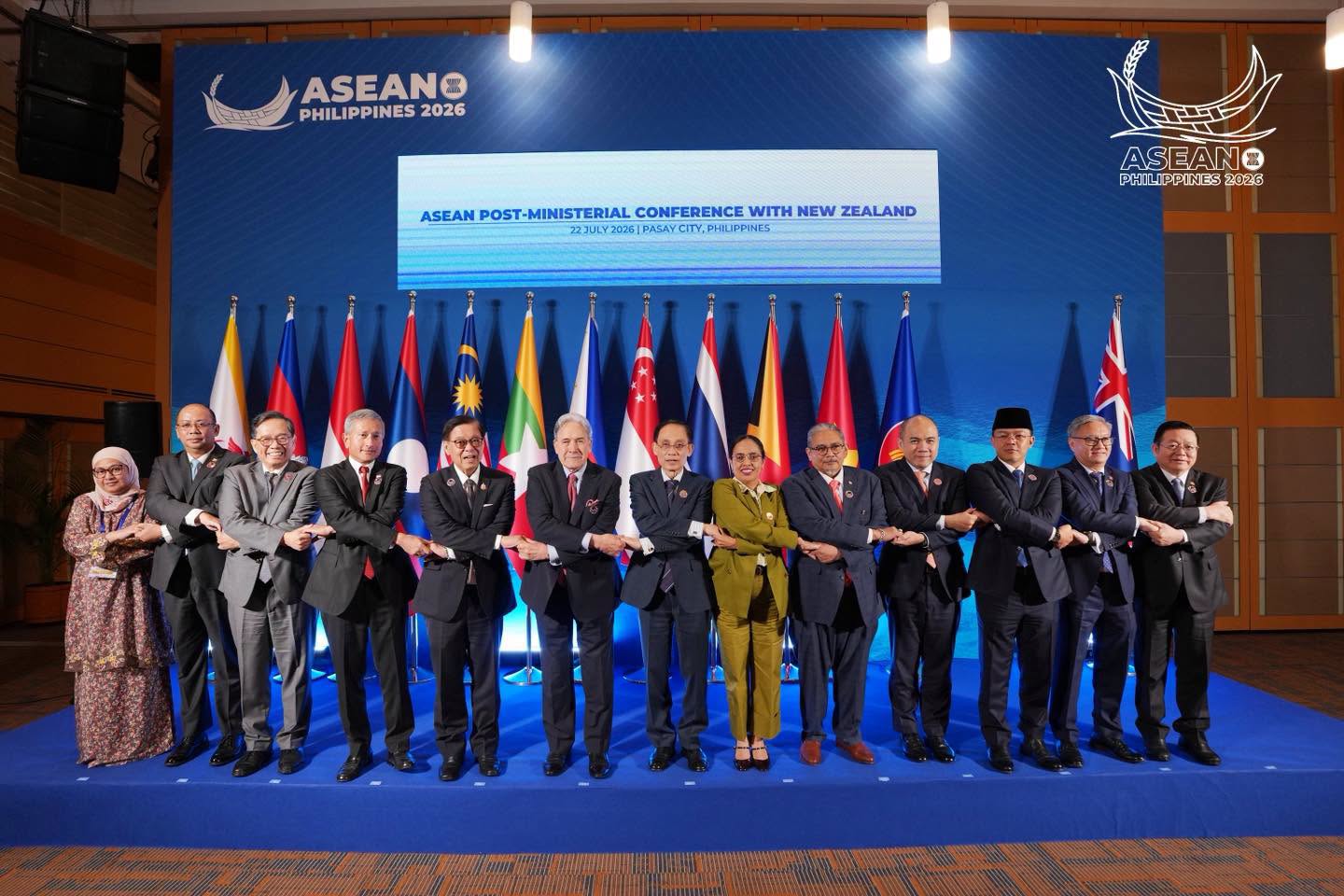
The official readout frames the trip as On July 22nd, 2026, Deputy Prime Minister and Minister of Foreign Affairs Sihasak Phuangketkeow participated in the ASEAN Post-Ministerial Conference with New Zealand in Manila, a move solidified by the established ASEAN – New Zealand Comprehensive Strategic Partnership (CSP) launched in 2025. This engagement, occurring alongside the 59th ASEAN Foreign Ministers’ Meeting and Related Meetings, underscores a growing need for collaborative regional architecture amidst intensifying geopolitical pressures. The statement highlights that both sides reaffirmed their commitment to bolstering this partnership, particularly concerning maritime security and transnational crime – specifically addressing online scams.
Background
The ASEAN – New Zealand Comprehensive Strategic Partnership (CSP) was established in 2025. This framework facilitates cooperation across a range of areas, including economic engagement, security matters, and socio-cultural initiatives. The meeting occurred on the sidelines of the broader ASEAN gathering, indicating a prioritization of bilateral discussions alongside collective ASEAN deliberations. The statement does not mention previous meetings or agreements related to this partnership.
Analysis
Thailand’s emphasis on strengthening economic cooperation signals a strategic response to escalating geopolitical uncertainties. This suggests a recognition that traditional trade routes and supply chains are increasingly vulnerable. The focus on energy security, resilient supply chains, trade and investment, and food security reflects a broader concern about global instability – particularly concerning the situation in the Middle East and Myanmar. The agreement to deepen socio-cultural cooperation, especially the “green agenda,” including carbon markets and renewable energy, indicates an awareness of international pressure regarding climate change. The discussion around the ASEAN – New Zealand Vision Fund, launched in July 2026, potentially represents a mechanism for channeling resources towards these priorities.
Implications
For policymakers, this renewed commitment to the CSP carries implications for Thailand’s foreign policy trajectory. Increased engagement with New Zealand could provide access to alternative markets and investment opportunities, mitigating risks associated with over-reliance on existing partners. The emphasis on regional security cooperation suggests a potential role for Thailand in mediating conflicts and addressing transnational crime within Southeast Asia. The agreement regarding the Vision Fund could bolster Thailand’s efforts to align its development policies with international sustainability standards.
Outlook
Should the visit yield further discussions on regional security, Thailand may seek increased collaboration with New Zealand on maritime domain awareness and counter-terrorism initiatives. If the energy crisis continues to escalate, a deepened partnership could provide access to alternative energy sources and technological expertise. If the situation in Myanmar remains unresolved, Thailand’s commitment to humanitarian assistance and dialogue through the CSP will likely be tested.