
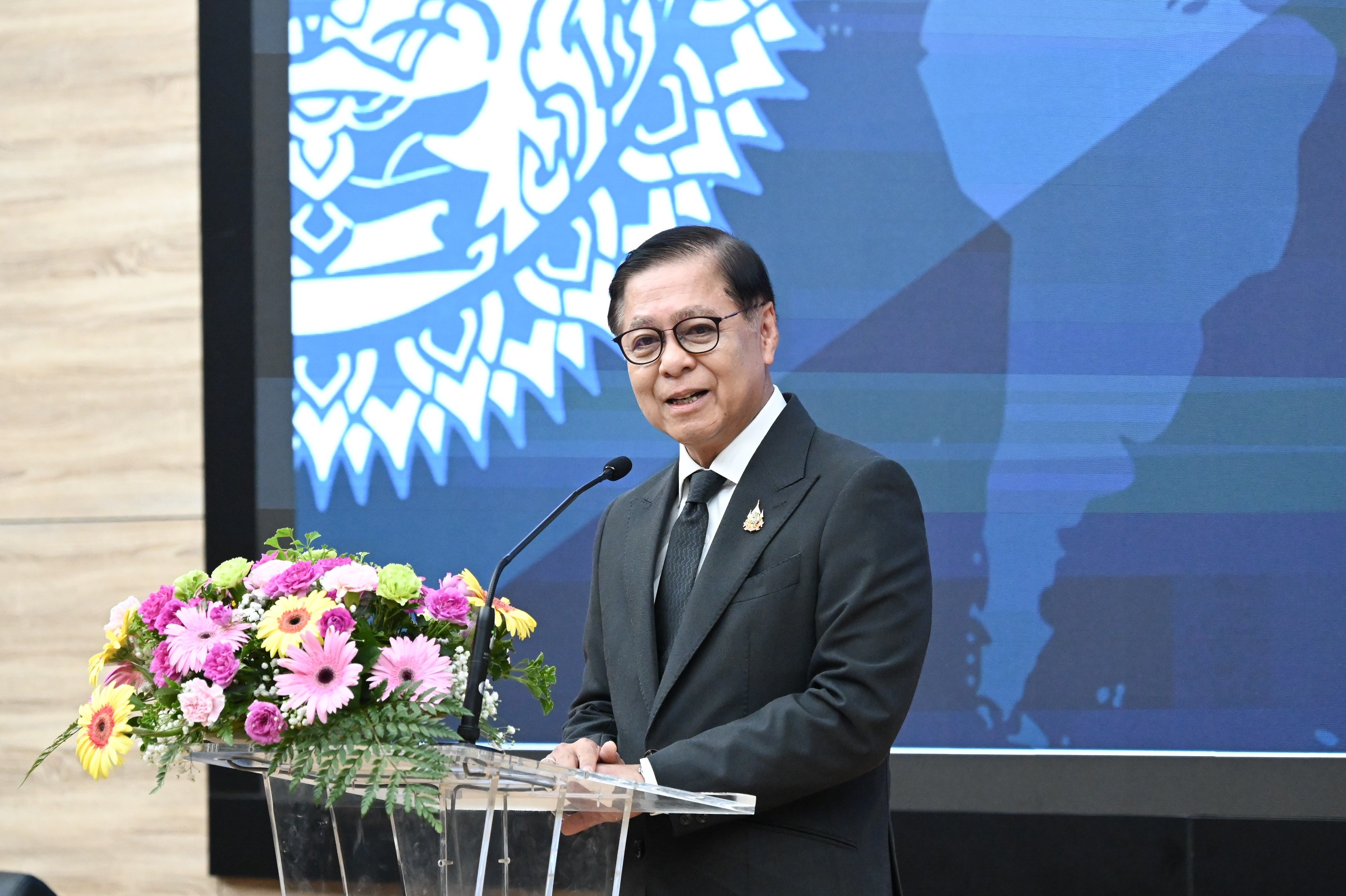
As set out in a formal announcement, The Deputy Prime Minister and Minister of Foreign Affairs delivered a keynote address at Rangsit University on 15 July 2026, outlining Thailand’s approach to navigating escalating global geopolitical disruptions. The statement, released following the event, highlights the critical need for Thailand to actively shape its position within the international order amidst significant shifts in power dynamics – a matter of considerable consequence for Southeast Asia’s future. This focus on proactive engagement, as articulated by H.E. Mr. Sihasak Phuangketkeow, directly responds to what the statement describes as “structural challenges and opportunities” presented by the current landscape. The event’s attendance of over 250 participants – faculty members, academics, and students – underscores the breadth of concern surrounding Thailand’s strategic direction within a world increasingly defined by instability. This addresses a key element of Thailand’s longer-term foreign policy objectives as outlined in the “5S” Masterplan.
Background
The event took place on 15 July 2026 at Rangsit University, organized around the theme “Thailand’s Strategic Position: Opportunities and Challenges in the Global Geopolitical Order.” The seminar was framed by Dr. Arthit Ourairat, President of Rangsit University, setting the stage for a discussion focused on Thailand’s role within the evolving global order. The Deputy Prime Minister’s address built upon existing policy frameworks, notably the “20-Year ‘5S’ Foreign Affairs Masterplan,” which prioritizes five core strategic objectives: security, stability, sustainability, and prosperity – all underpinned by a commitment to regional cooperation. The event’s structure—a keynote followed by a Q&A session—suggests an intention to foster open dialogue and gather diverse perspectives on Thailand’s foreign policy priorities. This reflects a deliberate effort to operationalize the broader strategic vision articulated in the Masterplan.
Analysis
The Deputy Prime Minister’s stated objectives – enhancing Thailand’s status, pursuing economic diplomacy, strengthening public understanding of foreign affairs, and addressing the Thailand-Cambodia situation – reveal a calculated attempt to reposition Thailand as a key player in regional security and trade. The emphasis on “economic diplomacy” is particularly noteworthy, reflecting a recognition that traditional diplomatic tools may be insufficient in an era defined by shifting alliances and economic competition. This suggests a move towards more targeted engagement designed to deliver tangible benefits for the Thai economy and its populace. However, the statement does not address the underlying tensions surrounding the Thailand-Cambodia border dispute – a persistent issue impacting regional stability and trade flows. The inclusion of “Team Thailand” as an approach to diplomacy highlights a desire for improved inter-agency coordination, reflecting a recognition that effective foreign policy requires a unified front. Furthermore, the mention of artificial intelligence in diplomacy suggests an awareness of technological advancements reshaping international relations.
Implications
The Deputy Prime Minister’s address has significant implications for regional stability and Thailand’s trade relationships. A successful recalibration towards proactive economic engagement could strengthen Thailand’s position within ASEAN, fostering greater cooperation on issues ranging from infrastructure development to security. Should the visit yield increased investment and trade flows – as suggested by the pursuit of economic diplomacy – it would bolster Thailand’s economic resilience. However, a failure to effectively manage the Thailand-Cambodia situation – if unresolved – could continue to disrupt regional trade routes and undermine confidence in Thailand’s commitment to regional stability. The incorporation of AI into diplomatic strategy implies an investment in technological capabilities that could be leveraged across various sectors, influencing Thailand’s competitiveness on the global stage.
Outlook
If the initiatives outlined in the statement are successfully implemented as described – prioritizing economic diplomacy and strengthening ASEAN cooperation – Thailand could solidify its role as a key regional hub for trade and investment. Should the Deputy Prime Minister’s efforts to foster public understanding of foreign affairs prove effective, it would contribute to broader political stability by increasing citizen engagement with international issues. However, if the Thailand-Cambodia situation remains unresolved, or if economic conditions deteriorate – impacting Thailand’s ability to pursue its diplomatic objectives – this could create significant challenges for the government.
Conclusion
The statement offers a clear strategic direction for Thailand’s foreign policy, but it lacks specific details regarding key areas of concern such as the Thailand – Cambodia dispute and broader considerations around global power competition. The focus remains on opportunity; the next test will be whether Thailand can translate this ambition into concrete outcomes.