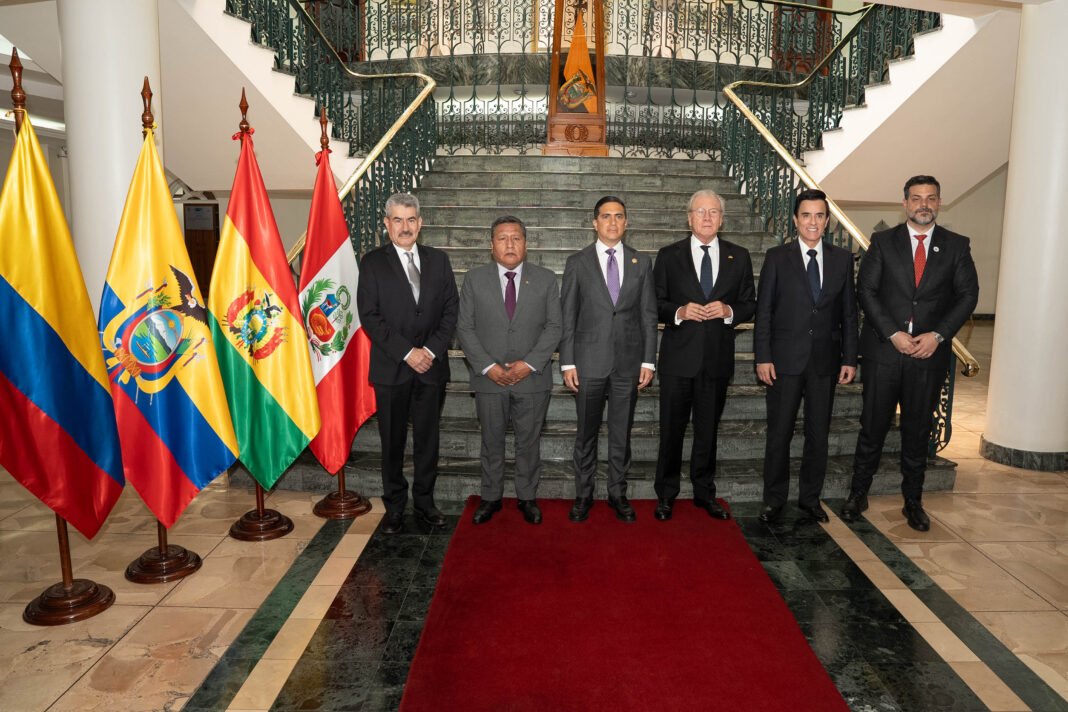
Quito (Ecuador), 30 de septiembre de 2026. Colombia presented a plan to strengthen the economic and technological competitiveness of the Andean Community during the LVIII Meeting of the Council of Ministers of Foreign Affairs and Trade of the Andean Community (CAN). This focus on bolstering the CAN’s economic standing represents a key strategic priority for the Colombian government.; see the full statement.

Background
The LVIII Meeting of the Council of Ministers of Foreign Affairs and Trade of the CAN, held in Quito, served as the forum for Colombia to articulate its vision for the future of the Andean Community. The CAN, established in 1969, is a trade bloc comprising Colombia, Ecuador, Peru, and Bolivia. The statement indicates a continued effort to enhance integration across multiple sectors – trade, infrastructure, and technology – within this regional framework. The current period of Peru assuming the Presidency Pro Tempore of the CAN (2026-2027) is highlighted, alongside Ecuador’s prior stewardship.
Analysis
Colombia’s emphasis on competitiveness within the CAN suggests a desire to mitigate the perceived risks associated with global economic shifts. The statement’s focus on “facilitation of trade, the development of regional value chains, the physical, energy and digital integration, as well as the promotion of investment and technology transfer” indicates a recognition of the need for structural reforms within member states. If implemented as described, this strategy would require significant investment and coordination. The emphasis on “opportunities for companies, job creation, economic growth and better conditions for citizens” reveals a core objective – to translate integration into tangible benefits for the Andean population. The director, Francisco Simón Solano Olarte, emphasized continuity in border cooperation, information exchange, and coordinated operations, signaling a desire to build upon existing efforts. The statement does not address the potential impact of this strategy on Colombia’s broader trade relationships outside the CAN.
Implications
The Colombian government’s prioritization of the CAN has significant implications for regional stability. Increased integration could foster economic interdependence, potentially reducing tensions and fostering collaboration. However, the statement does not address the potential for friction arising from differing economic development levels among the member states. Furthermore, the focus on “investment and technology transfer” raises questions about the potential for a widening gap between leading and lagging economies within the bloc. Should the visit yield greater cooperation on infrastructure projects, it could accelerate regional development. The statement does not address the potential impact of this strategy on Colombia’s role within broader South American trade agreements.
Outlook
If the cooperation on border issues, information exchange, and coordinated operations continues as suggested, it could strengthen the CAN’s capacity for collective action. Should the transition of the Presidency Pro Tempore to Peru be successful, it could provide a stable platform for advancing integration efforts. However, the statement does not address the challenges inherent in coordinating policies across four distinct national economies. The success of this strategy hinges on the willingness of member states to prioritize the collective good over national interests, a factor that remains uncertain.