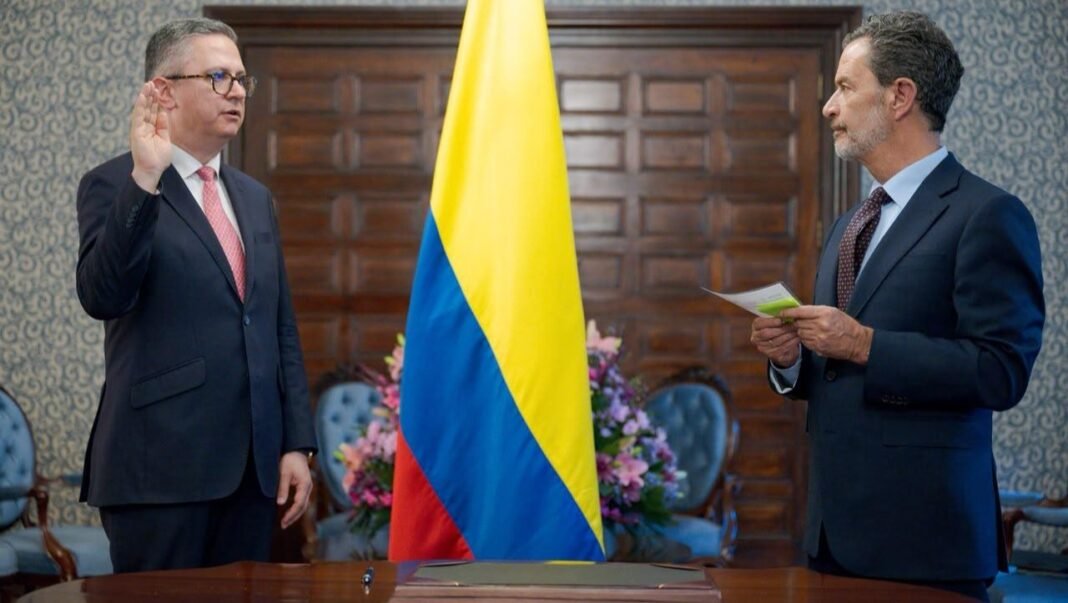
As set out in a formal announcement, Bogotá D.C., 27 de agosto de 2026. The Minister of External Relations, Omar Andrés Bula Escobar, formalized the appointment of Ambassador Pedro Agustín Roa Arboleda as the new Vice-Minister of Migratory, Consular and International Protection Affairs.

Background
The creation of this Vice-Ministry, a relatively recent development, has been discussed for approximately ten to twelve years. The statement does not mention specific prior agreements or bodies involved in the discussions surrounding its establishment. The Ministry’s focus is now on bolstering institutional capacity within the new Vice-Ministry, which encompasses migratory, consular and international protection issues – areas considered ‘sumamente importantes’ for the functioning of the Ministry’s mission objectives and the attention to the needs of Colombians, both domestically and abroad.
Analysis
The core objective articulated by Vice-Minister Roa Arboleda is to assemble a team capable of effectively addressing the responsibilities concentrated within this department. This suggests a recognition that the Vice-Ministry’s recent creation necessitates immediate investment in personnel and operational capabilities. The statement does not address the potential challenges associated with rapidly scaling up operations or the specific resources required to support this expanded mandate.
He highlights the importance of aligning this team’s work with the broader objectives set by President Abelardo De La Espriella and Minister Bula Escobar, indicating a desire for cohesive action. This underscores the need for effective coordination across government ministries and agencies – a persistent challenge for Colombia’s foreign policy apparatus.
The statement does not address the potential impact of this new structure on existing consular services or international protection protocols. The emphasis on a ‘multidisciplinary, amplio y altamente professional’ team implies an attempt to modernize the approach to these critical functions. It also suggests that the Ministry intends to actively engage with the Colombian diaspora – a significant demographic and strategic asset – to ensure effective support.
Implications
The appointment of Roa Arboleda carries several implications for Colombia’s foreign policy strategy. The stated goal of strengthening institutional capacity reflects a broader effort to improve the government’s responsiveness to both domestic and international challenges. This is particularly relevant given ongoing debates about migration flows and the protection of Colombian citizens abroad – issues that remain politically sensitive.
Should the visit yield success in consolidating the Vice-Ministry, it could enhance Colombia’s ability to advocate for its interests within regional organizations such as the Organization of American States (OAS). The focus on a ‘dynamic’ response to evolving circumstances suggests an adaptable approach to foreign policy – potentially beneficial in navigating complex geopolitical landscapes. The statement does not address potential implications for trade agreements or security cooperation initiatives.
Outlook
If the Ministry successfully implements this strategy, it could lead to improved coordination between consular services and international protection mechanisms. However, should the logistical challenges of building a truly responsive institution prove insurmountable, Colombia risks continuing to lag behind in providing adequate support to its citizens abroad. The statement does not address potential funding constraints or the need for further legislative reforms to streamline consular operations.
Conclusion
The appointment of Pedro Agustín Roa Arboleda represents a shift in emphasis, but the ultimate success hinges on the Ministry’s ability to translate this new structure into tangible improvements in service delivery. The question remains: can Colombia build an effective consular and protection apparatus capable of meeting the evolving needs of its citizens globally?