
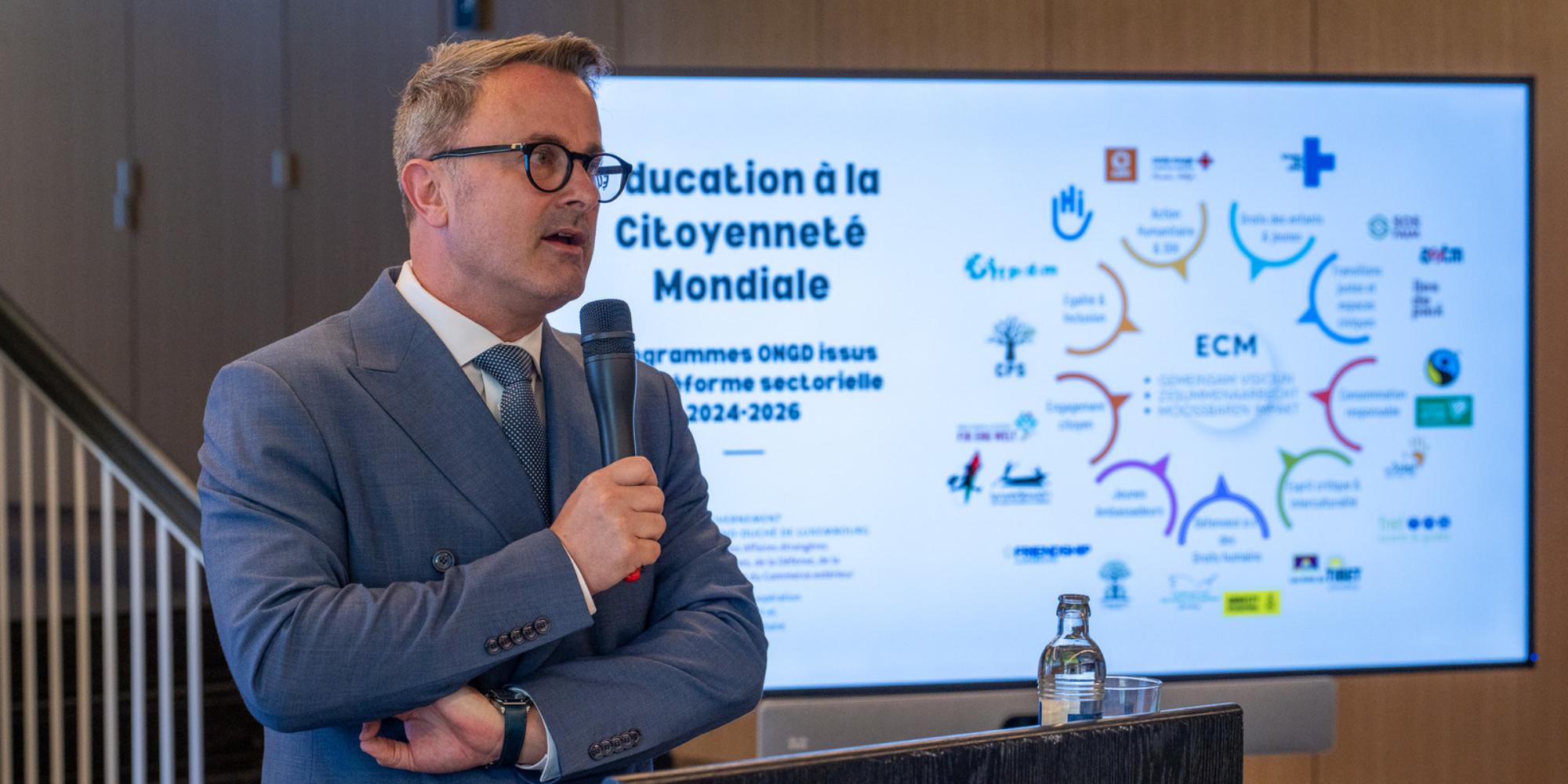
Details in a press release show that The 6 July 2026 saw the launch of programmes stemming from the 2024-2026 World Civic Education (ECM) reform, in the presence of Prime Minister Xavier Bettel. This event matters because it establishes Luxembourg’s renewed commitment to fostering global citizenship through a restructured NGO landscape.
Background
The initiative follows an announcement in March 2024 by Minister Xavier Bettel to reform the ECM sector, initiating a broad dialogue with development NGOs (ONGD). This reform aimed to strengthen collaboration between ECM actors, structure the sector more effectively, and equip it with tools for measuring impact. Prior to this, in April 2024, the Ministry of Foreign Affairs and European Affairs, Defence, Cooperation and Trade Exterior (MAE) validated a new specific methodology for the ECM sector, developed in close consultation with ONGD.
A significant component involved an extensive support and dialogue process designed to encourage NGO adoption of the reform. These NGOs are now united around a Shared Sectoral Framework (CSP), defining a common vision and shared strategic objectives. Adherence to the CSP is now a condition for accessing ECM funding from the MAE, with participating ONGD committed to contributing to these collective strategic goals and fueling jointly defined impact indicators.
Analysis
The statement does not address debt levels or financial implications of this restructuring. The reform’s core incentive lies in securing greater NGO alignment with Luxembourg’s foreign policy objectives, particularly concerning global development challenges. This suggests a deliberate attempt to centralize control over funding and influence the priorities of organizations operating within the ECM sector.
The process contains inherent contradictions. While aiming for increased collaboration, the CSP introduces a conditionality that could potentially limit the autonomy of participating ONGD. If implemented as described, this creates a dependence on MAE oversight and potentially restricts the range of approaches explored by these organizations. The statement does not address potential tensions between the government’s vision for ECM and the diverse mandates of individual NGOs.
Implications
For policymakers, the launch represents a consolidation of Luxembourg’s approach to international development cooperation. It signals an increased emphasis on measurable impact and strategic alignment within the sector. This could lead to a shift in funding priorities towards projects demonstrably contributing to the government’s defined objectives.
Regionally, this restructuring impacts Luxembourg’s standing as a key player in European development finance. It also has implications for trade and security, reflecting the understanding that global citizenship – informed by sustainable development – is increasingly intertwined with geopolitical stability.
Outlook
Should the visit yield an increase in collaborative projects aligning with the CSP’s strategic objectives, it would indicate a successful initial phase of the reform. If the adoption rate among ONGD remains low, the Ministry may need to reassess its approach, potentially exploring alternative mechanisms for engagement or adapting the framework to better accommodate diverse perspectives.
Conclusion
The launch event highlights the government’s ambition to shape global development strategies from within Luxembourg. The long-term success of this ECM reform hinges on its ability to genuinely foster collaboration and ensure that NGOs retain the capacity to pursue innovative solutions in pursuit of a more just world.