
Background
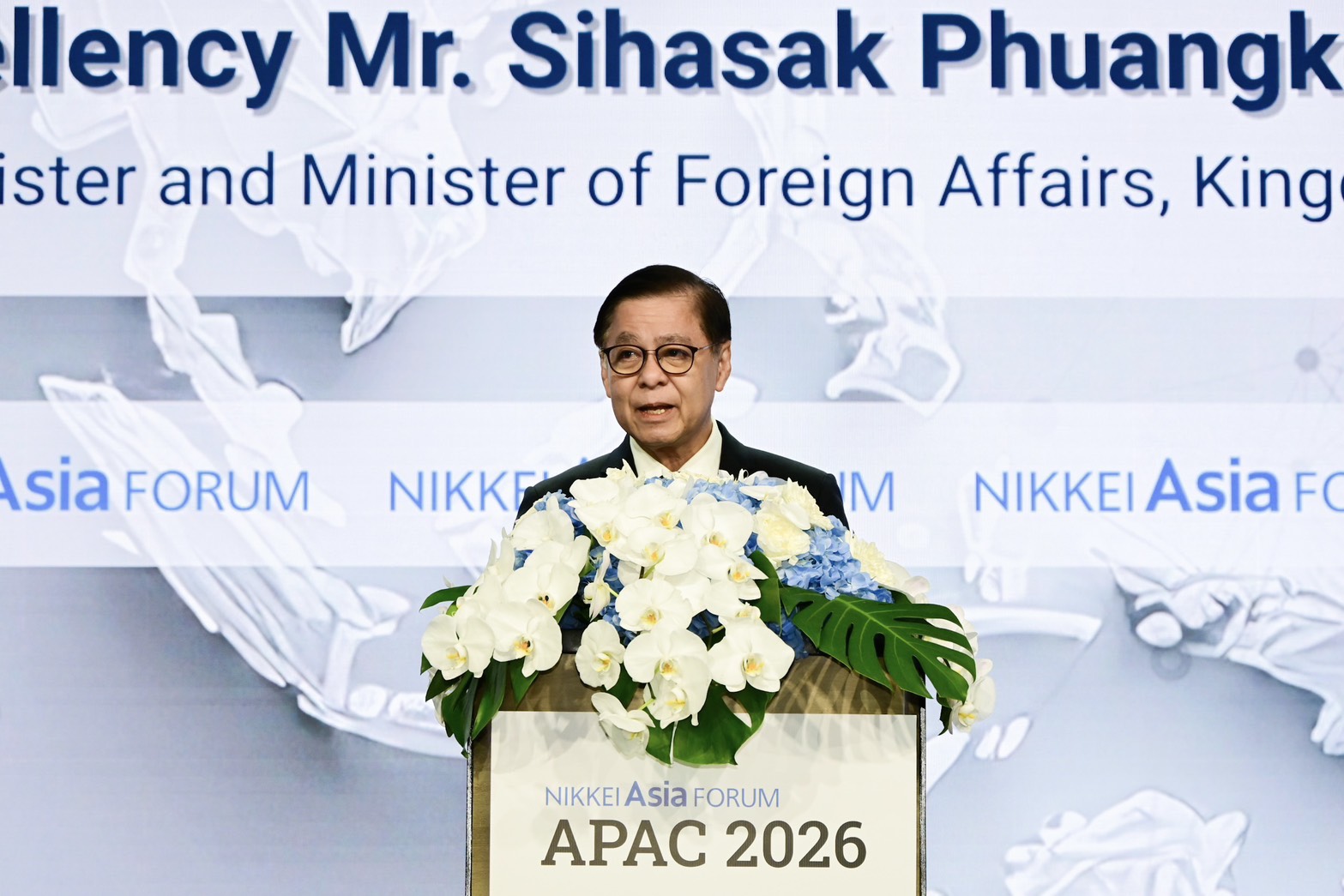
The Nikkei Forum APAC 2026, organized in partnership with the Ministry of Foreign Affairs to commemorate Nikkei’s 150th anniversary, served as a regional platform. Participants included leaders and experts from Thailand, Japan, China, and Viet Nam across key industries: automotive, robotics & AI, tourism, food, and finance. The event drew over 200 in-person attendees and more than 2,000 online participants. Deputy Prime Minister Ekniti Nitithanprapas also delivered the opening remarks on behalf of the Prime Minister.
Analysis
The repetition of “the future is Asia” signals a deliberate framing of Thailand’s foreign policy strategy. This messaging prioritizes intra-regional cooperation, particularly through ASEAN frameworks, as a mechanism for mitigating economic impacts from global and regional conflicts. The statement doesn’t address the specific risks or vulnerabilities Thailand faces within this framework. The inclusion of Deputy Prime Minister Nitithanprapas in the opening remarks suggests a concerted effort to align foreign policy with broader economic priorities outlined by the Ministry of Finance.
Implications
This emphasis on regional cooperation has implications for Thailand’s engagement with major powers. If implemented as described, it could potentially moderate Thailand’s approach to external relations, focusing on strengthening relationships within Asia. The event highlights a recognition of the need to adapt to evolving global economic landscapes – a factor that will likely shape trade agreements and investment strategies. The forum’s scope, encompassing industries like tourism and finance, underscores a strategy aimed at bolstering regional economic integration.
Outlook
Should the visit yield increased collaboration within ASEAN, Thailand could strengthen its position as a facilitator of regional trade and investment. If the Deputy Prime Minister’s vision proves successful in fostering mutual trust, it may lead to further initiatives focused on addressing shared challenges like supply chain disruptions. The statement does not address potential tensions arising from geopolitical competition or changes in international alliances.
Conclusion
The Nikkei Forum address establishes a clear framing for Thailand’s foreign policy – one centered on regional openness and cooperation. The ultimate test will be whether this strategy can effectively balance Thailand’s economic interests with the increasingly complex dynamics of the Asia-Pacific region.