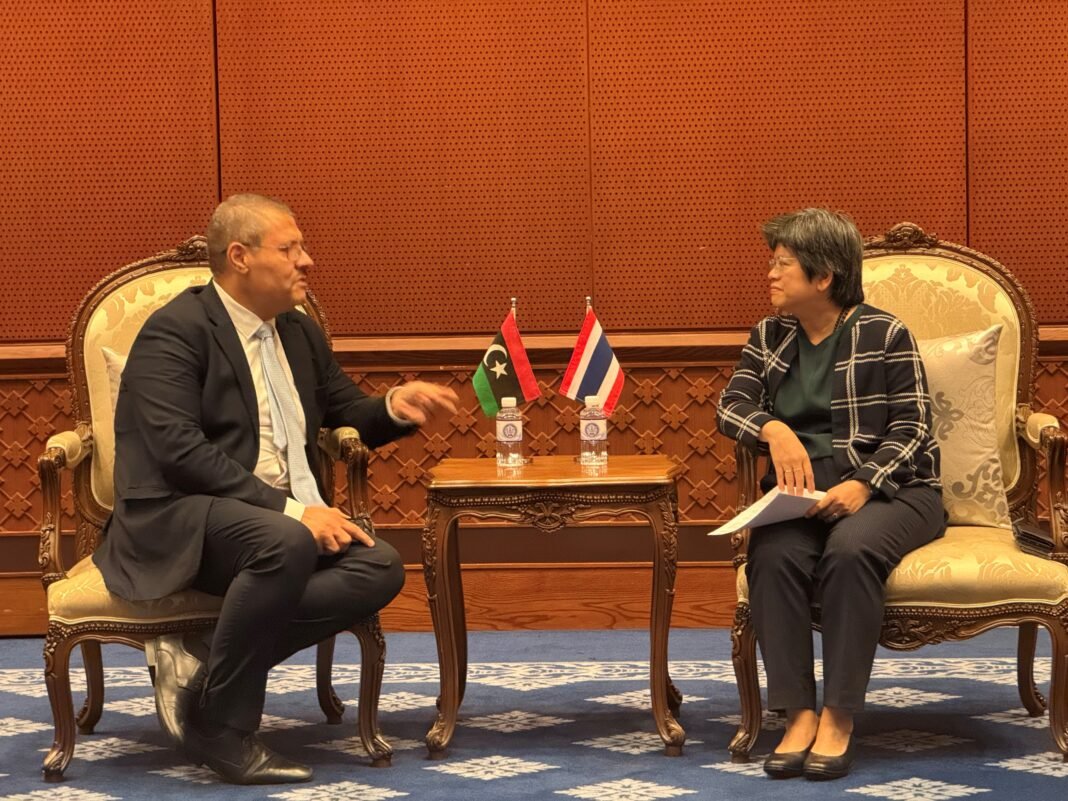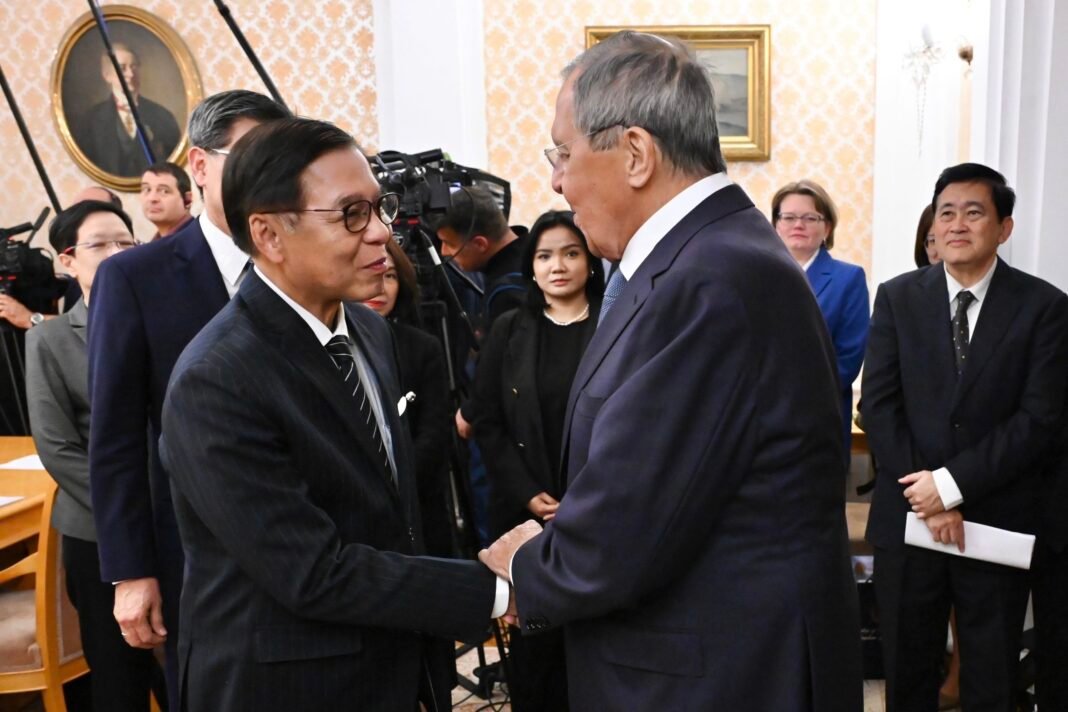
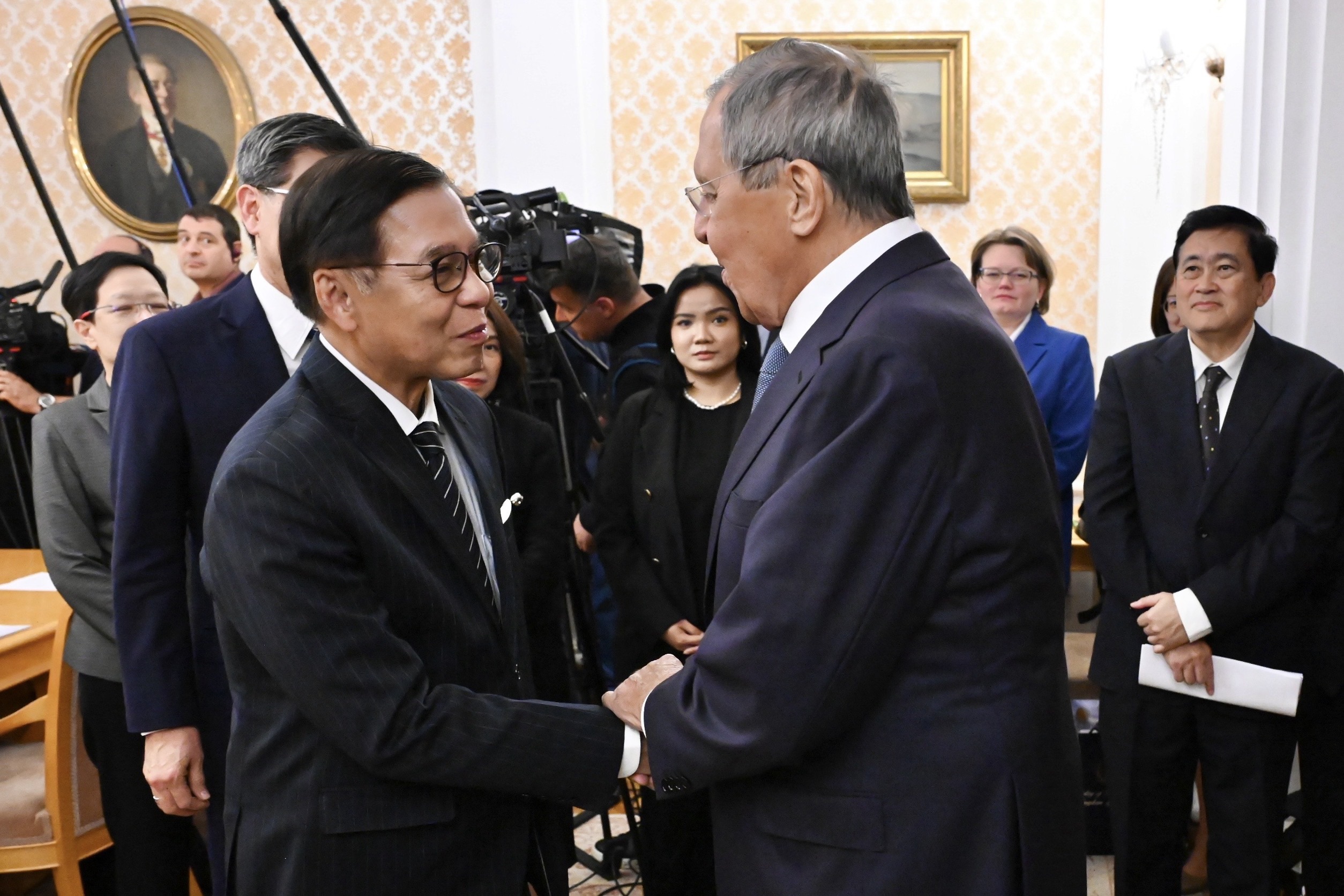
Details in a press release show that On August 14th, 2026, Deputy Prime Minister and Minister of Foreign Affairs Sihasak Phuangketkeow met with Russian Foreign Minister Sergey Lavrov in Moscow. The purpose of this bilateral meeting, according to the Ministry of Foreign Affairs statement, was to “further promote Thailand – Russia relations and multi-dimensional cooperation.” This underscores a renewed focus on trade facilitation, specifically seeking support for negotiations towards a Free Trade Agreement between Thailand and the Eurasian Economic Union (EAEU), highlighting an area of strategic economic interest for Bangkok.
Background
The meeting occurred against a backdrop of established diplomatic channels between Thailand and Russia, formalized through the 20-Year “5S” Foreign Affairs Masterplan, initiated in 2016. Prior consultations, detailed in the 6th Plan of Consultations, are scheduled to run from 2026 to 2030, establishing a framework for ongoing cooperation between the Foreign Ministries. Thailand and Russia are set to commemorate 130 years of diplomatic relations next year, marking a significant milestone in their bilateral ties.
Analysis
The statement reveals a prioritization of economic engagement as a cornerstone of the relationship. The explicit pursuit of trade facilitation and reduction of trade impediments signals Thailand’s desire to overcome potential obstacles to establishing a Free Trade Agreement with the EAEU. This suggests a strategic calculation, potentially driven by a need to diversify economic partnerships beyond traditional Western markets. Furthermore, the exchange of views on “key international and regional developments” indicates an awareness of broader geopolitical risks, explicitly mentioning the situation in Myanmar and Thailand-Cambodia relations. The inclusion of ASEAN – Russia cooperation highlights Thailand’s continued interest in regional security frameworks, though the statement does not elaborate on specific concerns or strategies.
Implications
The signing of the 6th Plan of Consultations carries implications for regional stability and trade dynamics. Should the Free Trade Agreement negotiations progress successfully, it could reshape trade flows within Southeast Asia and potentially alter Russia’s engagement with the European economic bloc. The discussions on Myanmar and Thailand-Cambodia relations represent a delicate balancing act for Bangkok – seeking to maintain positive ties with key neighbors while navigating complex territorial disputes. The continued dialogue with Moscow offers Thailand an opportunity to leverage Russian influence in regional forums, particularly concerning ASEAN – Russia cooperation.
Outlook
If the trade negotiations are successful and a Free Trade Agreement is established between Thailand and the EAEU, this would represent a significant shift in Thailand’s economic strategy. Should the support for expedited negotiations materialize as outlined in the statement, it indicates a willingness from the Russian Federation to actively participate in facilitating this agreement. However, should disagreements persist regarding trade impediments or if geopolitical tensions escalate – particularly concerning Myanmar and Cambodia – the framework established by the 6th Plan of Consultations may become less effective, requiring adjustments to Thailand’s approach.
Conclusion
The bilateral meeting between Phuangketkeow and Lavrov underscores a strategic prioritization of economic relations with Russia. The long-term success of this approach hinges on navigating complex regional dynamics and securing tangible benefits from trade facilitation, leaving open the question of how Thailand will balance its diplomatic ambitions with evolving geopolitical pressures.