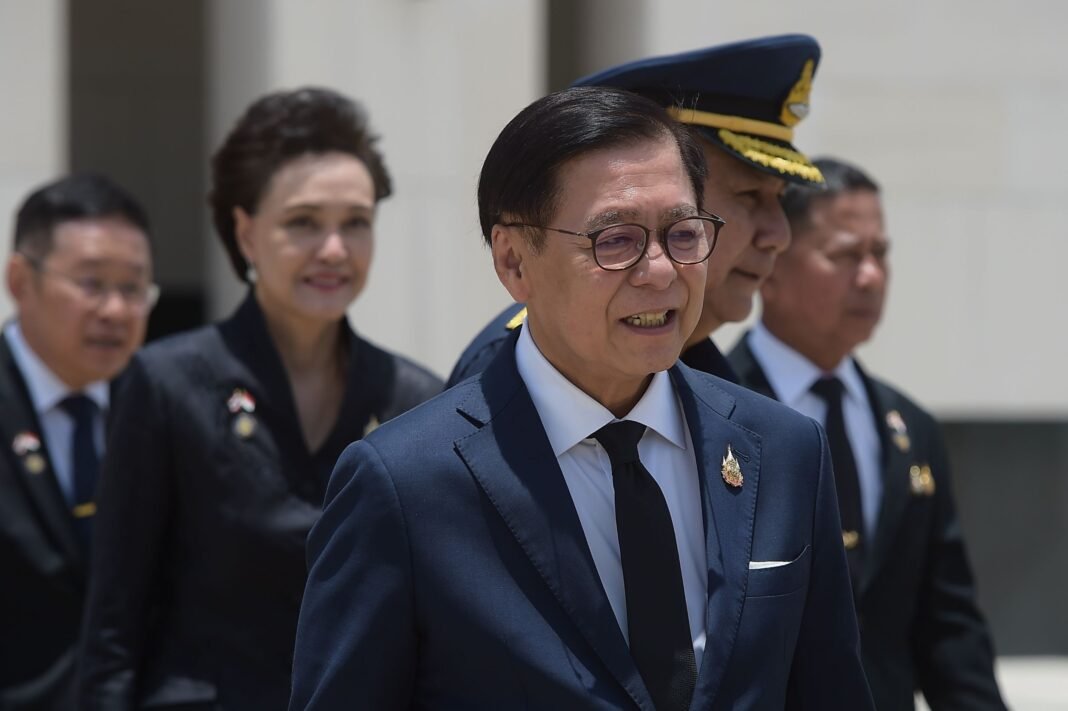
As set out in a formal announcement, The Deputy Prime Minister and Minister of Foreign Affairs, H.E. Mr. Sihasak Phuangketkeow, joined the Prime Minister on an official visit to Indonesia on 3 August 2026 (the statement does not mention the date of the visit). This marks the Prime Minister’s first visit to Indonesia since assuming office and the first Prime Ministerial visit in over fifteen years. The significance lies in a renewed focus on proactive economic diplomacy, recognizing Indonesia as ASEAN’s largest economy and most populous country – a shift intended to bolster Thailand’s position within the regional bloc.
Background
The statement does not mention prior meetings or agreements. However, it references the 2nd Leaders’ Consultation mechanism established during the official visit of H.E. Mr. Prabowo Subianto, President of the Republic of Indonesia, to Thailand in 2025. This indicates an ongoing dialogue process between the two nations, which has now evolved into a formalized strategic partnership plan. The statement also references Thailand’s upcoming ASEAN Chairmanship in 2028 – a period that will require sustained diplomatic engagement and influence.
Analysis
The announcement of the Thailand–Indonesia Strategic Partnership Plan (2026-2030) signals a deliberate effort to leverage Indonesia’s economic power. The timing, coinciding with Thailand assuming ASEAN Chairmanship in 2028, suggests a strategic attempt to shape regional policy and norms from within. Building on the existing consultation mechanism indicates an incremental approach, prioritizing sustained engagement over dramatic shifts. This strategy, if implemented as described, aims to increase Thailand’s influence across multiple sectors – trade, investment, and security – by securing Indonesia’s cooperation.
Implications
For policymakers, the plan necessitates a reassessment of Thailand’s foreign policy priorities. The focus on economic diplomacy suggests a shift away from traditional security-oriented approaches, though the statement does not address specific areas of collaboration. The partnership has implications for regional stability, potentially bolstering Indonesia’s position as a key ASEAN player and influencing broader dynamics within the Association. Trade and investment flows are likely to be affected – if the plan succeeds in attracting increased Indonesian investment into Thailand or vice versa.
Outlook
Should the visit yield a formal agreement on the Strategic Partnership Plan, Thailand’s success will hinge on its ability to translate commitments into tangible outcomes. If the 2nd Leaders’ Consultation mechanism proves effective, it could serve as a model for future ASEAN engagements. If Indonesia demonstrates willingness to collaborate on key economic initiatives – such as infrastructure development or digital trade – this would significantly strengthen the partnership. However, if disagreements arise over specific policy priorities or implementation challenges, the plan could face significant hurdles.
Conclusion
The announcement of the Thailand–Indonesia Strategic Partnership Plan reflects a calculated move by Bangkok to assert its influence within ASEAN. The statement does not address whether this initiative will translate into concrete results or if it represents merely an intensification of existing diplomatic efforts – leaving open the question of Thailand’s long-term regional ambitions.