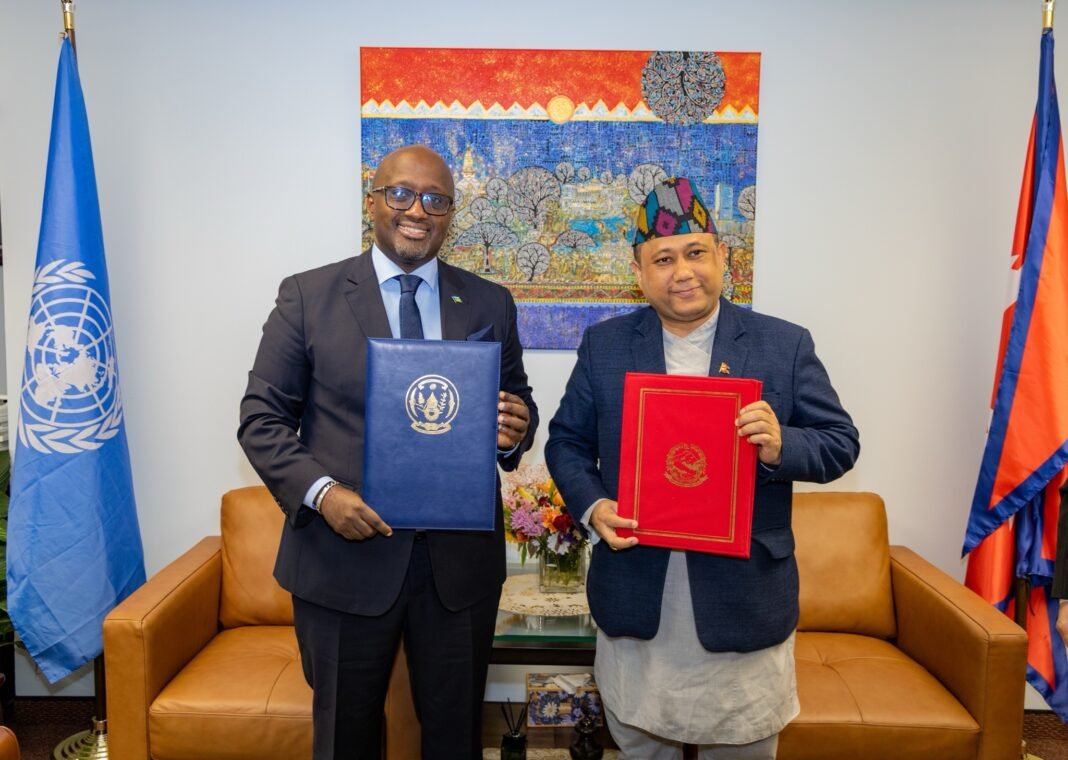
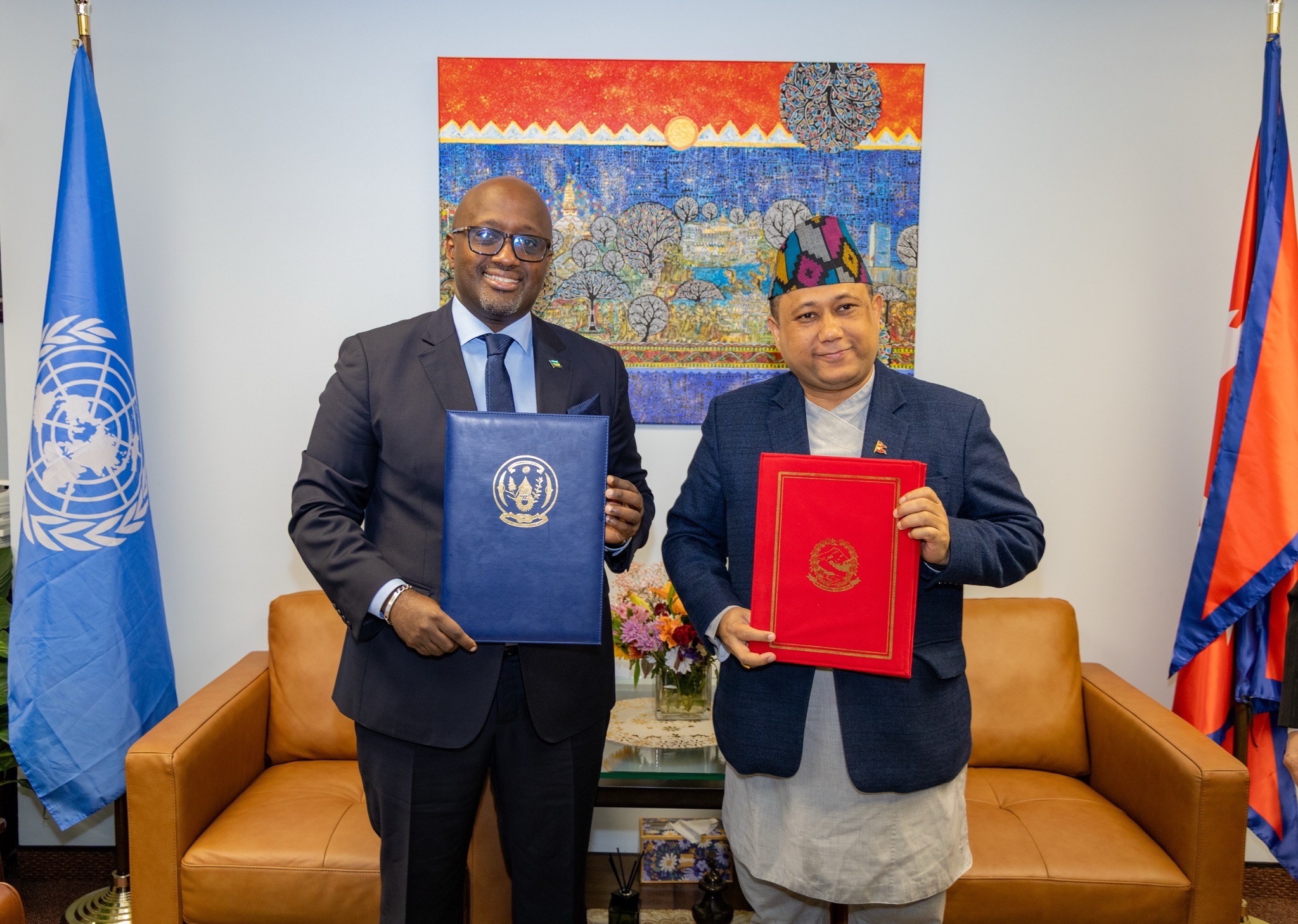
As set out in a formal announcement, The signing of a General Cooperation Agreement between Rwanda and Nepal, announced on September 25th, 2026, occurred on the sidelines of the 81st Session of the United Nations General Assembly (UNGA81) in New York. This event, involving Minister of Foreign Affairs and International Cooperation Olivier J.P. Nduhungirehe and Minister of Foreign Affairs Shisir Khanal, represents the latest in a series of agreements Rwanda has pursued during its participation in international forums. The statement does not mention the specific terms of the agreement, only that it provides a “framework for enhanced collaboration and further strengthening bilateral ties.” This suggests a desire to formalize existing engagement, though the details remain opaque. The fact that this agreement was secured during a busy diplomatic environment—specifically, UNGA81—highlights the strategic importance Rwanda places on maintaining a robust network of partnerships.
Background
Rwanda’s sustained diplomatic activity during UNGA81 demonstrates a clear prioritization of multilateral engagement. Prior to this meeting, the ministry had already facilitated the signing of a General Cooperation Agreement with Uruguay, a similar agreement with Armenia, and a visa exemption accord with Ukraine, all within the same timeframe. Furthermore, Minister Nduhungirehe participated in the 50th G77 Annual Meeting of Ministers for Foreign Affairs and the 19th Ministerial Meeting of the Global Governance Group (3G). These activities, coupled with his attendance at the Landlocked Developing Countries Annual Ministerial Meeting, reveal a deliberate strategy to showcase Rwanda’s commitment to international cooperation and secure mutually beneficial arrangements. The ministry’s receipt of letters of credence from the Ambassador-designate of Sweden to Rwanda, documented on September 11th, 2026, further underscores this outward-facing approach. This history of engagement, as evidenced by the Armenia and Uruguay agreements, suggests a consistent pattern of diplomatic activity, rather than a singular, isolated event.
Analysis
The signing of this General Cooperation Agreement with Nepal signals a calculated effort on Rwanda’s part to diversify its diplomatic portfolio. The agreement’s broad terms—a “framework for enhanced collaboration”—offer considerable flexibility, allowing Rwanda to tailor future engagements to specific priorities. The timing of the agreement, coinciding with UNGA81, likely provided opportunities for discreet discussions and the potential for follow-on agreements. This suggests a focus on leveraging international platforms to advance Rwanda’s foreign policy objectives. The statement does not address the potential economic benefits of the agreement, nor does it explain the rationale for selecting Nepal as a partner. However, the existing agreements with Armenia and Uruguay demonstrate Rwanda’s willingness to forge partnerships with nations across a range of geographic regions. The fact that the ministry has been pursuing agreements with several nations simultaneously indicates a proactive, rather than reactive, foreign policy stance.
Implications
The agreement’s implications extend beyond the immediate bilateral relationship. Rwanda’s sustained diplomatic activity during UNGA81—including the signing of multiple agreements—demonstrates a strategic effort to strengthen its international standing. This increased engagement could bolster Rwanda’s influence within regional organizations and contribute to its broader diplomatic objectives. The agreement also has implications for Nepal, potentially opening up new avenues for trade and investment. The ongoing pursuit of agreements with nations across various continents highlights Rwanda’s ambition to play an increasingly prominent role in global affairs. The statement does not address the potential impact on Nepal’s own foreign policy priorities.
Outlook
Should the visit yield further discussions regarding trade and investment opportunities, Rwanda could seek to secure concrete commitments from Nepal. If the agreement proves to be a foundational element for deeper collaboration, Rwanda may prioritize initiatives in areas such as technology transfer or capacity building. However, the agreement’s vagueness—a “framework for enhanced collaboration”—leaves considerable room for interpretation and potential disagreements. Should Nepal demonstrate a willingness to engage in joint projects, Rwanda could pursue further agreements to solidify its partnership. The statement does not address whether Rwanda intends to pursue specific projects with Nepal as a result of this agreement.
Conclusion
The signing of the General Cooperation Agreement with Nepal represents another step in Rwanda’s ongoing effort to cultivate a diverse network of diplomatic partnerships. The lack of specific details regarding the agreement’s terms, however, raises questions about the depth and scope of future collaboration. The next phase will hinge on Rwanda’s ability to translate this agreement into tangible outcomes, a process that remains largely undefined.