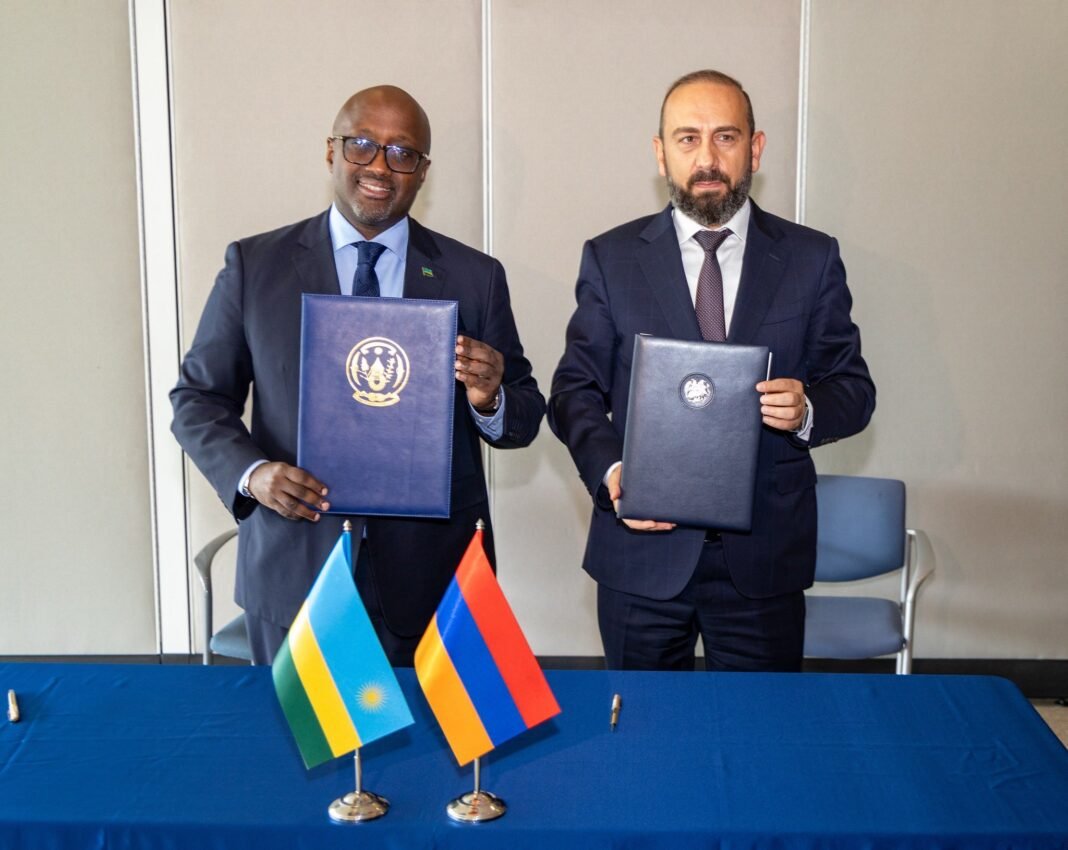
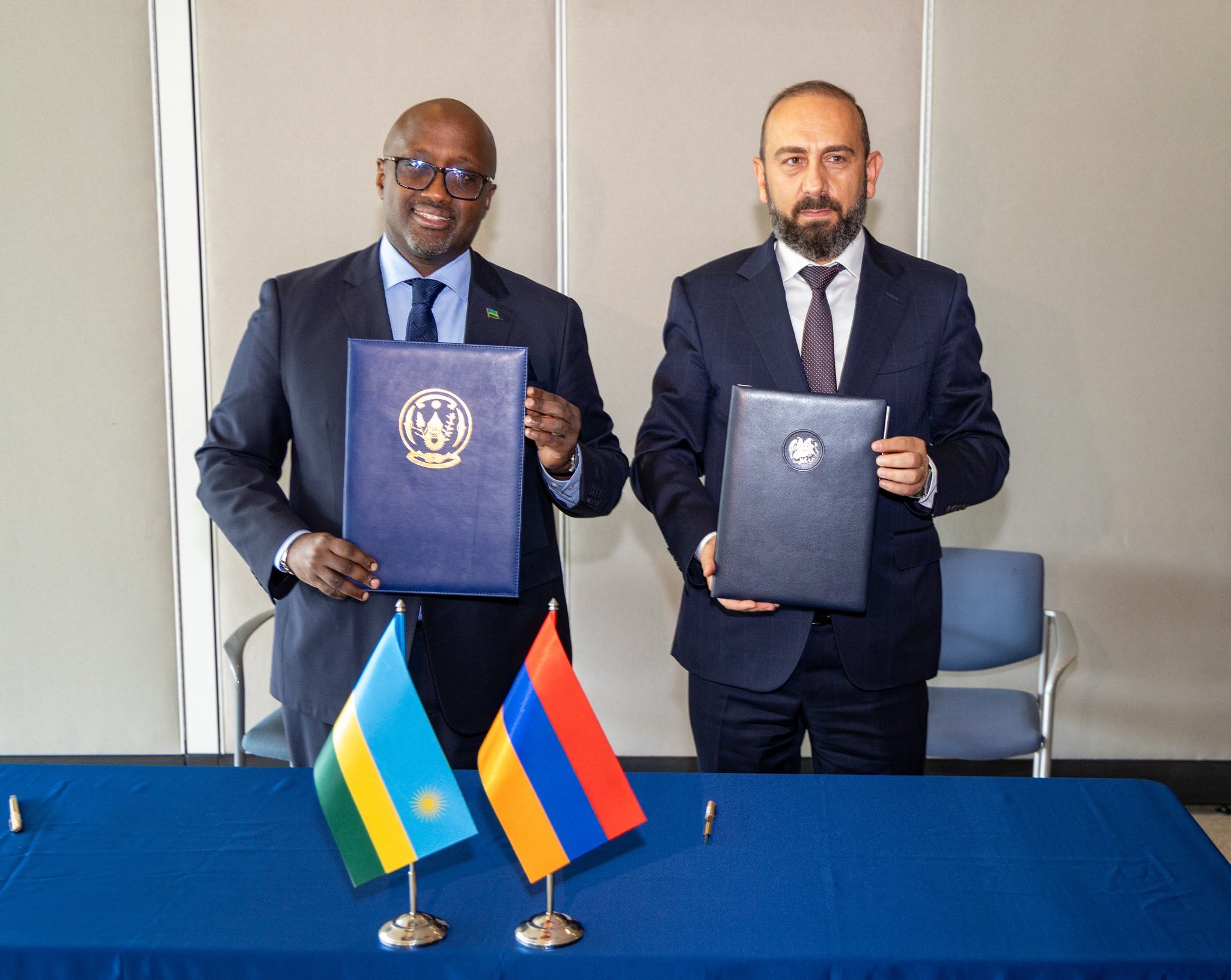
Per the government announcement, New York, 25 September 2026 – The signing of a visa exemption agreement between Rwanda and Armenia, finalized on the margins of the 81st Session of the United Nations General Assembly (UNGA81), represents a further expansion of Kigali’s diplomatic engagement this month. This agreement, formalized through a bilateral meeting between Minister of Foreign Affairs and International Cooperation Olivier J.P. Nduhungirehe and Minister of Foreign Affairs of the Republic of Armenia Ararat Mirzoyan, allows holders of diplomatic and service passports to enter each other’s territories without the need for traditional visa procedures. The significance of this development lies in its occurrence amidst a broader pattern of agreements secured by the Rwandan Ministry of Foreign Affairs and International Cooperation during the UNGA81 session, including deals with Uruguay, Nepal, Ukraine, Cyprus, Togo, and Greece. The statement does not address the specific rationale behind this particular agreement’s timing or scope.
Background
The agreement follows a series of similar visa exemptions secured by Rwanda during this UNGA81 session. Prior to this, the ministry signed an agreement with Uruguay on 25 September 2026, and an agreement with Nepal on the same date. Furthermore, the ministry signed an agreement with Ukraine on 24 September 2026, and an agreement with Cyprus on 23 September 2026. Rwanda also signed agreements with Togo and Greece on 23 September 2026. These agreements demonstrate a sustained effort by the Rwandan government to bolster its international relations and facilitate trade and travel. The ministry participated in the 50th G77 Annual Meeting of Ministers for Foreign Affairs, held under the auspices of the Group of 77 and China, on 25 September 2026. The statement does not mention any prior discussions between the Rwandan and Armenian governments regarding this specific agreement.
Analysis
The signing of this visa exemption agreement reflects Rwanda’s continued prioritization of multilateral engagement, as evidenced by its active participation in a range of international forums during UNGA81. The agreement’s focus on diplomatic and service passports suggests an emphasis on facilitating official travel and cooperation between the two nations. The timing of the agreement, coinciding with the UNGA81 session, indicates a strategic effort to leverage the platform for bilateral discussions and establish new partnerships. The statement does not address the potential economic implications of the agreement, nor does it detail the specific sectors in which the two countries anticipate increased cooperation. The ministry’s participation in the 19th Ministerial Meeting of the Global Governance Group (3G) on 24 September 2026 highlights Rwanda’s commitment to broader international governance issues.
Implications
The visa exemption agreement has implications for both Rwanda and Armenia, potentially facilitating increased trade, investment, and tourism between the two countries. The agreement could also strengthen diplomatic ties and create opportunities for greater collaboration on issues of mutual interest. The statement does not address the potential impact of the agreement on regional security dynamics, nor does it outline any specific security guarantees associated with the visa exemption. The agreement’s formalization occurs alongside the ministry’s assumption of the G77 chairmanship for 2027, suggesting a potential role for Rwanda in promoting South-South cooperation.
Outlook
Should the visit yield increased trade flows between Rwanda and Armenia, the agreement’s success would be predicated on the establishment of effective mechanisms for monitoring and enforcement. If the agreement is successfully implemented as described, it could serve as a model for future visa exemption agreements between Rwanda and other nations. The agreement does not specify a timeline for review or renewal, suggesting a commitment to ongoing dialogue and collaboration.