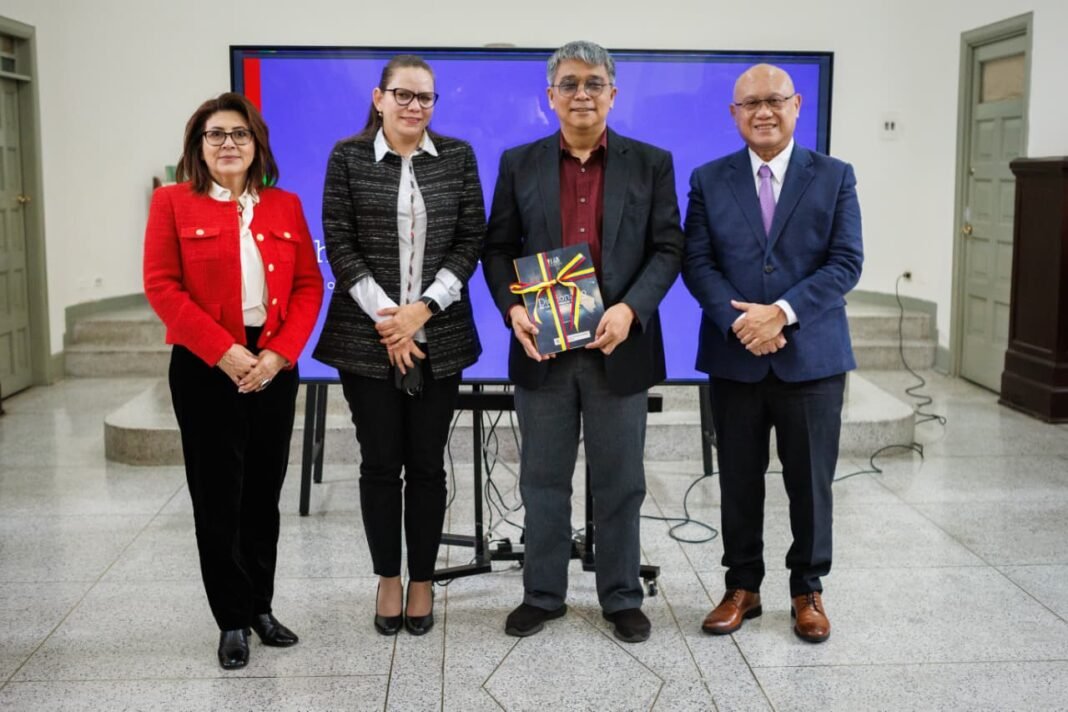
The official readout frames the trip as Bogotá D.C., 15 de septiembre de 2026. The Colombian Academy of Diplomacy Augusto Ramírez Ocampo, in partnership with the Embassy of the Republic of the Philippines, hosted a conference titled ‘The Law of the Sea in Times of Polycrisis: New Challenges and Trends in International Maritime Law’ at the Biblioteca Marco Fidel Suárez. The event featured a keynote address by Professor Jay L. Batongbacal, a renowned expert in maritime law and governance from the University of the Philippines College of Law, exploring the complex challenges facing international maritime regulations.

Background
The conference occurred within the framework of commemorating eighty years of diplomatic relations between Colombia and the Philippines. The event was facilitated by the Academia Diplomática Augusto Ramírez Ocampo and the Embassy of the Republic of the Philippines. The context for this gathering is established by the Memorandum of Understanding on academic cooperation signed on November 18, 2015, in Manila. This agreement fosters exchange and collaboration between the two nations on contemporary international issues.
Analysis
Professor Batongbacal’s presentation centered on the concept of “polycrisis,” identifying several interwoven dimensions to this challenge. These include the effects of climate change, the sustainability of marine resources, the increasing automation of intelligent vessels, and transnational crime. The statement does not address the potential impact of these factors on Colombian maritime interests. Furthermore, the conference highlights a need for adaptive legal frameworks, given the evolving nature of maritime activities. The event underscores the importance of international cooperation in addressing these complex issues, particularly as outlined by the 2015 Memorandum.
Implications
The conference’s focus on maritime governance has significant implications for Colombia’s foreign policy. It suggests a prioritization of international dialogue and collaboration within the framework of the established Memorandum. The event could strengthen Colombia’s engagement in regional and international initiatives related to maritime security and resource management. Should the visit yield further discussions on maritime boundaries and resource sharing, it would align with Colombia’s strategic interests in the Pacific Ocean.
Outlook
If the collaboration continues to focus on maritime governance, it could lead to the development of new legal frameworks and institutional arrangements. Should the Memorandum of Understanding be renewed, it would provide a stable foundation for ongoing cooperation. The event’s emphasis on polycrisis suggests a longer-term commitment to addressing the challenges associated with climate change and resource scarcity, but the statement does not address whether Colombia will actively participate in international efforts to mitigate these risks.
Conclusion
The exchange with Professor Batongbacal raises fundamental questions regarding Colombia’s capacity to adapt its maritime policy to the increasingly complex and interconnected challenges of the 21st century. The event’s success hinges on sustained commitment to collaborative dialogue and the development of proactive legal strategies.