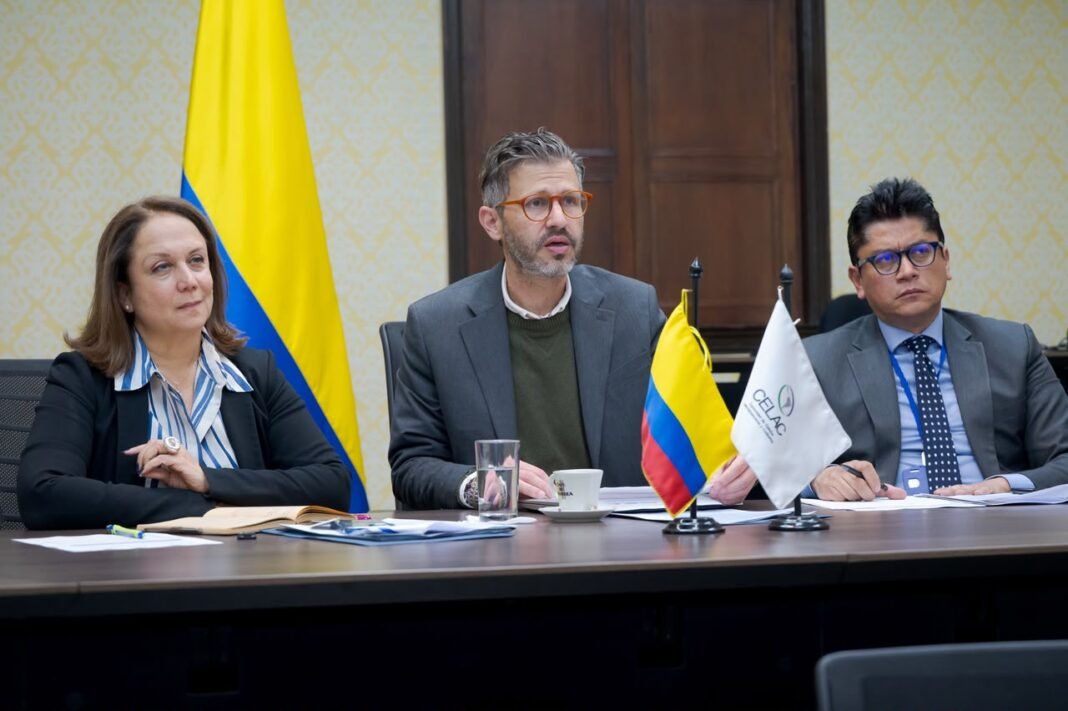
The foreign ministry readout describes Colombia participated in the “Regional Dialogue on the Future of United Nations Leadership,” organized by Uruguay in its capacity as the pro tempore presidency of the Community of Latin American and Caribbean States (CELAC). This event, held in Bogotá on August 3, 2026, represents a potential turning point for the region’s influence within the global organization. The statement notes that Colombia is seeking to regain control of the UN Secretariat after more than 35 years – a goal centered around the possibility of a woman holding the position of Secretary-General for the first time. The initiative was highlighted by the viceministro de Asuntos Multilaterales, Mauricio Jaramillo Jassir, who emphasized this opportunity within the context of the press release.

Background
Uruguay currently holds the presidency pro tempore of CELAC. The “Diálogo regional sobre el futuro liderazgo de las Naciones Unidas” was convened by Uruguay as part of its role in facilitating discussions amongst nations within the region. The statement identifies Rebeca Grynspan (Costa Rica), María Fernanda Espinosa (Ecuador), and Carolyn Rodrigues-Birkett (Guyana) as participating candidates for the position of UN Secretary-General. Rafael Grossi (Argentina) offered a video message, while Michelle Bachelet (Chile) submitted a written communication read aloud during the session. The meeting was broadcast live and included representatives from all CELAC member states – including the Colombian delegation.
Analysis
Colombia’s participation is framed around two key concerns: strengthening UN diplomatic efforts to combat transnational organized crime, specifically through preventative diplomacy and mediation, and promoting sustainable development alongside reducing inequalities. Jaramillo Jassir’s questions to the candidates focused directly on these issues – signaling a prioritization of security and economic equity within the UN framework. The inclusion of Grossi’s video message suggests an awareness of Argentina’s potential influence within the region, while Bachelet’s written communication indicates a desire for broader consultation on global challenges. This signals Colombia’s intent to leverage regional institutions like CELAC as a platform for advancing its foreign policy objectives and potentially shaping the next UN Secretary-General.
Implications
Colombia’s proactive engagement has significant implications for regional stability, particularly within Latin America. Should Colombia succeed in securing the position of UN Secretary-General – a goal the statement explicitly states – it could reshape international diplomatic norms and influence decision-making processes at the United Nations. The focus on preventative diplomacy suggests a commitment to addressing root causes of conflict, potentially impacting ongoing security challenges across the region. Furthermore, the emphasis on sustainable development aligns with broader global trends, but does not address whether Colombia intends to use this position to promote specific trade agreements or investment strategies within CELAC.
Outlook
The success of Colombia’s bid hinges on the ability of the candidate to effectively articulate a vision that resonates with a diverse range of member states. If the candidate secures the position, it will be crucial to assess whether Colombia’s priorities – specifically its emphasis on preventative diplomacy and sustainable development – are aligned with the broader strategic goals of the UN system. Should the visit yield positive results in terms of securing support from key regional players, it could pave the way for increased collaboration on transnational crime issues. However, the statement does not address any potential disagreements or challenges that may arise during negotiations.
Conclusion
The Colombian delegation’s participation represents a carefully calibrated move towards greater influence within the UN system – but it ultimately leaves open the question of whether Colombia can translate this opportunity into tangible action, particularly regarding the core priorities identified by Jaramillo Jassir.