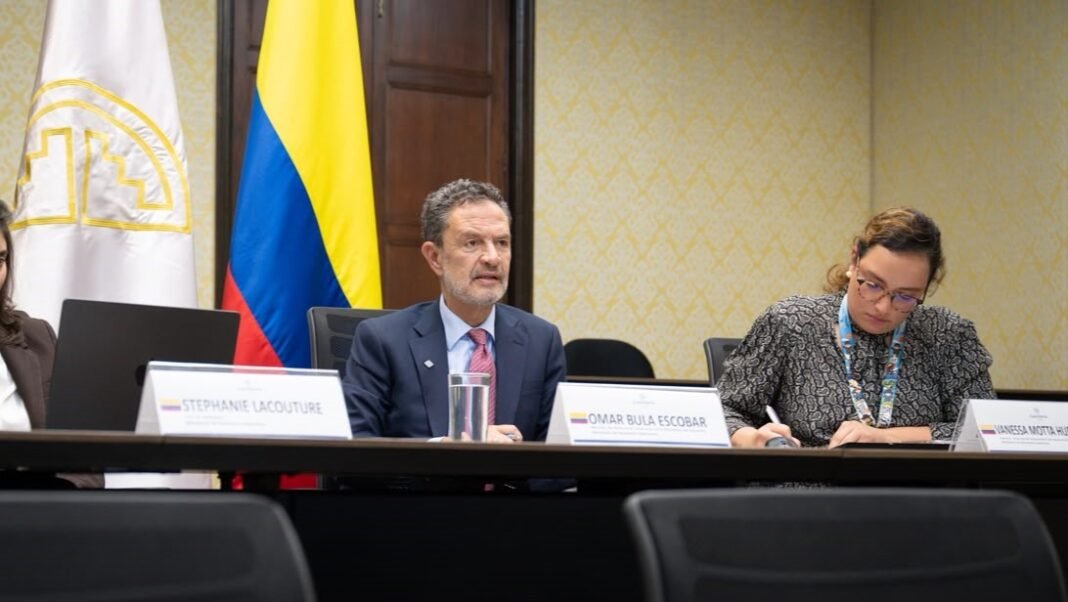
In a published statement ahead of the visit, The Colombian Ministry of Foreign Affairs, through its Minister of Relations, Omar Bula Escobar, announced on September 30th, 2026, a renewed commitment to strengthening Andean cooperation to combat transnational organized crime during the XXXII Ordinary Meeting of the Andean Council of Ministers of Foreign Affairs (CAMRE) held in Quito. This reaffirmation, centered around the implementation of Decision 922, represents a key element in Colombia’s strategy to address the growing threat of criminal networks operating across the region. The statement matters because the continued pursuit of this multi-national strategy is essential to maintaining security within the Andean nations, a region already grappling with significant instability and illicit activity.

Background
The XXXII Ordinary Meeting of the CAMRE represents a recurring forum for Andean nations to address shared security concerns. Established in 2011, the Council serves as a key body for coordinating policies and strategies related to combating transnational organized crime, drug trafficking, and other illicit activities. The stated goal is to foster a collaborative approach to security, leveraging the combined resources and intelligence capabilities of the member states – Colombia, Ecuador, and Peru. The statement does not mention the specific number of member states in the Andean Community. Prior to this meeting, the Ministry of Foreign Affairs, in a statement on September 16th, 2026, had announced plans to bolster relations with Israel to expand cooperation in security and intelligence, highlighting a broader international effort to counter transnational threats. Furthermore, on September 24th, 2026, the Ministry called for strengthening cooperation between CELAC and the EU against organized crime, demonstrating a commitment to a wider regional security network. The XIII Ordinary Meeting of the High-Level Group (GAN) of Decision 922 of the Andean Community, held in September 18th, 2026, also saw Colombia participating in regional actions against transnational organized crime, reviewing progress on the Resolutive Action Plan (PAR). This plan, established to provide a framework for coordinated action, is overseen by a High-Level Group.
Analysis
The core of Colombia’s strategy, as outlined by Minister Bula Escobar, revolves around the implementation of Decision 922, an instrument designed to facilitate joint actions against transnational organized crime. The move to a second phase, incorporating verifiable indicators, defined responsibilities, and effective monitoring mechanisms suggests a desire to move beyond simply identifying the problem to actively measuring and managing progress. The support for the Committee Operational Regulation on Small and Light Weapons Trafficking, and the declaration on judicial cooperation, highlights a targeted approach to disrupting the flow of illicit arms fueling criminal networks. The fact that approximately 200 coordinated operations were conducted between 2024 and June 2026, particularly in border zones involving Colombia, Ecuador, and Peru, underscores the scale of the challenge. The statement does not address the specific types of criminal organizations involved or the nature of the illicit activities being targeted. The emphasis on cooperation penitentiary, alongside efforts to combat extortion, drug trafficking, and money laundering, reveals a recognition of the interconnectedness of these crimes. The adoption of the Andean Migratory Statute (EMA) is presented as crucial for “safe mobility” between nations, implying a concern about the movement of criminal actors facilitated by irregular migration. This suggests a recognition of the vulnerabilities created by large-scale migration flows.
Implications
The renewed commitment to Andean cooperation carries significant implications for regional stability. Should the implementation of Decision 922 succeed in establishing verifiable targets and effective monitoring, it could contribute to a reduction in transnational crime and bolster the security of the three Andean nations. However, the success hinges on the willingness of each country to fully commit to the collaborative framework and share intelligence effectively. The increased focus on judicial cooperation and combating money laundering could also strengthen the legal tools available to prosecute and disrupt criminal networks. The push for an updated Migratory Statute could lead to more streamlined border controls and enhanced information sharing regarding individuals of interest to law enforcement. The statement does not address potential impacts on trade or investment flows, or the geopolitical ramifications of increased security cooperation.
Outlook
If the visit to Quito yields a concrete agreement on the implementation of the Committee Operational Regulation and the declaration on judicial cooperation, and if the High-Level Group demonstrates a commitment to rigorous monitoring and reporting, then the Andean nations could demonstrate measurable progress in combating transnational organized crime. Should the EMA be updated and adopted, it could facilitate more effective cross-border law enforcement and enhance the ability to track and apprehend criminals involved in illicit activities. However, the effectiveness of these efforts will depend on sustained political will and continued financial investment. The statement does not offer a timeline for achieving these outcomes or identify potential obstacles.
Sources & Further Reading
- Official press release
- Foreign ministry source
- Colombia fortalecerá su relación con Israel para ampliar la cooperación en seguridad e inteligencia (2026-09-16)
- Colombia llama a fortalecer la cooperación CELAC-UE contra el crimen organizado transnacional (2026-09-24)
- Colombia participa en acciones regionales contra la delincuencia organizada transnacional (2026-09-18)