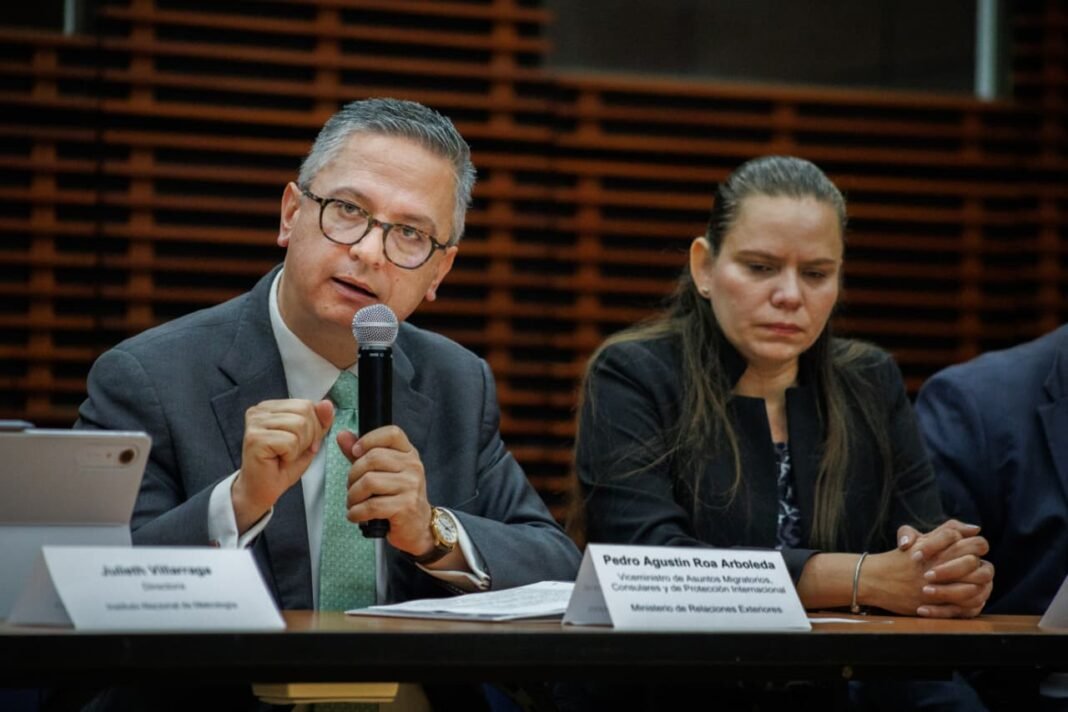
Details in a press release show that Bogotá, 1 de octubre de 2026 – The Colombian Ministry of Foreign Affairs, in conjunction with the Ministry of Science and the National Department of Planning (DNP), convened the first assembly of the Intersectoral Table for Scientific Diplomacy (MIDICI) at the National Metrology Institute (INM). This event marks a significant step in Colombia’s strategy to utilize its scientific and academic resources as a driver of economic development and international competitiveness, focusing on the country’s diaspora and global networks. The statement does not mention the specific number of attendees or participants at the assembly, but highlights the importance of this intersectorial approach to the nation’s foreign policy.

Background
The MIDICI assembly represents a formalized effort to align Colombia’s foreign policy with its growing investments in science, technology, and innovation. The statement does not address the history of Colombia’s approach to scientific diplomacy, but it indicates a recognition of a changing global landscape, characterized by significant economic, technological, and geopolitical shifts. The establishment of the MIDICI follows a period of increasing emphasis on Colombia’s participation in international research collaborations and the development of its technological capabilities. The assembly’s location at the INM underscores Colombia’s commitment to standards and measurement within its scientific endeavors. The statement does not specify any previous meetings or agreements that led to the formation of the MIDICI.
Analysis
The Colombian government’s strategy, as articulated by the Ministry of Foreign Affairs, reflects a calculated response to global trends. The statement does not address the potential risks associated with this strategy, such as the concentration of power within academic institutions or potential challenges in coordinating efforts across multiple sectors. The focus on the diaspora represents a deliberate attempt to tap into a valuable resource – Colombian scientists and researchers working abroad – and to foster closer ties with these individuals. The prioritization of the Universidad de Santander, DNP, and Universidad El Bosque as leaders in this initiative suggests a targeted approach to building expertise and innovation capacity. The inclusion of the CTI Global team, coordinated by the Universidad El Bosque, indicates a desire to strengthen collaboration in science, technology, and innovation. The decision to hold future assemblies at the Universidad de Antioquia (Sede Bogotá) highlights a commitment to regional development and engagement.
Implications
The consolidation of Colombia’s scientific diplomacy strategy has significant implications for regional stability and international trade. Should the visit yield a strengthened network of partnerships with universities and research institutions globally, it could position Colombia as a more attractive destination for foreign investment in the science and technology sectors. The initiative could also enhance Colombia’s ability to participate in international scientific collaborations, potentially leading to breakthroughs in areas such as renewable energy, agriculture, and healthcare. The statement does not address the potential implications for Colombia’s trade relations, but a stronger scientific base could contribute to the development of high-value-added exports. The strengthening of consular relationships, as outlined, could also have security implications, facilitating intelligence sharing and cooperation on transnational crime.
Outlook
If the implementation of the Lineamientos Nacionales de Diplomacia Científica proceeds as planned, Colombia could see a measurable increase in the number of Colombian scientists and researchers returning to the country to contribute to its development. Should the Universidad de Santander’s governance model be successfully adopted, it could serve as a template for other countries seeking to build effective scientific diplomacy programs. The ongoing discussions regarding the Erasmus+ COLDECISIONSEED project with Universidad La Sabana and the confirmation of the Universidad de Antioquia (Sede Bogotá) as the next assembly location suggest a long-term commitment to this strategy.