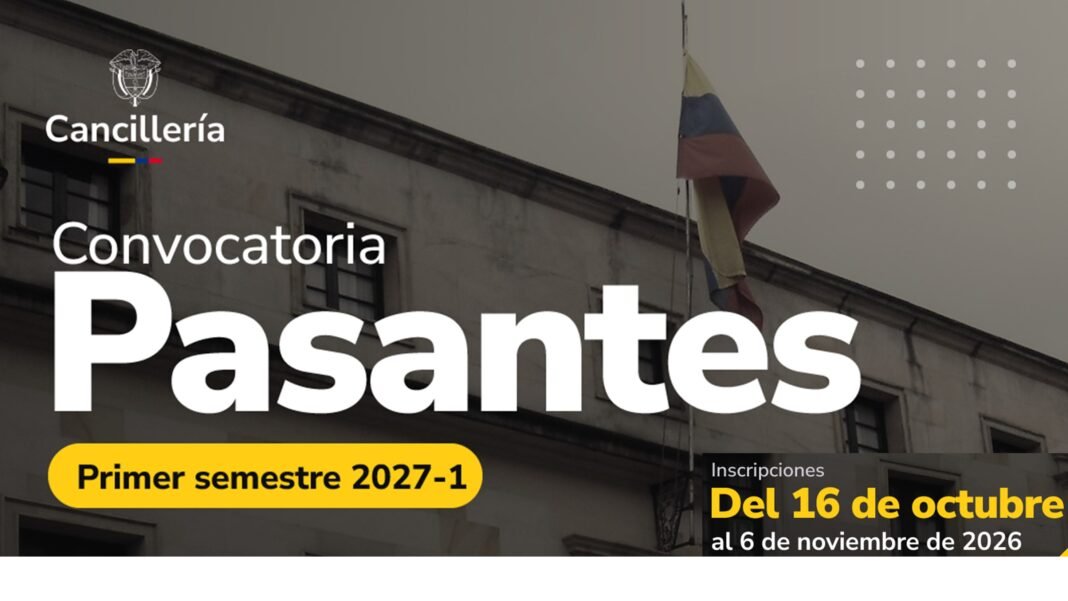
The Ministry of Foreign Affairs is inviting students to participate in the internship call for the first semester of 2027. This call will be open from October 16, 2026, until November 6, 2026. This represents a novel development that the Ministry receives with special enthusiasm: for the first time, internship positions are open in Honorary Consulates of Colombia abroad, in addition to the opportunities already available in Embassies, Consulates, Missions and within the Agency’s internal workforce. The statement does not address the number of internships available. ; see the full statement.

Background
The press release details a comprehensive internship program, aiming to integrate Colombian students into the Ministry’s international operations. The program’s scope has been broadened to include Honorary Consulates, representing a significant expansion of practical experience for students. The Ministry of Foreign Affairs seeks to reinforce its commitment to nurturing young professionals for service to Colombia abroad. The statement does not mention the specific number of available positions across the different categories.
Analysis
The Ministry’s initiative appears designed to address a recognized need within the Foreign Service – a skilled and motivated workforce. The inclusion of Honorary Consulates, a previously untapped resource, represents a strategic move. The requirement for a two-year visa validity (for foreign placements) highlights a pragmatic approach to ensuring student engagement and project longevity. This suggests a desire to attract and retain talent within the consular network. The requirement for specific language proficiency levels (A1-C2) further demonstrates a commitment to targeted training. The inclusion of a detailed list of required documents, including background checks, underscores a rigorous selection process. The reliance on the Resolution 3819 of 2019 as the governing norm establishes a clear legal framework for the program.
Implications
This internship program carries implications for both the Ministry of Foreign Affairs and Colombian students. For the Ministry, it provides a pathway to attract fresh perspectives and develop future leaders. The program’s success could strengthen Colombia’s diplomatic presence globally. For students, the opportunity to gain practical experience within the Foreign Service is a valuable asset for their professional development. The program’s expansion to Honorary Consulates could enhance Colombia’s engagement in smaller, specialized diplomatic missions. The call for specific language skills suggests a focus on operational readiness.
Outlook
Should the Ministry’s recruitment efforts prove successful, the program could lead to a sustained influx of young professionals into the Foreign Service. If the number of applications exceeds available positions, the Ministry may need to prioritize candidates based on language skills and experience. Should the student participation rate be low, the Ministry may need to re-evaluate its outreach strategies. The reliance on Compensar for registration suggests a formalized process for tracking and managing interns.
Conclusion
The Ministry’s internship program represents a tangible investment in Colombia’s future diplomatic capacity. However, the ultimate success of the initiative hinges on attracting a strong cohort of motivated students and effectively integrating them into the Ministry’s operational framework. The program’s long-term impact remains uncertain, dependent on sustained engagement and adaptive management.