
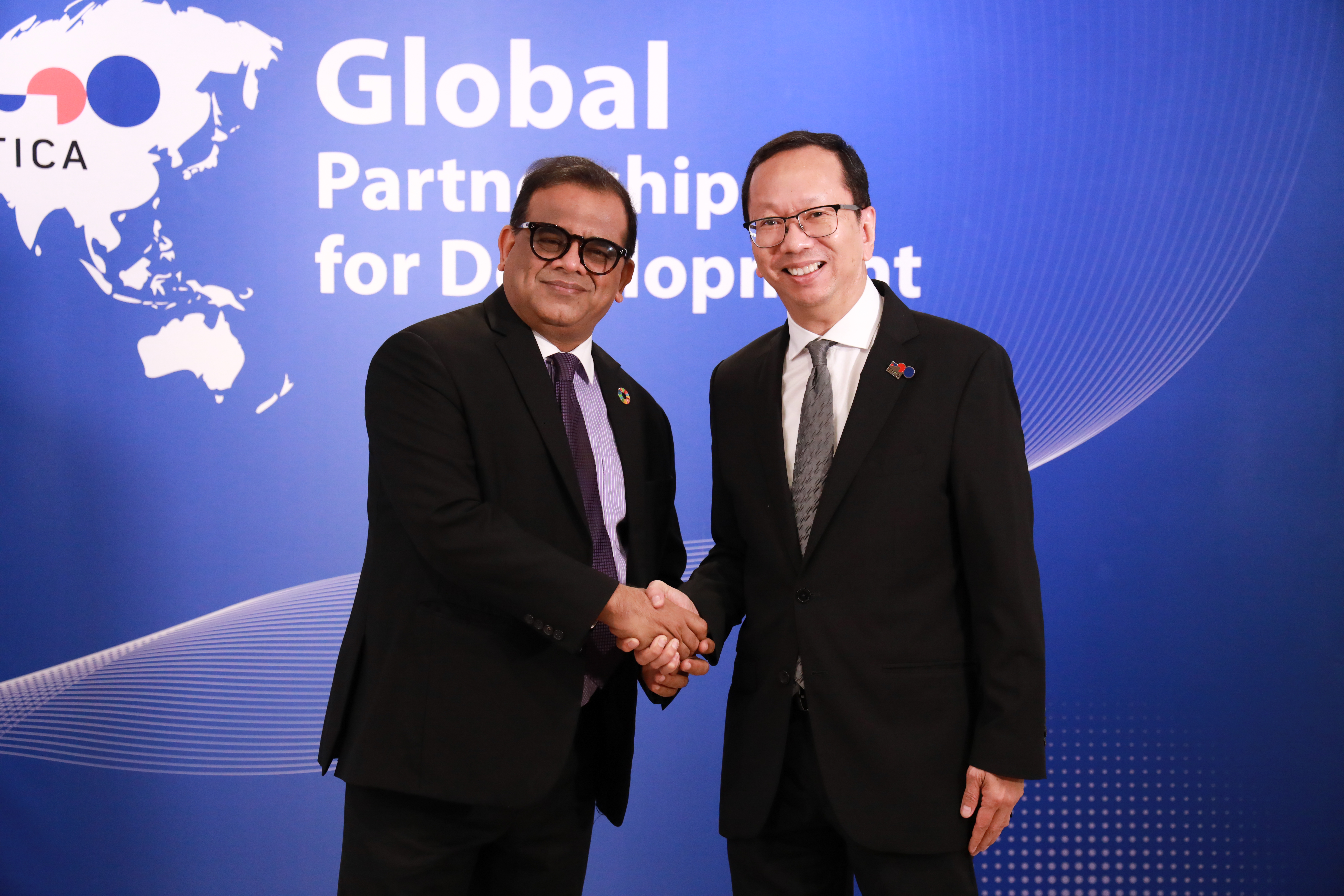
On 17 July 2026, Mr. Chulvat Narinthrangura, Director-General of Thailand International Cooperation Agency (TICA), welcomed Dr. Srinivas Tata, Director of the Strategy and Programme Management Division of the United Nations Economic and Social Commission for Asia and the Pacific (ESCAP), at TICA’s meeting room. This engagement, coinciding with Dr. Tata’s assumption of his duties, signals a prioritization of continued collaboration between Thailand and the UN body, specifically regarding South-South and Triangular Cooperation initiatives. — the full statement has further detail.
Background
The meeting occurred within the framework of ongoing efforts by the Ministry of Foreign Affairs to enhance Thailand’s role in regional development. The statement does not mention specific prior agreements or formal structures governing this cooperation. However, it references the 20-Year “5S” Foreign Affairs Masterplan, a national strategy emphasizing sustainable and strategic engagement across Southeast Asia and beyond. Furthermore, the meeting was scheduled following the 11th TICA Connect event, to be held on 24 July 2026 at Vites Samosorn, Ministry of Foreign Affairs.
Analysis
The exchange between Narinthrangura and Tata indicates a deliberate effort by Thailand to leverage ESCAP’s expertise in strategic planning. The focus on South-South and Triangular Cooperation (SSTC) suggests an alignment with global trends in development assistance, moving beyond traditional donor-recipient models. This approach prioritizes knowledge sharing and best practices among developing nations. The discussions around Results-Based Management (RBM) and Monitoring and Evaluation (M&E) demonstrate a desire to improve the effectiveness of Thailand’s international aid programs—a common concern for bilateral development agencies globally.
Implications
This engagement carries implications for regional stability, particularly within Southeast Asia. Enhanced cooperation through SSTC can foster economic integration and address shared challenges such as climate change adaptation. Support for capacity-building programmes implies a recognition of the need to strengthen developing nations’ ability to manage their own development trajectories. The participation in ESCAP’s Visiting Fellows program signifies Thailand’s commitment to absorbing international expertise, potentially impacting its approach to infrastructure investment and sustainable development projects.
Outlook
Should the visit yield positive outcomes regarding RBM and M&E support, Thailand could see a demonstrable improvement in the targeting and efficiency of its foreign assistance. If the APDG Forum continues to be convened regularly, it would provide a platform for dialogue on emerging development challenges and best practices. Should TICA officials remain engaged within the ESCAP Visiting Fellows programme, this will contribute to a sustained exchange of knowledge regarding effective development strategies.
Conclusion
The meeting between Narinthrangura and Tata establishes a clear intention to deepen Thailand’s engagement with key international partners. The statement does not address whether these discussions will translate into concrete funding commitments or revised operational protocols, leaving open the question of how effectively this renewed collaboration can contribute to Thailand’s broader foreign policy objectives.