
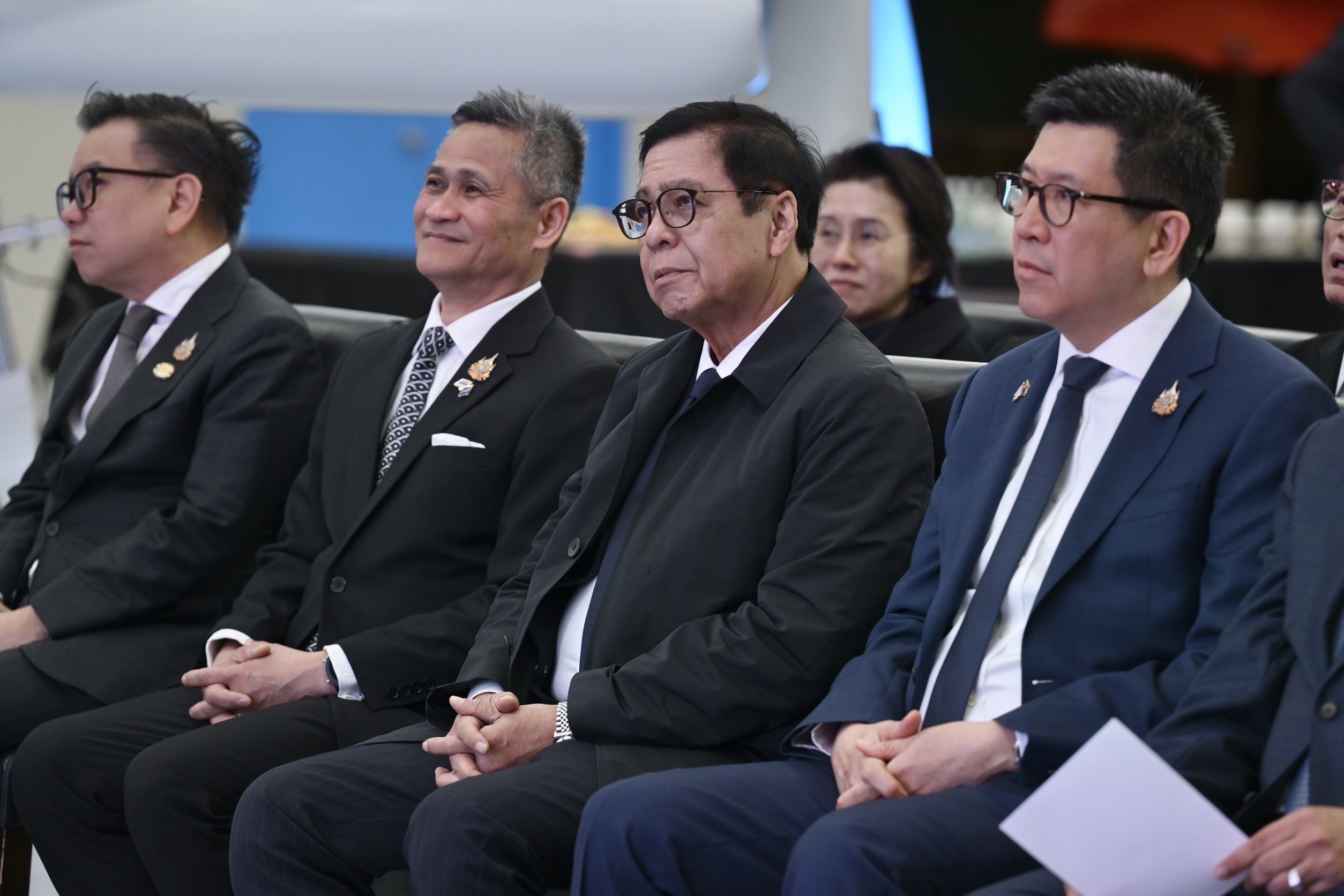
The Deputy Prime Minister and Minister of Foreign Affairs, Mr. Sihasak Phuangketkeow, spent 21 August 2026 at Ardmore Airport in Auckland to observe a briefing on New Zealand’s capabilities within the aviation industry (the statement does not mention any specific figures or details regarding the budget allocated for this observation). This engagement, alongside Prime Minister Anutin Charnvirakul, underscores Thailand’s continued utilization of NZAero’s aircraft – specifically for the Royal Rainmaking Project and as training assets for the Royal Thai Air Force. The matter is significant because it represents a sustained operational reliance on a foreign partner in a sector with immediate, tangible impacts, suggesting a prioritization of specialized capabilities rather than broader diplomatic engagement. (Read the full statement.)
Background
The visit occurred during an official visit to New Zealand. It involved a briefing delivered by Mr. Stephen Burrow, Executive of NZAero. The press release details the existing cooperation between Thailand and NZAero dating back to previous engagements. This engagement builds upon prior utilization of NZAero’s aircraft within the Royal Rainmaking Project – a program focused on precipitation enhancement – and their provision as training aircraft for the Royal Thai Air Force. The statement does not mention any formal agreements or timelines established during this visit.
Analysis
The Deputy Prime Minister’s attendance at the briefing highlights Thailand’s strategic approach to securing specialized capabilities through international partnerships. This is particularly evident in the continued utilization of NZAero’s aircraft for critical projects like the Royal Rainmaking Project, demonstrating a pragmatic approach to addressing national needs. The signing ceremony of a Memorandum of Understanding between Top Flying Limited and NZAero represents a step toward further operational collaboration. The Prime Ministers serving as witnesses signals an elevated level of engagement, though the specifics of this agreement remain opaque. This suggests a prioritization of demonstrable utility over broader diplomatic objectives.
Implications
The visit carries implications for Thailand’s approach to regional security and resource management. The ongoing reliance on NZAero’s aircraft for weather modification activities implicitly acknowledges the limitations of domestic capabilities in this area. Should the cooperation continue as described, it reinforces a model of external support for strategically important initiatives. Furthermore, the engagement with NZAero potentially influences Thailand’s broader strategy within ASEAN regarding collaborative efforts addressing climate change and natural disaster mitigation – though the statement does not address these connections.
Outlook
If the Memorandum of Understanding is fully implemented as described, it would represent a significant expansion of operational collaboration between Thailand and NZAero. Should this occur, Thailand could potentially leverage NZAero’s expertise to enhance its capabilities in weather modification and related fields. However, given the absence of information regarding long-term commitments or funding arrangements, any such outcome remains contingent on continued mutual interest and agreement; the statement does not address the potential for future expansion.
Conclusion
The briefing at Ardmore Airport reveals a strategic alignment between Thailand’s needs – particularly in weather modification – and the operational capacity of NZAero. The visit, however, leaves open the question of whether this reliance on specialized foreign partnerships will translate into broader advancements within Thailand’s technological or diplomatic priorities.