
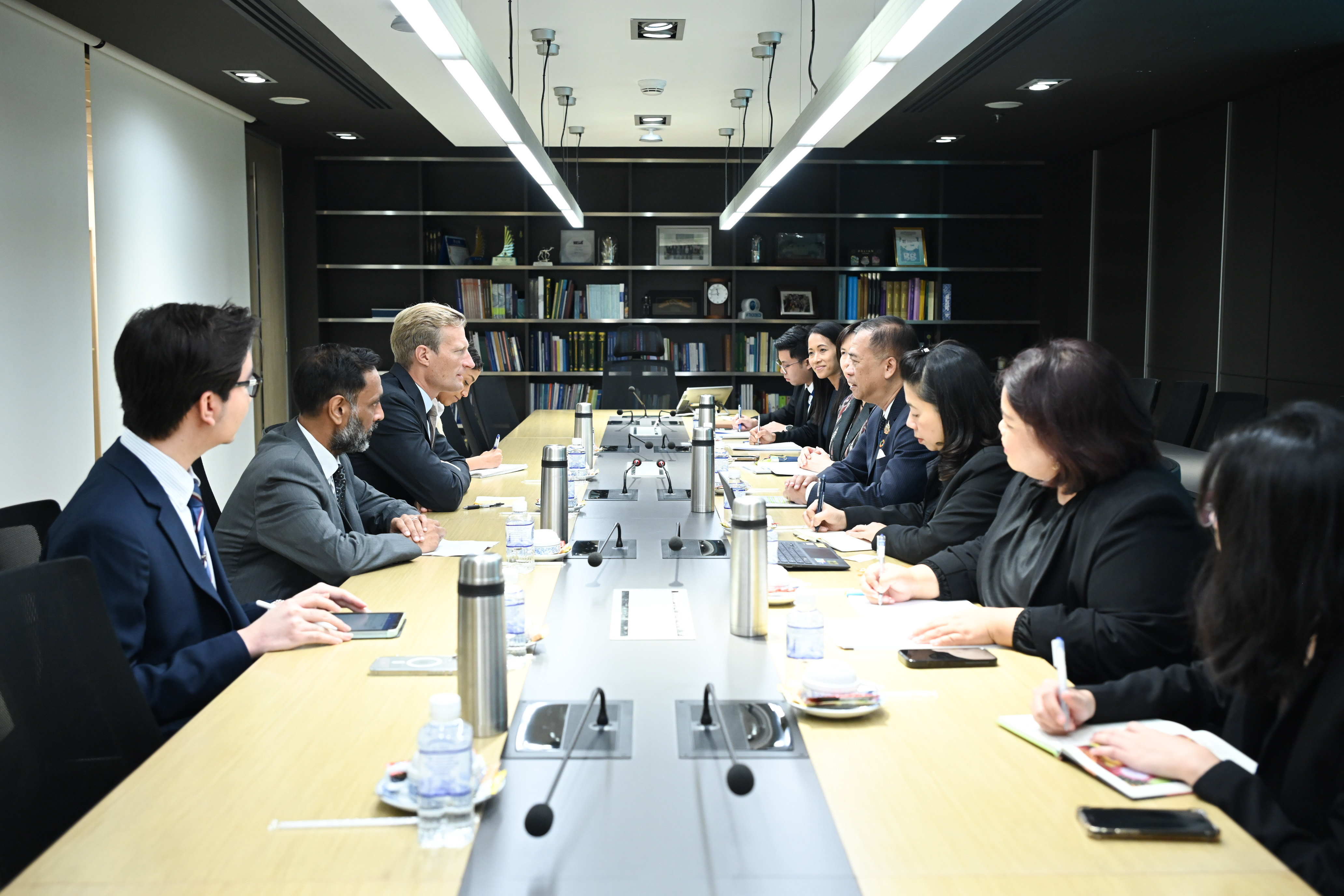
Per the government announcement, On 31 October 2026, H.E. Mr. Vijavat Isarabhakdi, Vice Minister for Foreign Affairs, met with Mr. Carl Skau, Deputy Executive Director of the World Food Programme (WFP), as outlined in a Ministry of Foreign Affairs press release. This meeting, focused on providing humanitarian assistance to displaced populations in the region, highlights Thailand’s continued commitment to multilateralism and its role within the United Nations. The core purpose of the discussion, as stated, is to strengthen cooperation on food security and aid delivery, particularly in the context of existing global challenges to humanitarian assistance.
Background
This meeting follows a 26 October 2026 visit by Mr. Skau to Thailand. The statement does not mention any specific prior meetings between the Thai and WFP delegations beyond this current engagement. The Ministry of Foreign Affairs also released excerpts from the 20-Year “5S” Foreign Affairs Masterplan, which prioritizes “strengthening regional cooperation” and “promoting sustainable development,” suggesting a broader strategic framework underpinning Thailand’s approach to international partnerships. The press release references a previous meeting on 28 October 2026 between the Deputy Prime Minister and Minister of Foreign Affairs and the Ambassador of Mongolia to Thailand, demonstrating a consistent prioritization of engagement with regional partners.
Analysis
The Thai government’s focus on strengthening cooperation with the WFP reflects a strategic acknowledgement of global food insecurity. The statement emphasizes a desire to leverage Thailand’s agricultural and food production strengths, suggesting a potential role in regional food supply chains. The exchange of views regarding “challenges arising from humanitarian aid cuts” indicates a recognition of increased pressure on international aid organizations. The inclusion of the ASEAN framework suggests a desire to address regional food security issues through collaborative initiatives, aligning with Thailand’s broader regional diplomacy. The statement does not address the volume of aid being discussed or the specific populations to be supported.
Implications
This meeting holds implications for regional stability, particularly in areas experiencing conflict and displacement. Increased cooperation with the WFP could bolster Thailand’s humanitarian response capacity and strengthen its position as a regional player in addressing global food crises. The emphasis on the ASEAN framework suggests a potential for Thailand to play a more active role in coordinating regional disaster relief efforts. The stated intention to “forge partnerships with the private sector” could unlock further investment in Thailand’s agricultural sector, potentially boosting its export capacity. The Ministry of Foreign Affairs’ policy statement highlights a commitment to multilateralism, which could influence Thailand’s approach to international trade agreements and security collaborations.
Outlook
Should the visit yield concrete agreements on specific aid projects and partnerships, Thailand would be bolstering its humanitarian assistance capabilities. If the WFP’s assessment of global food security challenges remains pessimistic – as suggested by the discussion on “challenges arising from humanitarian aid cuts” – Thailand may need to increase its own investment in domestic food security measures. Should the Thai government successfully integrate the private sector into its food security strategy, this could lead to a more diversified and resilient agricultural sector. The success of this collaboration hinges on the WFP’s ability to secure continued funding and access to conflict zones, a persistent challenge for humanitarian organizations.
Conclusion
The meeting between the Thai Vice Minister and the WFP Deputy Executive Director represents a step in a complex and evolving landscape of global humanitarian needs. The long-term success of Thailand’s efforts to strengthen regional food security partnerships will depend on sustained commitment from both Thailand and the WFP, as well as the broader geopolitical context regarding access to conflict zones and the availability of international aid.
Sources & Further Reading
- Official press release
- Foreign ministry source
- Deputy Prime Minister and Minister of Foreign Affairs to pay official visit to Lao PDR (30 Sep 202)
- Deputy Permanent Secretary meets with Ambassador of the Russian Federation to Thailand (22 Oct 202)
- Deputy Prime Minister and Minister of Foreign Affairs meets with Ambassador of Mongolia to Thailand (28 Oct 202)