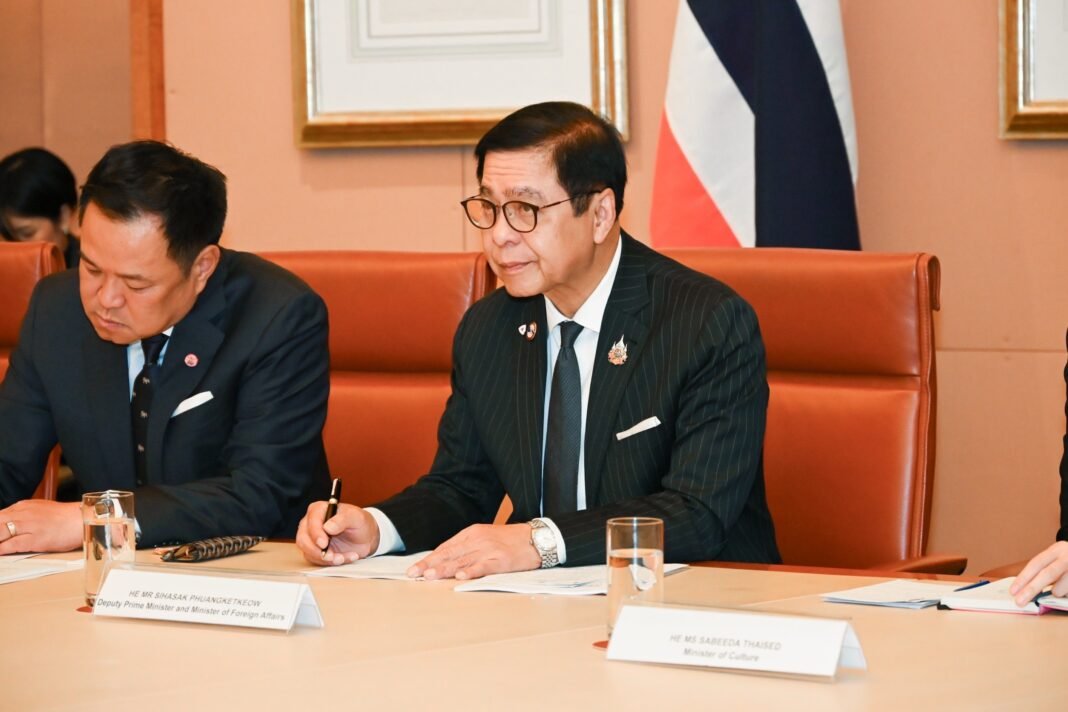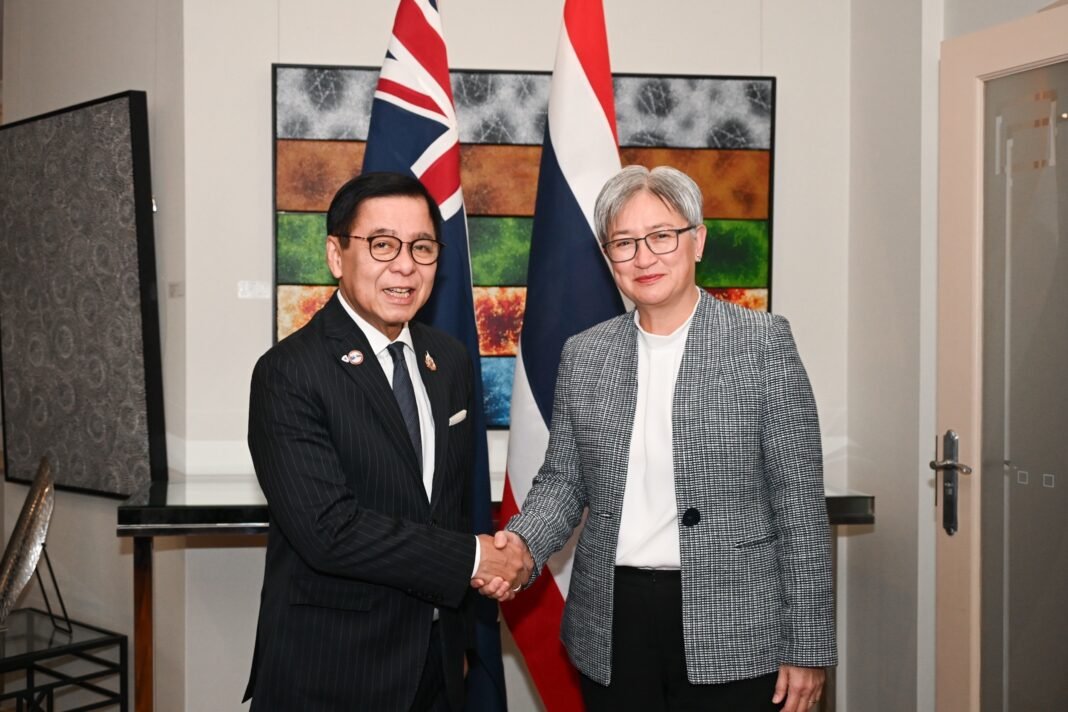
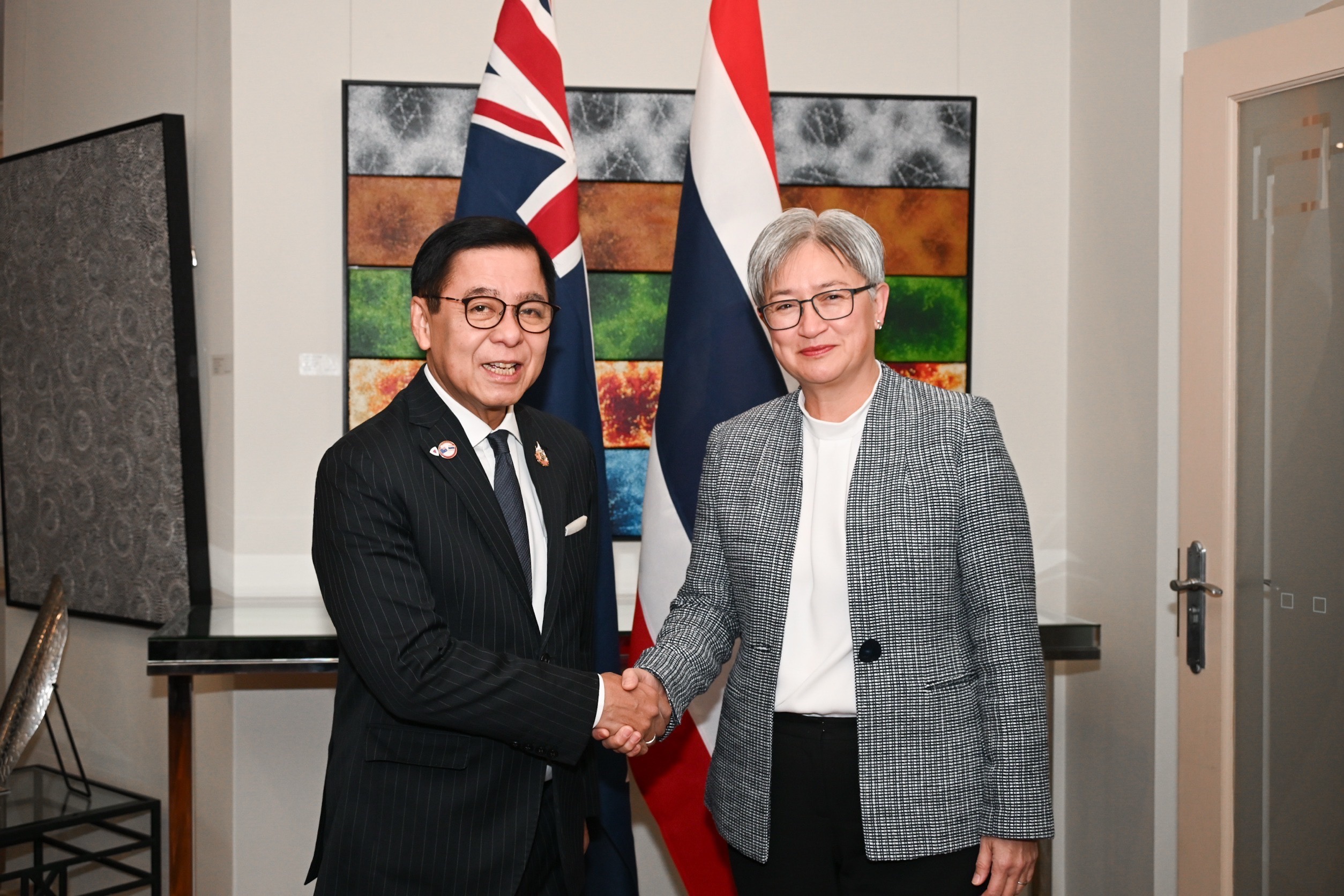
On August 19th, 2026, Deputy Prime Minister and Minister of Foreign Affairs Sihasak Phuangketkeow engaged in discussions with Senator Penny Wong, Australia’s Minister for Foreign Affairs, during the official visit of Prime Minister Anutin Charnvirakul to Canberra. The meeting, as detailed within the Ministry of Foreign Affairs press release, underscored a shared interest in bolstering regional and global security. This focus on ‘strengthening of regional and global security,’ as stated by the ministry, is particularly pertinent given the ongoing instability surrounding Myanmar. (Read the full statement.)
Background
The visit transpired within the framework established through Thailand’s “5S Foreign Affairs Masterplan,” a 20-year strategic initiative outlined in the Ministry of Foreign Affairs documentation. This plan, as indicated by the press release, prioritizes security and stability across Southeast Asia. The discussions centered on broadening existing cooperation, specifically referencing ‘exchanges of high-level visits,’ an element already formalized within Thailand’s diplomatic protocol. Furthermore, the talks addressed key regional developments – notably, the situation in Myanmar and the ongoing relationship with Cambodia.
Analysis
The Deputy Prime Minister’s stated ‘dual-track approach’ concerning Myanmar represents a delicate balancing act. The release highlights Thailand’s commitment to supporting the peace process through ‘good faith dialogue,’ while simultaneously acknowledging the need for gradual trust-building with Cambodia. This strategy, if implemented as described, suggests a prioritization of pragmatic engagement over immediate resolution. The shared interest in regional security clearly positions Australia as a potential partner in this effort. The exchange of views on the Thailand – Cambodia situation indicates an awareness of persistent tensions and a desire to mitigate potential escalation.
Implications
This meeting carries implications for regional stability, particularly regarding Myanmar where the statement does not address the ongoing conflict. Should the visit yield further collaboration with Australia on diplomatic efforts, it could strengthen Thailand’s position as a mediator. The deepening of security ties also has ramifications for trade and security relations between the two countries. Continued cooperation may lead to increased defense collaborations or intelligence sharing, though the press release does not address specific areas of potential joint operations.
Outlook
If the dialogue continues to focus on regional stability and confidence-building measures, Thailand’s approach to Myanmar could gain further traction. Should this diplomatic engagement prove unsuccessful in achieving a lasting ceasefire or facilitating meaningful peace talks, Thailand’s reliance on Australia for security support is likely to increase. The statement does not address whether increased defense cooperation would be considered as an alternative path.
Conclusion
The meeting between the Deputy Prime Minister and Senator Wong underscores a strategic alignment within Southeast Asia, but leaves open the question of concrete action. Thailand’s commitment to dialogue remains central, yet the underlying challenges – particularly in Myanmar – demand sustained international attention.