
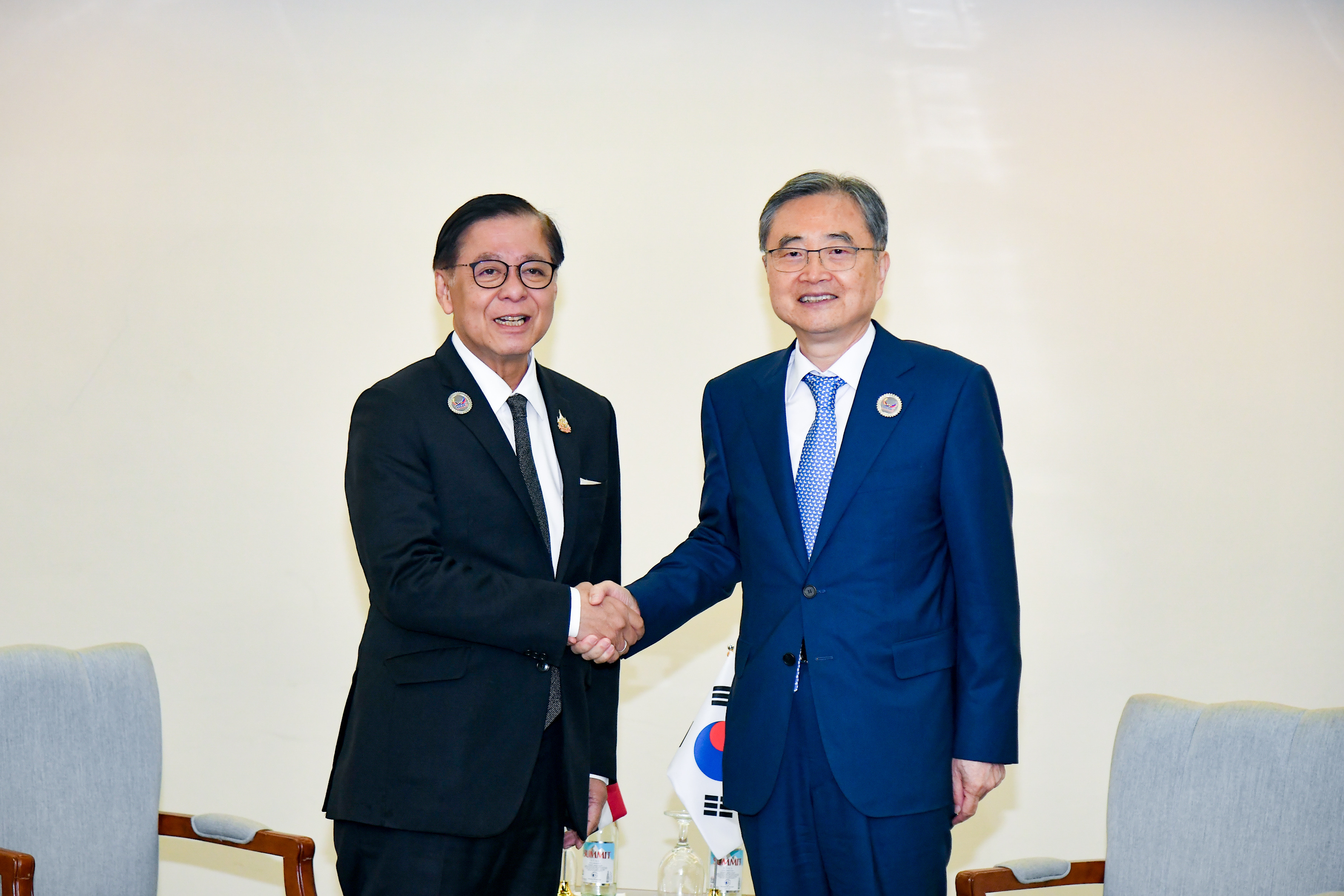
A ministry communiqué confirms that On July 22, 2026, Deputy Prime Minister and Minister of Foreign Affairs Sihasak Phuangketkeow engaged in a bilateral meeting with his South Korean counterpart, Cho Hyun, during the 59th ASEAN Foreign Ministers’ Meeting in Manila. This event matters because it represents a formalized commitment from both nations to bolster already existing security cooperation – specifically addressing emerging threats like transnational crime and online scams. The focus on these areas reflects a growing concern within Southeast Asia regarding evolving criminal networks and their impact.
Background
The Thailand–Republic of Korea Strategic Partnership has been developing incrementally over the past decade, largely driven by economic considerations. Prior to this meeting, several high-level visits had occurred, primarily focused on trade agreements and investment flows. The formalization of a ‘5S’ Foreign Affairs Masterplan, as outlined within the MFA’s policy statements (as of July 2026), emphasizes security cooperation among its core pillars – Stability, Security, Sustainability, Support, and Strategic Engagement. This strategic partnership is further underpinned by the ongoing negotiations on the Thailand–Republic of Korea Comprehensive Economic Partnership Agreement (CEPA), a key element in deepening economic ties.
Analysis
The primary incentive for Thailand to strengthen security cooperation with South Korea appears rooted in shared vulnerabilities. Both nations face significant challenges related to transnational crime, including the facilitation of illicit financial flows and the exploitation of vulnerable populations through online scams. The agreement’s emphasis on “closer law enforcement cooperation, capacity-building” suggests a recognition that existing domestic capabilities are insufficient to effectively combat these evolving threats. This signals an intent to leverage South Korea’s technological expertise and investigative resources. The inclusion of discussions regarding the defense industry – specifically “cooperation in the defense industry” – is notable, though the statement does not address the specific types of collaboration being considered or the potential implications for Thailand’s strategic alignment with other regional powers.
Furthermore, the engagement on Myanmar and Thailand-Cambodia situations indicates a desire to maintain influence within Southeast Asia. The Republic of Korea appreciating Thailand’s role as ASEAN-Republic of Korea Country Coordinator highlights Thailand’s continued relevance in regional diplomacy. However, the statement does not address the underlying complexities or potential disagreements within the ASEAN framework surrounding these sensitive issues.
Implications
This meeting has significant implications for regional stability. Enhanced security cooperation between Thailand and South Korea could contribute to a more secure environment in Southeast Asia, particularly by disrupting criminal networks operating across borders. The agreement’s focus on capacity-building suggests a potential long-term commitment from South Korea to assist Thailand in strengthening its law enforcement capabilities. From a trade perspective, the accelerated negotiations on the CEPA represent a tangible step towards deepening economic integration between the two nations, potentially boosting bilateral trade flows.
More broadly, the meeting underscores the shifting geopolitical dynamics within Southeast Asia. The Republic of Korea’s appreciation of Thailand’s role as ASEAN-Republic of Korea Country Coordinator suggests an attempt to solidify South Korea’s position within the ASEAN framework – a region increasingly viewed through the lens of strategic competition.
Outlook
Should the visit yield further commitments on law enforcement cooperation, Thailand could see increased assistance from South Korea in combating online scams and related criminal activities. If the CEPA negotiations proceed successfully, it would represent a significant boost to Thailand’s export-oriented economy. However, should South Korea’s engagement with Myanmar remain limited – as currently indicated by the exchange of views on that situation – Thailand risks further marginalization within ASEAN discussions regarding this critical regional challenge.
Conclusion
The bilateral meeting in Manila represents a strengthening of a strategic partnership, but it ultimately leaves open questions about Thailand’s broader role and influence within the evolving geopolitical landscape of Southeast Asia. The sustainability of this alliance hinges on continued commitment to shared security priorities and a more nuanced approach to regional diplomacy.