
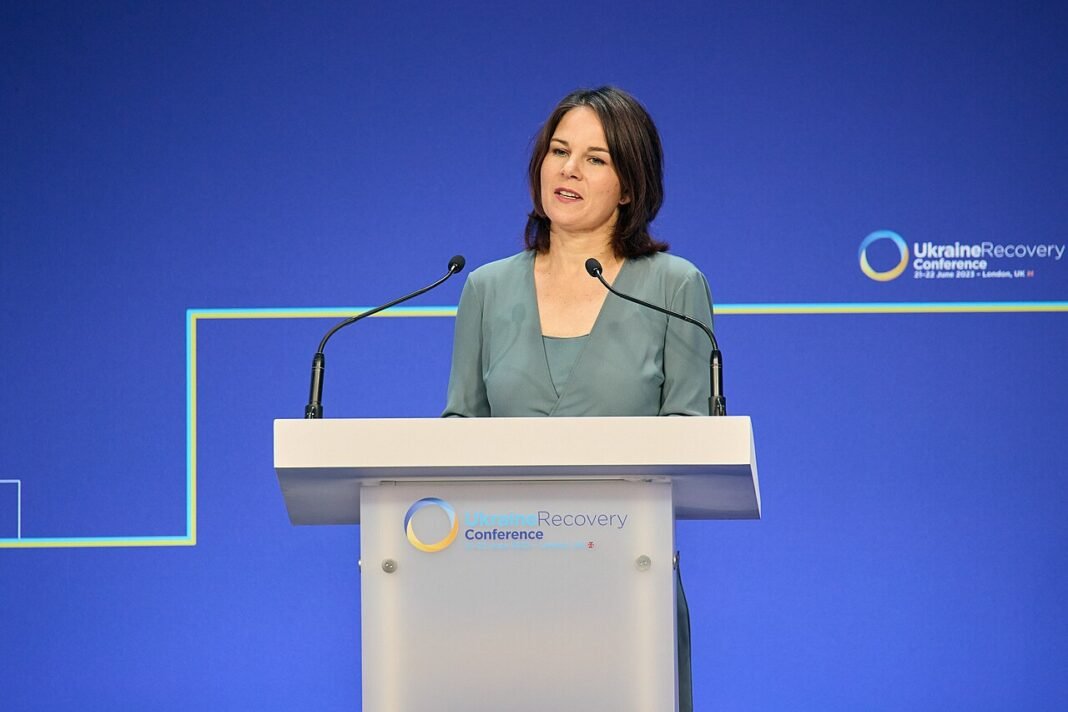

A ministry communiqué confirms that
Background
The statement does not mention specific dates or prior meetings beyond welcoming Maroš Šefčovič, European Commissioner for Trade and Economic Security. It references a “Business Forum” at the German Foreign Ministry, an annual event. The press release highlights a shift within the ministry’s structure, creating a new department integrating geoeconomics with European affairs. This change is linked to adapting to budgetary constraints, including planned staff reductions of 8%. The statement does not detail the specific reforms or the federal budget implications.
Analysis
The core message centers on navigating a deteriorating global economic environment characterized by increased geopolitical instability. The stated dependence on exports – representing roughly one in four jobs – underscores Germany’s vulnerability to external shocks. The emphasis on “partner-oriented” economics, reliant on inputs like energy and critical raw materials, reveals an acknowledgement of strategic dependencies. The announcement reflects a recognition that traditional trade relationships with the US and China are increasingly challenged by non-market policies and undervalued currencies. This suggests a need for diversification beyond established partnerships. The framing of the situation as “politically contested markets” indicates a shift in operational strategy.
Implications
For policymakers, this signals a prioritization of European Union integration as a crucial element of Germany’s economic resilience. Strengthening the EU as a geoeconomic powerhouse is framed as essential for defending values and securing prosperity. The reforms within the Foreign Ministry imply a more proactive role in shaping trade relations and mitigating external risks. This could translate into increased diplomatic efforts to secure favorable trade agreements, particularly with MERCOSUR. The statement’s focus on reducing strategic dependencies has immediate implications for Germany’s industrial base and supply chain management.
Outlook
Should the visit yield a strengthened commitment to diversification as outlined, the German government will likely pursue further Free Trade Agreements – notably with Maroš Šefčovič – to reduce reliance on traditional trade partners. If the European Union continues to deepen its single market and implement industrial policy packages, it could provide a buffer against global economic fragmentation. However, should geopolitical tensions escalate significantly—as evidenced by Russia’s ongoing aggression in Ukraine—Germany will likely prioritize de-risking strategies, including measures to protect critical infrastructure and reduce strategic dependencies.

.jpg)