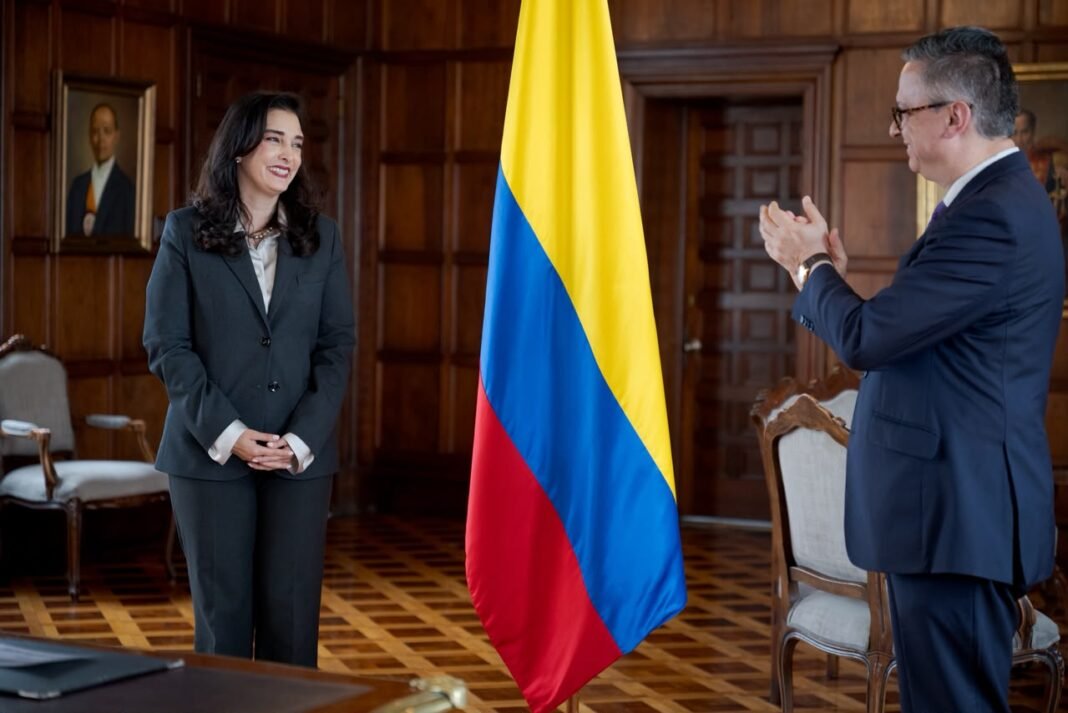
The official readout frames the trip as Bogotá, 15 de octubre de 2026. The appointment of Adela Maestre Cuello as Vice-Minister of Foreign Relations represents a significant step for Colombia’s foreign policy. The statement, released by the Ministry of Foreign Affairs, details Maestre Cuello’s extensive background, encompassing legal, diplomatic, and international experience, alongside a proven record in public service and the promotion of regional cooperation. This appointment, noted the Ministry, comes at a time of heightened global geopolitical complexity, and the statement does not address the immediate implications for Colombia’s relationships with key regional partners.

Background
Prior to her appointment, the Ministry of Foreign Affairs, in March the ministry said, was strengthening merit and professionalization within the Colombian foreign service. This initiative, designed to bolster expertise and efficiency, aimed to elevate the standards of the Carrera Diplomática y Consular de Colombia. Maestre Cuello’s career reflects a consistent pattern of engagement across diverse diplomatic roles, beginning with her work as a Commissioner of Television and as the President of the Colombian Association for the Promotion and Defense of the Audiovisual Industry (APDIF). The statement does not mention any specific prior agreements that may influence her current responsibilities.
Analysis
Maestre Cuello’s background strongly suggests a commitment to strengthening Colombia’s regional ties. Her previous role as Director of Regional Concertation and Integration Mechanisms within the Ministry of Foreign Affairs, as detailed in the statement, highlights a sustained focus on promoting dialogue and cooperation with neighboring countries and multilateral organizations. This experience, coupled with her time managing the Oficina Subregional para los Países Andinos of the Ibero-American General Secretariat (SEGIB), indicates a strategic emphasis on Andean regionalism. The statement does not address the potential impact of this appointment on Colombia’s broader foreign policy objectives, particularly regarding trade and security.
Implications
The appointment of Maestre Cuello carries implications for Colombia’s foreign policy strategy. Should the visit yield a renewed commitment to regional integration, as indicated by her previous role, it could potentially strengthen Colombia’s position within organizations like the Ibero-American Secretariat. Furthermore, her experience as Consul General in Santiago de Chile and as Ambassador to Paraguay – responsibilities from which she promoted bilateral relations and defended national interests – suggests a pragmatic approach to diplomatic engagement. The statement does not address the potential impact on Colombia’s relations with the BRICS countries, or its engagement with global trade agreements.
Outlook
Should the new Vice-Minister prioritize strengthening regional partnerships, Colombia could anticipate increased collaboration with countries in the Andean region. If the Ministry’s stated goal of fostering dialogue and cooperation with international actors is fully realized, it could lead to renewed efforts to mediate regional conflicts and promote sustainable development. The statement does not address the potential for increased diplomatic activity or the allocation of resources to support these initiatives.
Conclusion
Adela Maestre Cuello’s arrival at the Ministry of Foreign Affairs presents an opportunity to recalibrate Colombia’s foreign policy approach, but the statement does not address the immediate challenges facing the department. The critical question remains: will her experience translate into a discernible shift in Colombia’s engagement with the international community, or will the ministry continue to operate within a framework of established priorities?