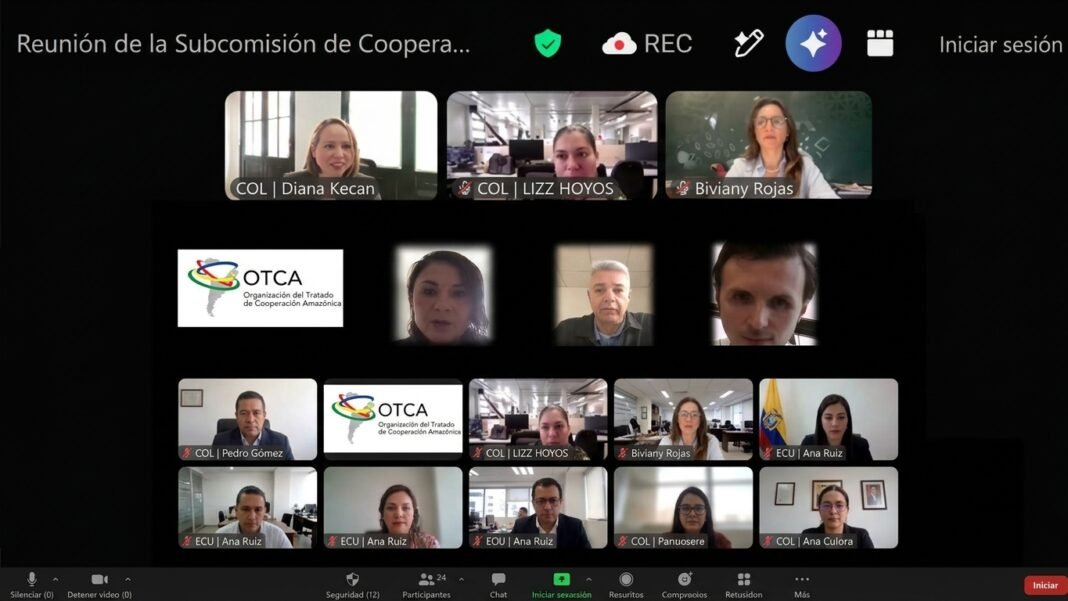
The official readout frames the trip as Colombia will coordinate regional public safety issues in the Amazon within the framework of the Andean Trade Integration Mechanism (OTMA), with a commitment to contributing to the implementation of effective strategies to respond to current challenges in terms of public safety. This commitment, announced on October 8, 2026, by the Ministry of Foreign Affairs, is rooted in a renewed emphasis on the Subcommission for Public Safety of the Special Commission on Public Safety and Transnational and Transborder Illicit Activities in the Amazonian region (CESPIT).

Background
The OTMA, established in 1995, is an intergovernmental organization comprised of Colombia, Brazil, Ecuador, Peru, and Bolivia. The CESPIT, established in 2018, operates under the OTMA’s umbrella, specifically addressing security challenges within the Amazon. The statement does not mention specific prior meetings or agreements that led to this coordination. It does, however, indicate continuity with existing work within the CESPIT, highlighting a phased approach to strategy development.
Analysis
The Colombian government’s stated commitment reflects President Abelardo de la Espriella’s priorities, as outlined in the release. This action suggests a recognition of the escalating transnational criminal activity impacting the Amazon – specifically, illicit drug trafficking, illegal mining, and deforestation – and a desire to strengthen regional cooperation to address these threats. The involvement of multiple ministries – Foreign Affairs, Defense, Environment, and Justice – signals a multi-faceted approach, recognizing the interconnected nature of the challenges. The focus on “good practices” and “benchmarking” implies a desire to learn from established models of regional security cooperation.
If implemented as described, this initiative could represent a significant shift in Colombia’s regional role, moving beyond traditional economic engagement to a more prominent position in security matters. The emphasis on “monitoring and early warning mechanisms” indicates a proactive strategy, aiming to anticipate and mitigate potential threats before they escalate. This suggests a desire to enhance the OTMA’s effectiveness in tackling complex security issues within the Amazon.
Implications
For policymakers, Colombia’s leadership within the OTMA carries implications for regional stability. Should the visit yield a strengthened regional security framework, it could incentivize other member states to increase their engagement in combating transnational crime. The focus on environmental protection, linked to the fight against illegal mining, has direct implications for biodiversity conservation efforts within the Amazon. Furthermore, the coordination could influence trade agreements, potentially requiring stricter regulations to address illicit goods moving through the region. The statement does not address potential impacts on trade flows or investment patterns.
Outlook
Should the coordination efforts prove effective, contingent upon the continued commitment of all OTMA members, it could lead to a more coordinated approach to addressing security threats. If the “mechanisms of monitoring and alerts” are successfully implemented, it may facilitate quicker responses to emerging crises. However, the statement does not address potential obstacles, such as differing national priorities or capacity limitations within member states. It remains to be seen whether the initiative will translate into tangible results or remain a largely symbolic gesture.
Conclusion
Colombia’s assumption of leadership within the OTMA’s security agenda presents a key opportunity for regional cooperation, but the success of this endeavor hinges on the sustained political will of its member states. The ultimate test will be whether this renewed focus on public safety can translate into a demonstrable reduction in illicit activities and a tangible improvement in the security and well-being of the Amazonian region.