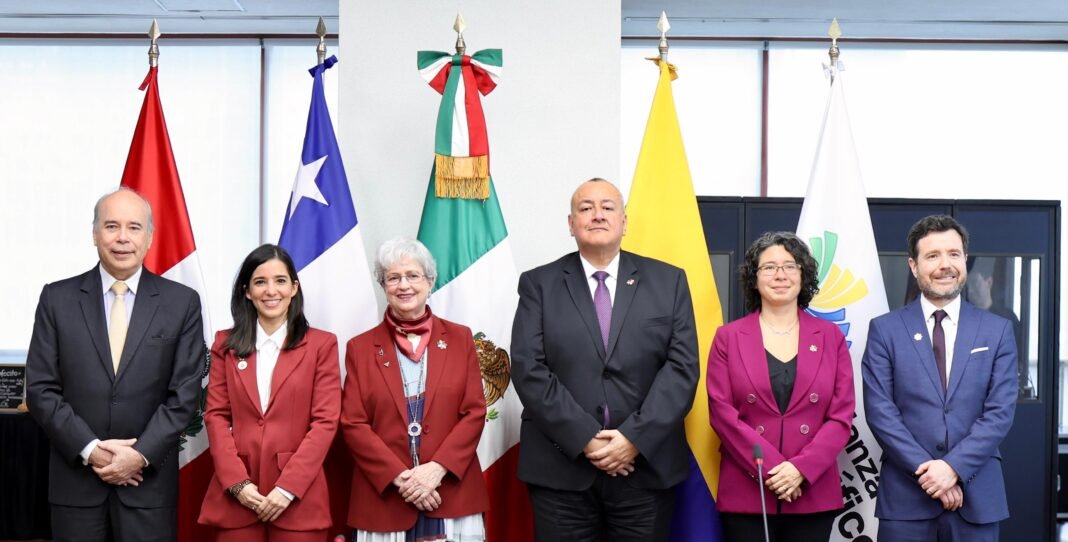
A ministry communiqué confirms that Bogotá, 16 de octubre de 2026. The Ministry of Foreign Affairs has filed the necessary legislative instruments to ratify the Free Trade Agreement between the Pacific Alliance and Singapore (PASFTA) and the Second Modification Protocol to the Framework Agreement. This action represents Colombia’s objective to expand commercial and investment opportunities and strengthen its economic integration with Asia-Pacific. The announcement was made by Vice-Minister of Multilateral Affairs, Daniella Restrepo, during the II High-Level Meeting of the Pacific Alliance, under the Pro Tempore Presidency of Mexico. The statement reflects a key aspect of Colombia’s foreign policy, focused on bolstering economic competitiveness through attracting foreign investment and leveraging trade agreements.

Background
The Pacific Alliance constitutes a market of 236 million potential consumers and represents 43% of the GDP and 57% of total trade in Latin America and the Caribbean, according to 2024 figures. The 92% of trade between its member countries benefits from zero tariffs, facilitating commercial opportunities for the bloc’s companies. In March the ministry said Colombia was “impulsing trade, digital transformation and strengthening of SMEs in the agenda Pacific Alliance-ASEAN,” demonstrating an ongoing interest in this regional collaboration. Prior to this, on 8 October 2026, Colombia and the Association of Southeast Asian Nations (ASEAN) agreed to strengthen cooperation for the development of the Caribbean, as confirmed by a meeting between Vice-Minister Restrepo and ASEAN Secretary-General Noemí Espinoza. The government’s stated aim is to leverage these partnerships to generate new trade, investment, and sustainable development opportunities, consolidating Colombia as a key connection within the Asia-Pacific region.
Analysis
The ratification of the PASFTA is primarily driven by economic incentives – access to a vast consumer market and opportunities for Colombian exports. The inclusion of Singapore as a potential Alliance associate represents a strategic move to broaden Colombia’s engagement within the Asia-Pacific, particularly given the country’s significant import activity (more than 90% of its food consumption). However, the statement does not address the potential impact of this agreement on Colombia’s existing trade relationships, particularly with other Latin American countries. The move also highlights a broader effort to strengthen Colombia’s diplomatic presence in Asia-Pacific, aligning with the country’s fifth pillar of foreign policy – a focus on economic competitiveness through investment attraction and trade promotion. The inclusion of provisions on services transborder commerce, foreign investment, public procurement, e-commerce, telecommunications, and temporary entry of businesspeople indicates a comprehensive approach to trade liberalization.
Implications
For policymakers, the ratification of the PASFTA signals a commitment to diversifying Colombia’s trade portfolio beyond traditional Latin American partners. Should the visit yield the desired outcome of Singapur’s inclusion, it could bolster Colombia’s economic growth and attract foreign investment. Regionally, the move strengthens Colombia’s position within the Pacific Alliance, potentially increasing its influence within the bloc. From a security perspective, the agreement could facilitate greater cooperation on issues such as maritime security and trade facilitation, though the statement does not address these specific areas. The deal’s impact on Colombia’s trade balance and the competitiveness of Colombian industries remains a key consideration.
Outlook
If the visit to Singapur yields a formal agreement on the country’s inclusion as the first Associated State of the Pacific Alliance, Colombia’s efforts to deepen its engagement with Asia-Pacific will be significantly accelerated. Should the negotiations fail to achieve a formal agreement, Colombia will continue to pursue bilateral trade agreements and to strengthen its relationship with the ASEAN bloc through the existing network of 64 observer states. The government’s continued focus on strengthening the relationship with the Inter-American Development Bank (IDB) to support external relations of the Pacific Alliance further demonstrates a commitment to long-term economic development.
Conclusion
The ratification of the PASFTA represents a significant step, but the ultimate success of Colombia’s strategy hinges on the concrete benefits derived from Singapur’s inclusion as an Alliance associate – a question that remains unanswered as of this reporting.