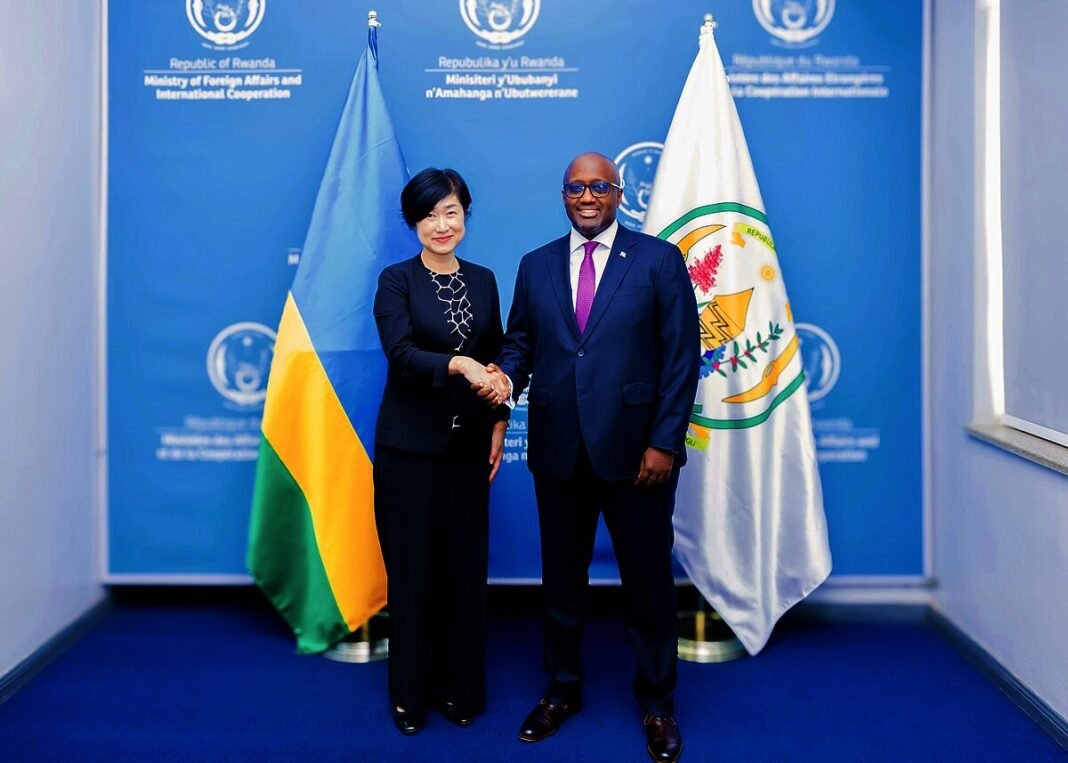
Bogotá, 15 October 2026 – The Colombian Ministry of Foreign Affairs announced that Director Katherine Diartt Pombo held meetings with representatives from Uruguay and Brazil, focusing on bolstering trade agreements and operationalizing existing cooperation projects. This initiative, aligned with President Abelardo De La Espriella’s strategy, aims to generate opportunities for Colombian businesses, create employment, and facilitate the transfer of technology, directly benefiting the national interest. The statement does not address the specific value of these trade agreements or the total investment involved. — the full statement has further detail.

Background
The Colombian Ministry of Foreign Affairs is directing international cooperation under the strategic mandate of tangible, measurable results that benefit the nation’s interests. Director Diartt Pombo’s meetings with the Uruguayan Ambassador, Mercedes Corominas Galloso, and the Brazilian Minister Counselor, Ciro Leal, represent a continuation of this approach. The existing cooperation program with Uruguay, currently 100% executed, is slated for renewal in 2027, contingent upon the IX Commission Mixed of Technical and Scientific Cooperation, to be presided over by Uruguay. The statement does not mention any prior commissions or their specific mandates.
Analysis
The stated objectives – generating opportunities for Colombian businesses, creating employment, and transferring technology – represent a key component of President De La Espriella’s broader economic strategy. The emphasis on “reciprocity and mutual benefit” suggests a deliberate attempt to address concerns about the balance of power in these bilateral relationships, particularly with Brazil, where project execution currently lags at 27.08% according to the Agencia Presidencial de Cooperación Internacional de Colombia (APC-Colombia) report from August 2026. The inclusion of six projects under each agreement – two of each type – indicates a commitment to sustained engagement, though the differing levels of project completion (100% for Uruguay, 27.08% for Brazil) reveal potential disparities in resource allocation or project management capacity. The statement does not address the factors contributing to these differences.
Implications
For Colombia, the renewed focus on bilateral cooperation carries significant implications for its regional trade strategy. Successfully operationalizing these projects could strengthen ties with key trading partners, particularly Brazil, a major market for Colombian exports. However, the varying project execution rates raise questions about Colombia’s ability to effectively manage and leverage these partnerships. Should the visit yield a renewed commitment from Brazil, it would bolster Colombia’s efforts to diversify its export markets and reduce reliance on traditional partners. The statement does not address the potential impact on Colombia’s broader trade policy.
Outlook
If the IX Commission Mixta is successfully convened and presided over by Uruguay, and if a revised framework is established, the program could be reinvigorated, particularly if Brazil demonstrates a renewed commitment to project execution. Should the Brazilian projects achieve a 50% completion rate by the end of 2027, it would signal a significant shift in the dynamics of the relationship. However, if the current trends persist, the program could be deemed ineffective, potentially damaging Colombia’s credibility as a reliable partner. The statement does not address potential contingency plans or risk mitigation strategies.
Conclusion
The meetings between Colombian and Brazilian officials, coupled with the renewed emphasis on bilateral cooperation, represent a strategic effort to bolster economic ties. The ultimate success of this initiative, however, hinges on Colombia’s ability to drive project implementation and achieve measurable outcomes – a challenge that remains unresolved.