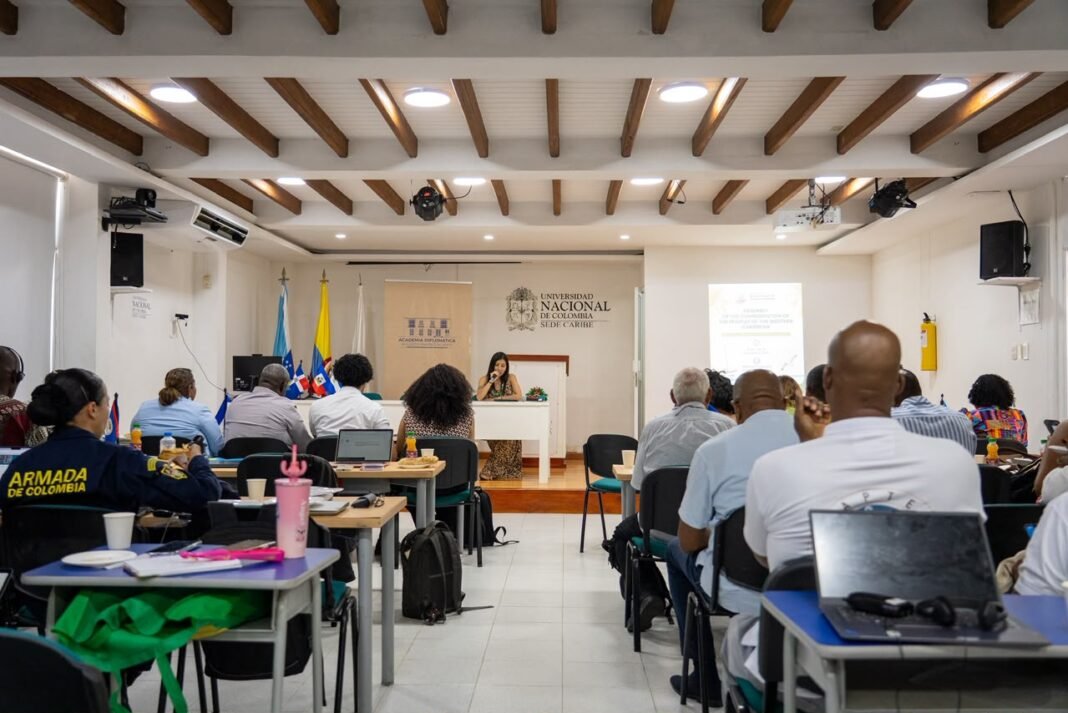
San Andrés Isla, Colombia, July 31 – The Archipiélago de San Andrés, Providencia y Santa Catalina is preparing to receive delegations from various peoples in the Assembly of the Confederation of Peoples of the Western Caribbean (CPCO). This event, scheduled for July 29th to August 2nd, 2026, marks a historic milestone in consolidating an autonomous political articulation mechanism and cooperation between the peoples of the Greater Caribbean West. The statement does not address specific funding mechanisms or security arrangements related to this assembly. — the full statement has further detail.

Background
The CPCO Assembly is conceived as a high-level, in-person mission functioning as a theoretical-practical laboratory of “people’s diplomacy.” During four days, leaders from the Raizal, Creole, Miskito, Garifuna, Afrocostarican and AfroPanamanian peoples, among others, will participate in applied training sessions and political deliberations to strengthen their regional and international advocacy capabilities. This process is supported strategically by Colombia’s Ministry of Foreign Affairs through the Academy of Diplomacy Augusto Ramírez Ocampo and the Directorate of Border Integration and Development, alongside APC Colombia and the National University of Colombia – Caribbean Campus. The event precedes the III Summit of Peoples of the Western Caribbean, scheduled for December 2026 in Bocas del Toro, Panama.
Analysis
The core objective of this meeting is to formalize the normative and programmatic structure of the Confederation, a purpose to which Colombia’s Ministry of Foreign Affairs has decisively contributed through the director of the Academy of Diplomacy, Harol González Duque. Beyond organizational formalization, the assembly seeks to achieve the adoption of the Biannual Action Plan 2026-2027, as well as the design of routes for economic integration, fair trade, and regional connectivity. The statement does not address potential challenges related to coordinating diverse national interests within this framework.
The Observatory of Foreign Policy from the Academy of Diplomacy will deliver to delegates of the Assembly the research product produced in the framework of the II Western Caribbean Peoples Summit, tracking commitments made by the Ministry in that context. The formal delivery of this research to the National University of Colombia in San Andrés is anticipated, as well as the systematization of the commitments and achievements of the meeting for the III Summit.
This event coincides with Raizal People’s Emancipation Week, commemorated every August 1st – a date celebrating the abolition of slavery on the Archipelago in 1834. This shared memory is held by English-speaking Caribbean territories and Creole and Garifuna peoples of Central America. The timing gives the Assembly profound unifying symbolism.
Implications
The Assembly’s success could significantly bolster Colombia’s regional influence within the CPCO, providing a platform to advocate for its interests on issues ranging from maritime rights to sustainable development. This suggests that the Colombian government views the Confederation as a key instrument in shaping the geopolitical landscape of the Caribbean region. The formalization of the plan also carries implications for trade relations and access to resources within the Western Caribbean.
Outlook
Should the visit yield the adoption of the Biannual Action Plan, and if implemented as described, Colombia could strengthen its position as a central player in regional economic integration. If the III Summit successfully builds upon the momentum generated by the Assembly, it would represent a significant step towards greater collective governance among Caribbean peoples. The statement does not address potential disagreements or obstacles that may arise during negotiations.
Conclusion
The ambitious goals of the CPCO Assembly – formalizing its structure and achieving concrete outcomes – ultimately hinge on the willingness of diverse stakeholders to compromise and collaborate. The question remains: will this event truly foster a sustainable mechanism for collective action, or simply become another iteration in a complex web of regional diplomacy?