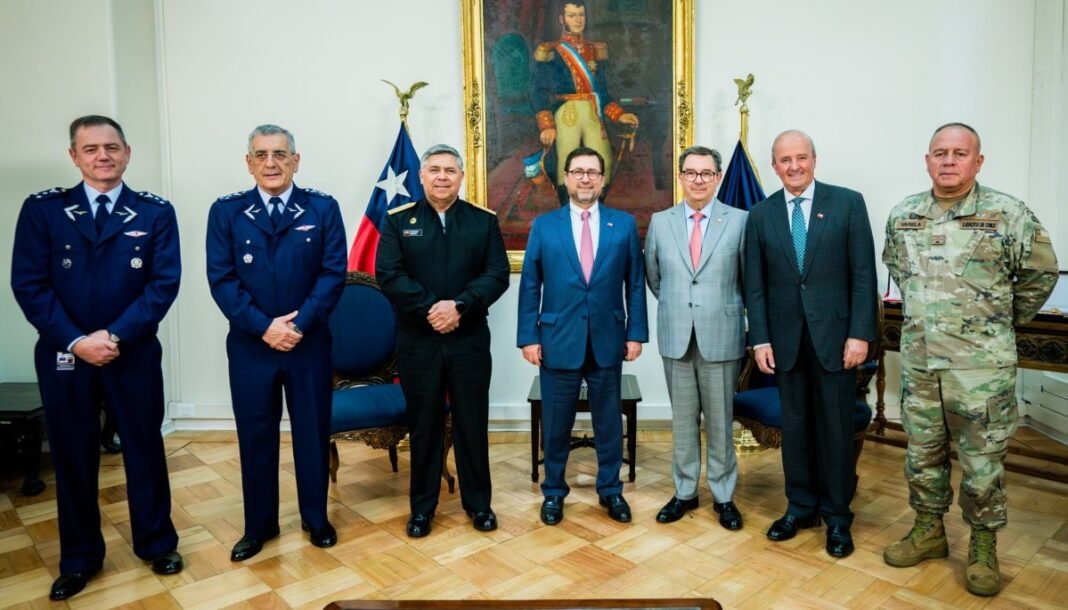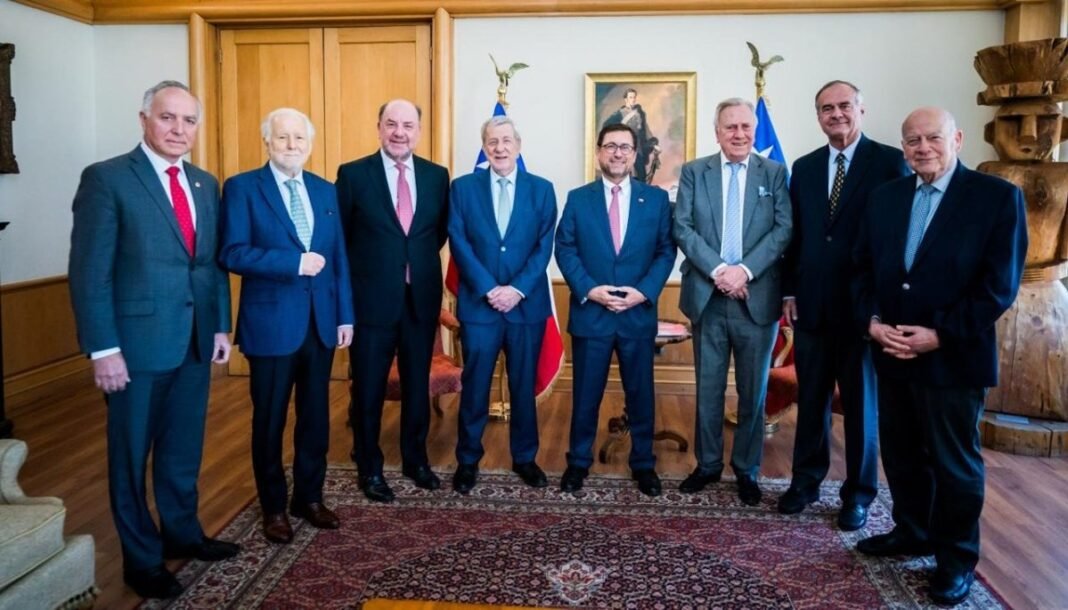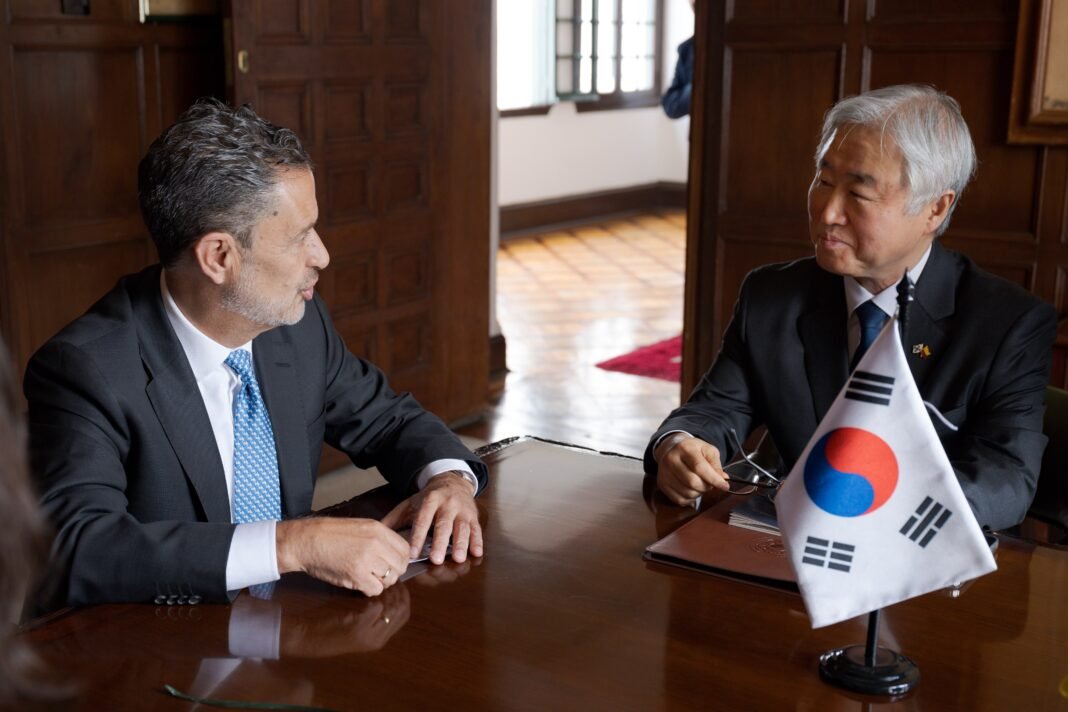
The foreign ministry readout describes The Minister for Foreign Affairs, Omar Bula Escobar, met with the Ambassador of the Republic of Korea in Colombia, Choi Hyun-Koog, on September 10, 2026, to discuss new opportunities for strengthening the Strategic Cooperation Association and its status as a Priority Partner Country. This meeting, focused on trade, investment, and technological modernization, highlights a deepening strategic alignment between the two nations. The core objective, as stated by the Ministry, is to bolster the existing relationship and expand areas of mutual benefit.

Background
The meeting occurred in the context of ongoing efforts to consolidate Colombia’s relationship with the Republic of Korea. Prior to this meeting, the Ministry of Foreign Affairs, in a statement on September 11, 2026, announced advancing relations with Lebanon, highlighting a commitment to strengthening trade, tourism, political dialogue, and international cooperation. The Korean government’s interest in Colombia stems from the country’s position as the only active Free Trade Agreement with an Asian nation for Colombia.
Analysis
The Colombian government’s stated intentions—specifically, the pursuit of technological renewal, increased trade, and investment—represent a strategic prioritization. This approach seeks to leverage Korea’s established expertise and financial resources to address Colombia’s developmental needs. The ambition to establish Korea as a Priority Partner Country underscores Colombia’s desire for deepened engagement with a global power. This is not merely a trade agreement; it’s a deliberate positioning of Colombia within a broader geopolitical landscape. The inclusion of the veteran support initiative—a direct response to the August 10th earthquake—demonstrates a commitment to humanitarian solidarity and a recognition of shared historical ties, particularly through the Korean International Cooperation Agency (KOICA), which has channeled over $118 million in cooperation since 2009.
Implications
For Colombia, the strengthened association with Korea holds significant implications. The potential for increased trade flows, facilitated by the existing Free Trade Agreement, represents a tangible economic opportunity. Furthermore, the prospect of technological modernization, supported by Korean financial institutions like Korea Eximbank and the EDCF, could catalyze advancements in key sectors. The formalization of this partnership also carries implications for Colombia’s regional stability, potentially influencing its engagement with other international actors. The successful implementation of the agreement, contingent upon legislative approvals, could further solidify Colombia’s position as a key player within the Asia-Pacific region.
Outlook
Should the visit yield a commitment to advancing the Free Trade Agreement and securing funding for infrastructure projects through the EDCF, Colombia’s economic growth could be stimulated. If the legislative process surrounding the agreement’s implementation proceeds smoothly, it would represent a crucial step towards realizing the stated objectives. However, the success of this endeavor hinges on Colombia’s ability to meet the conditions stipulated by the Korean government, particularly regarding the formalization of the agreement and subsequent financial commitments.
Conclusion
The deepening relationship between Colombia and Korea underscores a strategic alignment built on shared interests and mutual investment. The question remains whether this partnership will translate into tangible, sustainable development outcomes for Colombia, or if it remains primarily a framework for future cooperation.