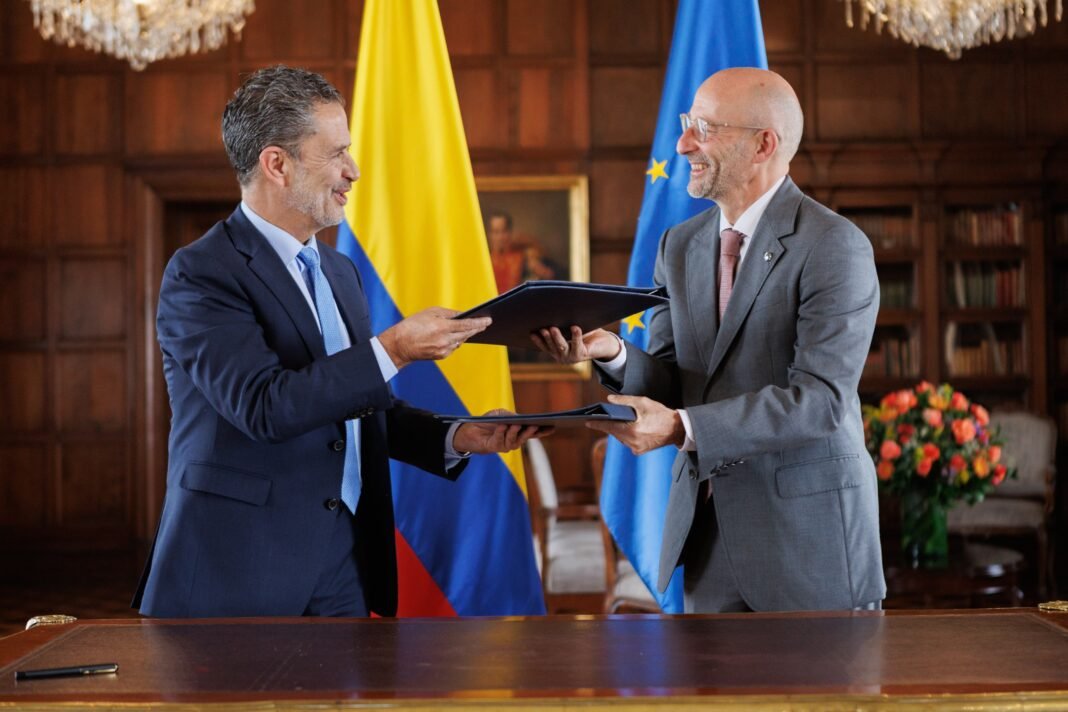
As set out in a formal announcement, Bogotá D.C., 8 de octubre de 2026. The Minister of Foreign Relations, Omar Bula Escobar, and the Ambassador of the European Union in Colombia, François Roudié, signed an agreement that facilitates the exercise of remunerated activities by the families of European diplomatic personnel in the country. This action matters because it directly addresses the welfare of families associated with the European diplomatic corps operating within Colombia, a benefit also extended to the families of Colombian officials serving at the Mission of Colombia before the European Union.

Background
The agreement’s signing was attended by Pelayo Castro Zuzuárregui, director general adjunto for the Americas of the European External Action Service (EEAS), who served as a witness to the subscription. The agreement’s purpose is to improve the lives of families connected to the European diplomatic staff stationed in Colombia. Furthermore, the viceminister (e) of Foreign Relations and director of Europe, Ambassador Patricia Cortés Ortiz, held a meeting with Pelayo Castro Zuzuárregui, during which strategic topics of the bilateral relationship were discussed, particularly regarding reconstruction, economic agenda and investment, as well as security and defense, with a focus on combating transnational organized crime. The statement does not address the specific financial terms of the agreement or the types of activities permitted.
Analysis
The agreement represents a step toward solidifying the relationship between Colombia and the European Union. It highlights a shared interest in supporting the families of European diplomatic staff, a common feature of diplomatic protocols globally. The exchange of perspectives between Bula Escobar and Roudié regarding regional and global challenges indicates a desire to broaden cooperation beyond traditional areas. The meeting’s emphasis on “reconstrucción” suggests a continued focus on Colombia’s post-conflict recovery efforts, aligning with ongoing EU development assistance. Should the visit yield the outlined outcomes, it would represent a strengthening of the bilateral relationship, particularly given the shared concerns surrounding transnational organized crime. The statement does not address the potential impact of this agreement on Colombia’s broader security strategy.
Implications
The agreement has significant implications for regional stability. Strengthening the support network for European diplomatic personnel could incentivize continued engagement in Colombia, particularly in areas of security cooperation. It also indicates a commitment from the EU to remain a key partner in Colombia’s economic development, especially concerning investment opportunities. The development of a “futuro Acuerdo de Alianza y Cooperación” suggests a long-term strategy for deepening ties. The agreement’s focus on “seguridad y defensa” points to a shared interest in combating criminal organizations operating across borders.
Outlook
If the negotiation of the “Acuerdo de Alianza y Cooperación” progresses as outlined, it would represent a notable advancement in the relationship. Should the future agreement be finalized, it would solidify a joint agenda for addressing regional and global challenges. If the dialogue political is dynamized, it could lead to increased cooperation on matters of mutual interest. The agreement does not specify timelines or benchmarks for the “Acuerdo de Alianza y Cooperación,” leaving the future trajectory open to further negotiation.