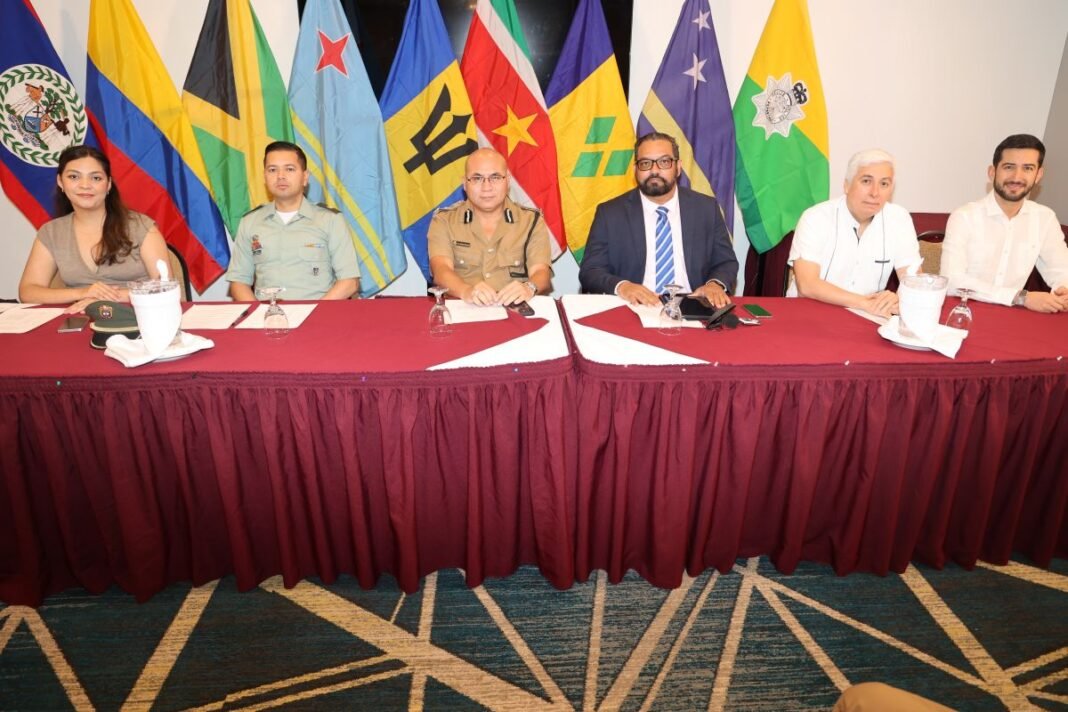
The Colombian Ministry of Foreign Affairs inaugurated a meeting in Belize on October 6th, 2026, bringing together representatives from Aruba, Barbados, Belice, Curazao, Jamaica, San Vicente and the Grenadines, and Surinam. This event, titled “Strategies and Successful Experiences in the Fight Against Cybercrime,” aims to bolster institutional capacities for preventing, investigating, and addressing cybercrime, and to promote networks of collaboration and knowledge exchange. This initiative matters because the statement does not address the escalating global threat of cybercrime, which increasingly targets regional economies and infrastructure. — the full statement has further detail.

Background
The meeting is part of the II Regional Programme of Technical Cooperation, Cultural, Educational and Sports, between Colombia, the member states of CARICOM, Aruba and Curazao. The event’s technical leadership is provided by the Ministry of Defence and the National Police of Colombia, supported by the Ministry of Foreign Affairs and the Presidential Agency for International Cooperation (APC-Colombia). The Colombian delegation is accompanied by officials from the Directorate of International Cooperation and the Directorate of Political Multilateral Affairs of the Ministry of Foreign Affairs. The involvement of Belicean authorities, including the Commissioner of Police, Dr. A. Richard Rosado, and the CEO of the Ministry of Internal Affairs, Elton Bennett, underscores the importance of regional partnerships in addressing shared security challenges. The Directorate of Cybercrime Police and the Forensic Computing Laboratory of Belize will be visited as part of the agenda.
Analysis
The core objective of this gathering, as outlined in the statement, is to strengthen institutional capabilities in cybercrime. This suggests a recognition of the evolving nature of cyber threats and the need for coordinated responses. The participation of INTERPOL (DIJIN) highlights a desire for international collaboration and access to specialized expertise. The inclusion of Aruba, Barbados, Curazao, Jamaica, San Vicente and the Grenadines, and Surinam demonstrates a broader commitment to expanding cooperation throughout the Greater Caribbean region. The focus on “successful experiences” implies a knowledge-sharing component, aiming to avoid duplication of effort and leverage best practices. The visit to the Belizean Cybercrime Unit and Forensic Computing Laboratory represents a tangible step towards building capacity within the participating nations.
Implications
This initiative has significant implications for regional stability and trade. Increased collaboration in combating cybercrime can protect critical infrastructure, bolster economic security, and foster trust between nations. The exchange of knowledge and expertise will likely improve the ability of Caribbean countries to respond effectively to cyberattacks. The commitment to a “long-term relationship” with the Greater Caribbean, based on trust and mutual benefit, suggests a broader strategic ambition by Colombia. Furthermore, the strengthening of cooperation could facilitate trade and investment by reducing the risks associated with cybercrime and promoting a more secure digital environment.
Outlook
Should the visit yield a formalized agreement to establish a regional cybercrime intelligence-sharing network, as suggested by the meeting’s objectives, it would represent a significant step forward. If the collaborative exercises identify specific gaps in capacity, Colombia could potentially provide technical assistance or training to address these needs. However, the success of this initiative hinges on the willingness of all participating nations to fully commit to the principles of cooperation and information sharing. If the Belizean authorities demonstrate a sustained commitment to implementing the recommendations arising from the meeting, it could serve as a model for similar initiatives within the Caribbean region.
Conclusion
The Colombian Ministry’s engagement in this regional initiative raises a fundamental question: can a geographically dispersed network of nations, operating with diverse legal frameworks and technological capabilities, effectively confront a transnational crime that transcends borders and evolves with unprecedented speed? The ultimate test will be the demonstrable impact of this collaboration on reducing cybercrime within the Greater Caribbean.