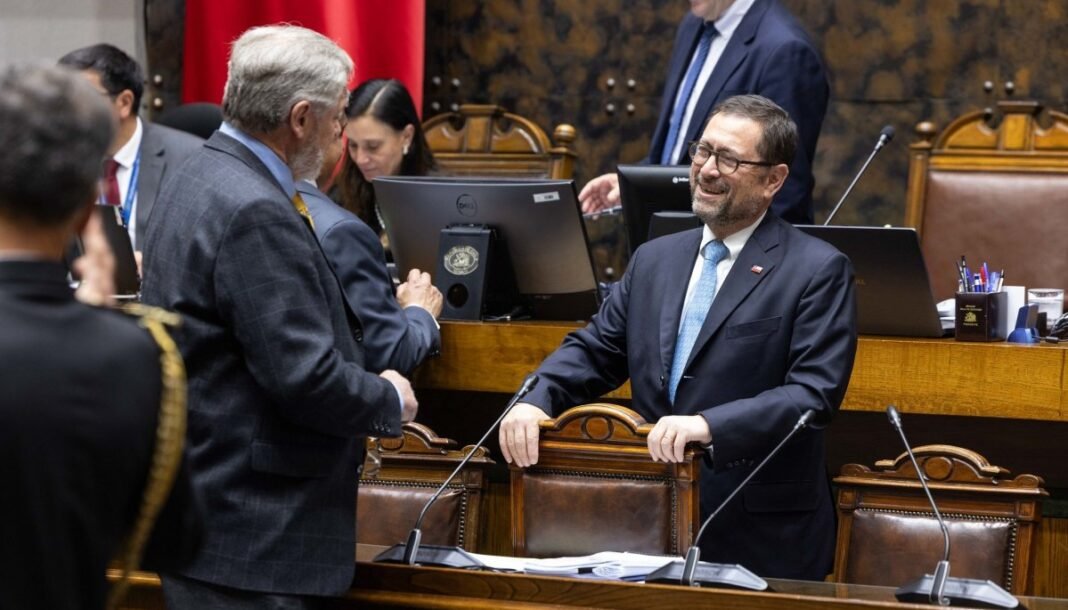

A ministry communiqué confirms that
Background
The XV Meeting of the Political Consultation Mechanism, held in Santiago, brought together the Subsecretaries of the Ministry of the Exterior Relations of the Republic of Chile, Ambassador Patricio Torres, and the Ambassador of the Republic Oriental del Uruguay, Valeria Csukasi. This mechanism, established in 2012, serves as a crucial channel for regular dialogue between the two nations’ foreign ministries. The meeting occurred within the context of over 182 years of diplomatic relations between Chile and Uruguay, a foundation built upon shared values and a commitment to pragmatic cooperation. The statement does not mention specific dates for prior meetings or agreements.
Analysis
The core of the discussion centered on reinforcing existing trade agreements – the ACE N.° 73 (Chile-MERCOSUR) and ACE N.° 35 – which continue to operate without tariffs, providing a stable framework for economic exchange. The statement highlights the strategic significance of Uruguay’s potential accession to the Comprehensive and Progressive Trans-Pacific Partnership (CPTPP), a move Chile is facilitating through a working group. This suggests a shared ambition to expand regional economic influence and engage with the Asia-Pacific market. The focus on reducing operational costs for SMEs through the Digital Signature Certificate Recognition Agreement demonstrates a commitment to practical, bottom-up economic benefits. If implemented as described, this agreement could significantly ease trade flows. The statement does not address the potential impact of this trade liberalization on specific sectors within either country.
Implications
The renewed emphasis on trade agreements carries implications for regional stability, particularly within the Southern Cone. Continued integration with the CPTPP could strengthen Uruguay’s economic ties with Asia, while bolstering Chile’s position as a regional trade hub. The ongoing discussions regarding the audiovisual co-production agreement, currently in legislative process, point to a desire to foster innovation and cultural exchange. These developments could also impact security cooperation, particularly regarding the fight against transnational crime, as the ministers acknowledged. The statement does not address the potential geopolitical implications of Chile’s involvement in the CPTPP.
Outlook
Should the visit yield further progress on the CPTPP accession, and assuming Uruguay successfully navigates the legislative hurdles for the audiovisual agreement, both countries could see a sustained boost to their economies. If the I Joint Commission on Science, Technology, Innovation and Development successfully establishes a framework for collaboration, it could unlock significant investment in research and development. The agreement to hold the IV Meeting of the Bilateral Commission on Consular and Migratory Affairs in 2027, coupled with the ongoing work on reciprocal driving license validation, indicates a continued commitment to streamlining cross-border interactions.