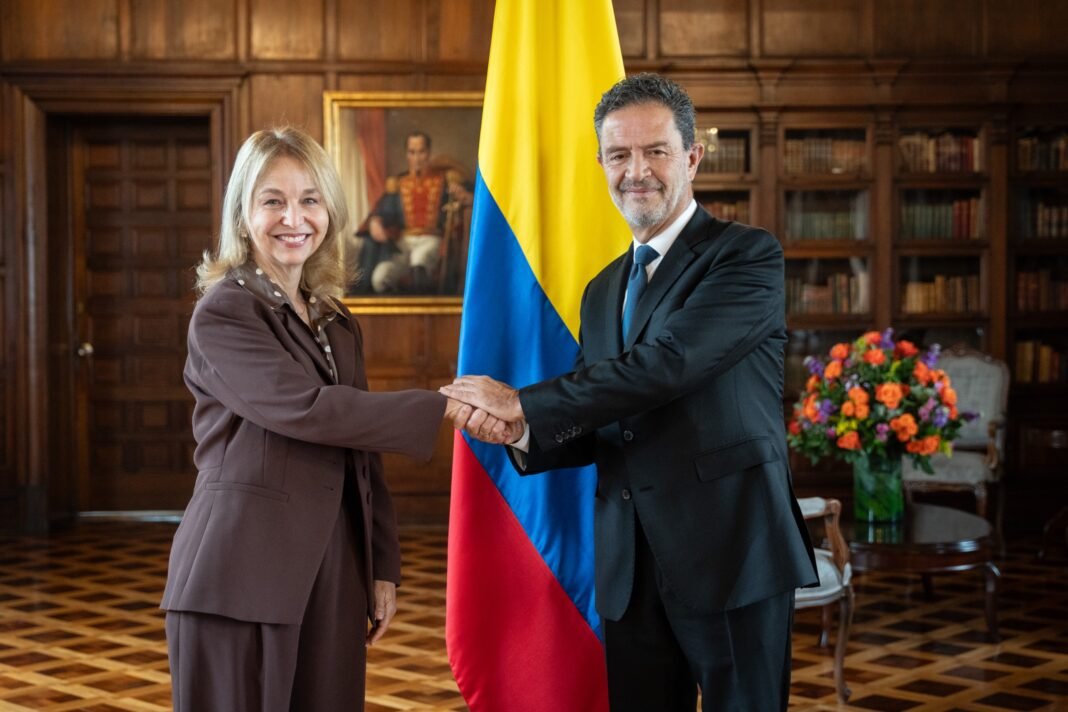
Reporting in a government statement, The Colombian Ministry of Foreign Affairs, through its Minister of Foreign Affairs, Omar Bula Escobar, formally appointed Tania Gilinski Bacal as the country’s ambassador to Israel on Thursday, October 2, 2026. This action, occurring within the Palacio de San Carlos, marks a renewed commitment to strengthening diplomatic ties between Colombia and Israel, following a deliberate decision to restore and bolster the bilateral relationship. The significance of this appointment lies in its potential to unlock expanded cooperation across a range of sectors, particularly in areas of strategic security and intelligence.

Background
Colombia established formal diplomatic relations with Israel in 1957, initiating a relationship that has since evolved into a multifaceted partnership. Prior to this renewed focus, in March the ministry stated that Colombia strengthened its relationship with Israel to amplify security and intelligence cooperation. The existing bilateral agenda encompasses a broad spectrum of areas, including defense, cybersecurity, and economic engagement. The appointment of Gilinski aligns with a broader trend of Latin American nations re-evaluating their relationships with established global powers, seeking strategic alliances based on shared security concerns and economic opportunities. The Ministry of Foreign Affairs previously, in September 2026, positioned Alejandro Ordóñez Maldonado as the new Colombian ambassador to the Organization of American States (OEA).
Analysis
The decision to appoint Gilinski, a seasoned entrepreneur with extensive experience in media, consumer brands, and technology, signals a deliberate shift in the approach to the Israeli relationship. Her background, including a Master’s degree in International Political Studies from Stanford University, underscores a focus on sophisticated, strategic engagement. The government’s stated intention – to deepen cooperation in security and intelligence, alongside exploring opportunities in sectors such as agriculture, healthcare, science, and technology – reflects a prioritization of addressing shared transnational criminal challenges and bolstering Colombia’s national security capabilities. This represents a move beyond traditional trade agreements, leveraging Israel’s technological prowess and security expertise. The statement does not address Colombia’s economic ties with other nations, nor does it comment on the country’s mineral resources.
Implications
The appointment of Gilinski carries significant implications for regional stability. Enhanced security cooperation between Colombia and Israel could potentially contribute to combating organized crime and terrorist networks operating in the wider Latin American region. Furthermore, the renewed focus on technology and innovation—including cybersecurity and data exchange—could accelerate Colombia’s digital transformation and foster economic growth. The strengthened relationship also presents opportunities for increased trade, particularly in sectors where Israel holds a competitive advantage. Should the visit yield the anticipated security cooperation, it could also impact Colombia’s relationship with other regional partners, potentially creating new diplomatic dynamics.
Outlook
If the visit with the Israeli delegation results in the agreed-upon exchange of information regarding cybersecurity and intelligence, it would represent a tangible step towards operationalizing the renewed bilateral agenda. Should the government successfully negotiate agreements on agricultural technology and healthcare innovation, Colombia could benefit from Israel’s advancements in these sectors. However, the success of this strategy hinges on the ability of both nations to overcome potential political sensitivities and logistical challenges. The statement does not address the timeline for achieving these goals or the potential for disagreements.
Conclusion
The appointment of Tania Gilinski as Ambassador to Israel represents a deliberate, if cautious, step towards a more strategically aligned relationship. The core question remains: can Colombia effectively leverage this renewed engagement to secure tangible benefits in terms of security, innovation, and economic development, or will the relationship remain largely defined by mutual strategic interests?