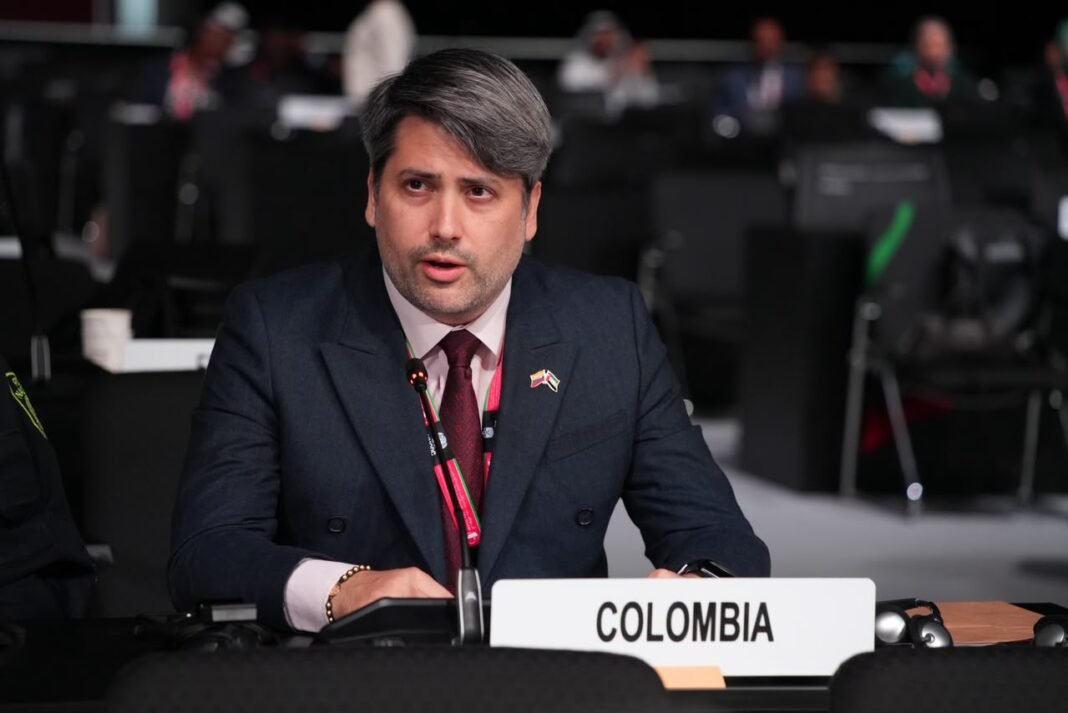
Details in a press release show that Abu Dabi, United Arab Emirates, September 30, 2026 – Colombia reaffirmed its commitment to combating transnational organized crime during the 15th United Nations Congress on Crime Prevention and Criminal Justice, taking place in Abu Dabi, United Arab Emirates, from September 26th to October 1st. The event, convened every five years, serves as the principal international forum for dialogue and cooperation on crime prevention, criminal justice, and strengthening the rule of law. This participation reflects a core element of Colombia’s foreign policy, prioritizing strategic alliances to address criminal threats that cross national borders.

Background
The UN Congress on Crime Prevention and Criminal Justice has been held every five years since 2011. This 15th iteration represents a significant opportunity for Colombia to engage with global partners in addressing increasingly complex criminal challenges. The statement does not mention specific prior meetings or agreements that led to Colombia’s participation, but it does reference the role of the Mission Permanent to International Organizations in Vienna and the coordination with the Directorate of Multilateral Political Affairs within the Ministry of Foreign Affairs. The Congress is organized under the auspices of the United Nations Office on Drugs and Crime (UNODC), operating through the Commission on Crime Prevention and Criminal Justice, which meets in Vienna.
Analysis
Colombia’s involvement in the Congress underscores the government’s assessment of transnational organized crime as a multi-faceted threat. The statement does not address the specific types of criminal organizations involved, but emphasizes the adaptive capacity of these groups, their utilization of new technologies, and their involvement in illicit economies. This paints a picture of a national security challenge demanding coordinated responses, not only within Colombia but also across regional and international boundaries. The adoption of the Abu Dhabi Declaration, negotiated with active Colombian participation through its diplomatic mission, signifies a commitment to a five-year plan of action. The statement does not explain the content of this declaration, but indicates its implementation through the Commission and its connection to UNODC activities.
Implications
Colombia’s presence at the Congress has significant implications for regional stability and international security. Should the visit yield increased cooperation on combating transnational crime, it could strengthen Colombia’s efforts to disrupt criminal networks operating within its borders. The participation also highlights the need for coordinated responses to environmental crime, as evidenced by Colombia’s co-sponsorship of events focused on combating illicit activities related to environmental degradation, alongside Peru and France. The statement does not address the potential impact on trade or security, but the focus on intelligence sharing and judicial cooperation suggests an effort to bolster these areas.
Outlook
If the adoption of the Abu Dabi Declaration is successful, as the statement suggests, it would establish a framework for international cooperation over the next five years. Should Colombia continue to prioritize mechanisms for cooperation that extend beyond isolated responses, it could contribute to a more effective global effort to dismantle transnational criminal organizations. The statement does not mention specific metrics or benchmarks for success, but the emphasis on pursuing criminal networks’ resources and financial structures indicates a focus on tangible results.