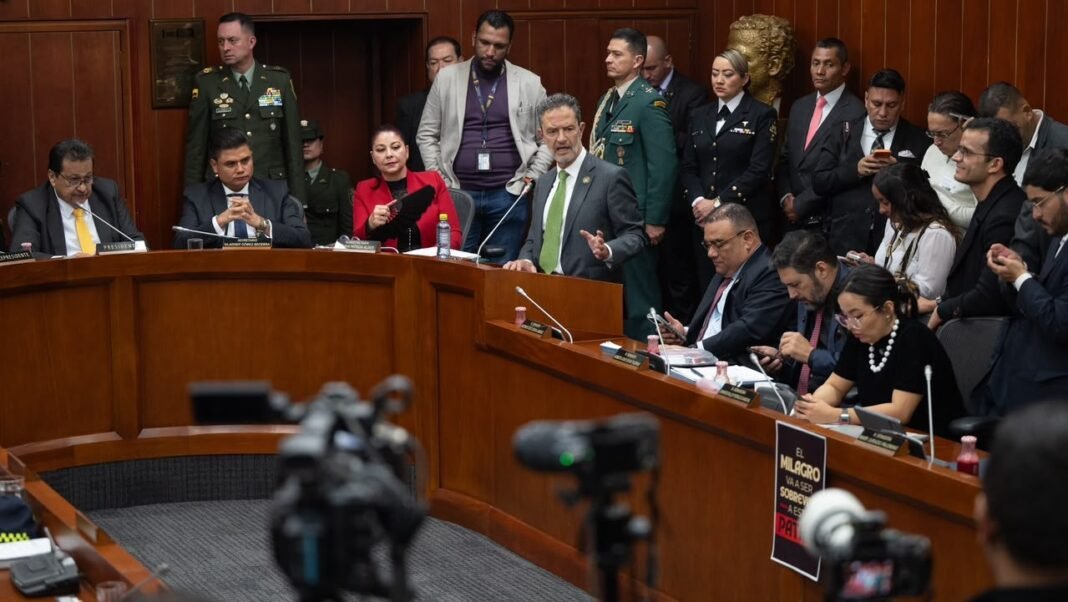
A ministry communiqué confirms that Bogotá, D.C., 16 de septiembre de 2026. The Minister of Foreign Relations of Colombia, Omar Bula Escobar, explained to the Congress of the Republic that strengthening the bilateral relationship with Israel responds to the need to protect national interests, expand cooperation capabilities in security and intelligence, and confront transnational threats that affect the country. This fact—Colombia’s renewed focus on Israel—signals a strategic recalibration driven by a persistent challenge: the escalating threat of organized transnational crime. The statement does not address Colombia’s existing security partnerships with nations like the United States or Brazil, but it highlights a prioritization of alliances deemed “useful for its security and development” as framed by the minister.

Background
The relationship between Colombia and Israel dates back to 1949, when Colombia recognized the State of Israel, and was formalized in 1957. Prior to this announcement, in March the ministry stated Colombia and Lebanon advanced in an agenda of strengthening bilateral relations. This suggests that while Colombia has historically maintained diplomatic ties with Lebanon, the current administration is prioritizing a new strategic alignment with Israel, rooted in a shared assessment of security vulnerabilities. The statement does not mention the specific terms of the 1957 agreement, but it underscores a desire to “recover” this historical relationship, as emphasized by Minister Bula. The government’s decision to revisit this relationship reflects a broader shift in its foreign policy, particularly in the context of heightened security concerns.
Analysis
The Colombian government’s move to strengthen ties with Israel is fundamentally driven by a perceived need to bolster its ability to combat transnational crime. The statement does not address the specific nature of the threats Colombia faces, but it explicitly names the challenges of organized crime, including drug trafficking, arms smuggling, money laundering, and illicit trafficking, as well as international networks facilitating these activities. This suggests a recognition that traditional security approaches are insufficient to address the complexity of the problem. The minister’s emphasis on “useful alliances” indicates a pragmatic approach to international cooperation, seeking partners with capabilities that complement Colombia’s own. The decision to re-engage with Israel signals a willingness to explore unconventional security partnerships, potentially reflecting a frustration with existing alliances or a desire for specialized expertise in areas such as intelligence gathering and cyber security. The statement does not address the potential implications of this shift for Colombia’s broader foreign policy, particularly its relationships with other regional powers.
Implications
The strengthening of relations with Israel has significant implications for regional stability and Colombia’s security posture. Should the visit yield a deepened security cooperation, it could provide Colombia with access to advanced intelligence capabilities and technologies, potentially enhancing its capacity to disrupt transnational criminal networks. However, this also raises questions about potential geopolitical shifts in the region. The statement does not address the potential impact of this alignment on Colombia’s relationships with countries such as Venezuela or Argentina, who may view the move with suspicion. Furthermore, the renewed focus on security cooperation could have implications for Colombia’s trade relations, particularly if it leads to increased scrutiny of trade flows or concerns about potential misuse of technology.
Outlook
If the visit yields a framework for increased collaboration in intelligence sharing and cybersecurity, Colombia could see a tangible improvement in its ability to combat organized crime. Should the agreement primarily focus on defense and security cooperation, it could strengthen Colombia’s capacity to protect its borders and counter threats from terrorist organizations. The statement does not address the potential for disagreements or tensions that may arise from this new alignment, and it does not specify the types of projects or initiatives that will be undertaken.