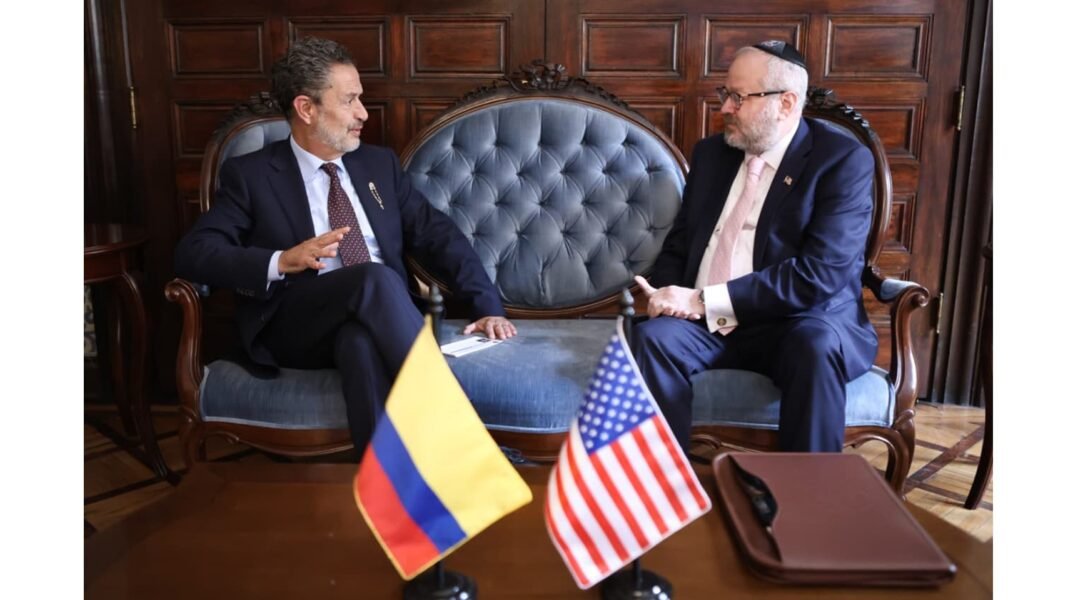
The official readout frames the trip as On August 26, 2026, the Ministry of Foreign Affairs of Colombia unequivocally rejected antisemitism, hate against Jewish people and any form of persecution, discrimination or violence motivated by religious or belief reasons.1 This action follows a meeting between Minister of Foreign Affairs Omar Bula Escobar and U.S. Special Envoy for Monitoring and Combating Antisemitism, Rabbi Yehuda Kaploun, and underscores Colombia’s stated commitment to both religious freedom and a culture of respect and dialogue among faith communities.

Background
The Ministry’s response is framed within the context of ongoing diplomatic efforts to combat antisemitism globally. The meeting between Minister Bula Escobar and Rabbi Kaploun occurred following the Envoy’s visit to Colombia. This represents a significant engagement with the U.S. Department of State’s monitoring and combating antisemitism initiatives, demonstrating a prioritization of this issue by the Colombian government.
The statement explicitly references Article 13 of the Colombian Constitution Political – which guarantees the freedom of religion and belief. It also highlights Colombia’s adherence to the definition of antisemitism established by the International Alliance for the Remembrance of the Holocaust (IHRA), a framework that includes “any perception of Jewish people as harbouring negative stereotypes.”2 This adoption signals an intention to align with international best practices in defining and combating antisemitism.
Analysis
The government’s stance is driven by a clear incentive: maintaining positive relations with the United States, particularly on issues related to human rights and security. The statement does not address potential domestic pressures surrounding concerns about extremist groups operating within Colombia or the country’s evolving relationship with Russia and Venezuela – both of which have been associated with anti-Semitic rhetoric.3 The Ministry’s actions are also intended to demonstrate a commitment to upholding international norms regarding religious freedom, a value increasingly under scrutiny in the face of geopolitical tensions.
A key contradiction lies in the statement’s broad condemnation of all forms of intolerance while simultaneously focusing solely on antisemitism. The Ministry does not address concerns about discrimination against other minority faiths within Colombia or acknowledge any specific vulnerabilities faced by religious communities beyond Jewish individuals. This suggests a strategic emphasis, prioritizing a message easily digestible for international audiences.
Implications
The Colombian government’s declaration has implications both regionally and internationally. For regional stability, it signals a willingness to align with U.S. foreign policy priorities on combating extremism, though the effectiveness of this alignment remains uncertain. From a trade perspective, continued engagement with the United States is crucial for Colombia’s access to markets and security assistance. However, the government’s focus on religious freedom could complicate relations with countries where religious persecution is a significant concern.
Furthermore, the statement offers no indication of increased investment in monitoring or preventative measures against hate speech or violence targeting minority groups within Colombia. This lack of detail raises questions about the practical application of the government’s stated commitment to protecting vulnerable communities.
Outlook
Should the visit yield further dialogue with the U.S. Envoy, the Ministry will likely continue to frame its foreign policy around human rights and religious freedom. If the Colombian government continues to prioritize engagement with the United States, it is possible that Colombia will seek additional support for initiatives aimed at combating extremism, particularly if security challenges within the country escalate. However, should the government fail to translate this rhetoric into concrete action – specifically regarding protections for vulnerable communities – its credibility on human rights issues could be severely undermined.
Conclusion
The Ministry’s forceful rejection of antisemitism is a statement of principle, but it remains unclear whether Colombia will follow through with meaningful safeguards for all religious minorities within its borders. The government’s continued commitment to dialogue and cooperation hinges on demonstrating genuine action alongside these pronouncements.