Bogotá, 31 de julio de 2026 – (Read the full statement.)

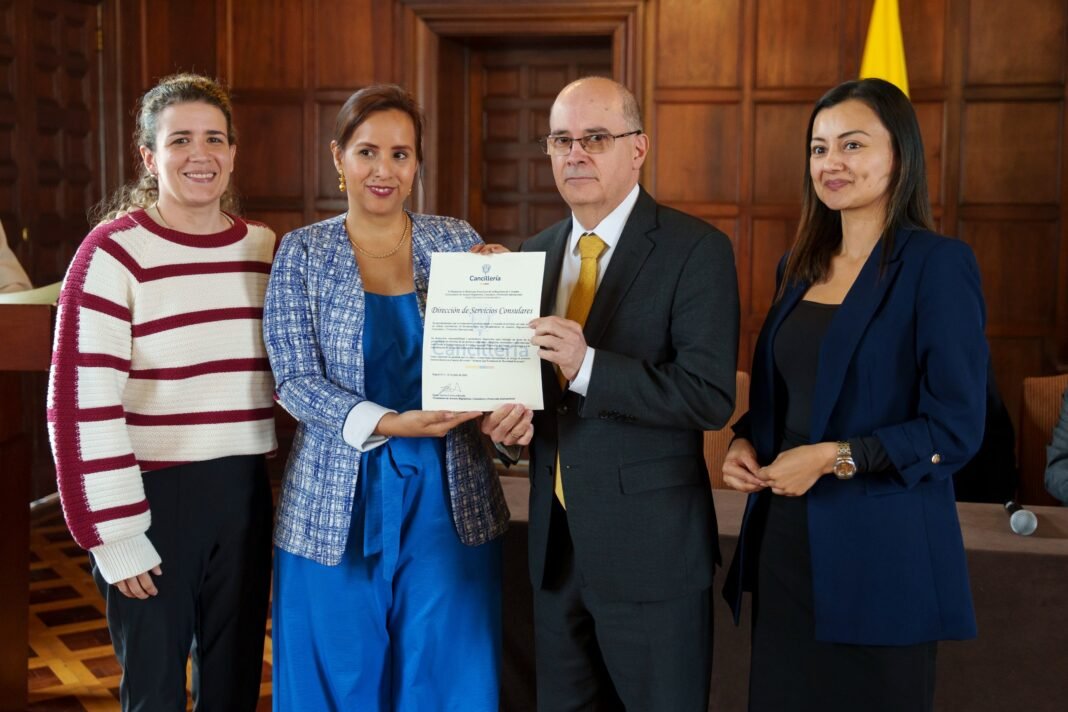
The Ministry of Foreign Affairs has recognized entities within Colombia’s state apparatus, international organizations, higher education institutions, and civil society organizations for their contribution to strengthening the country’s response to human mobility. The event highlighted the value of cooperation and coordinated work in consolidating a migratory policy centered on protecting the rights and dignity of migrant, refugee, returned, and stateless persons. The statement does not address specific migration corridors or the volume of individuals affected by this mobility. This action is noteworthy as it represents an explicit acknowledgement that Colombia’s response to human movement requires multi-stakeholder engagement.
Background
According to the statement, the recognition ceremony took place at the Palacio de San Carlos. The viceminister of Multilateral Affairs, Paula Andrea Cerón, underscored that effective migration policy is only achievable through robust alliances between the State, academia, international cooperation, and civil society. This suggests a continued reliance on collaborative frameworks for addressing complex challenges related to human mobility.
Cerón emphasized that the dynamic and increasingly complex nature of human movement necessitates shared responsibility and coordination among diverse actors. The statement does not mention any specific prior agreements or formal bodies involved in shaping this approach, beyond simply stating a “coordinated” effort. This implies an ongoing process of building these partnerships rather than a sudden shift in strategy.
Analysis
The government’s recognition represents an attempt to frame Colombia’s migration policy within a human rights framework—a key component of its diplomatic engagement. The statement highlights the need for protection of migrant and refugee populations, aligning with broader international norms. However, this approach glosses over potential tensions related to irregular migration flows, border security, or Colombia’s relationships with neighboring countries where significant numbers of migrants reside.
The fact that the recognition encompasses a broad range of actors – from academia to civil society – suggests an attempt to broaden the base of support for its migration policy. This also indicates the government recognizes the limitations of solely relying on state institutions in addressing this issue, as Cerón explicitly stated. The statement does not address whether these partnerships will translate into concrete policy changes or increased resource allocation.
Implications
This initiative has significant implications for regional stability and Colombia’s trade relationships. A renewed focus on human mobility, as articulated in the press release, could influence Colombia’s engagement with countries like Venezuela and Ecuador, where large migrant populations reside. The emphasis on “safe, orderly, regular and people-centered” migration management – a phrase repeated throughout the statement – signals an effort to align its foreign policy with international humanitarian standards.
Furthermore, the recognition of international organizations suggests Colombia intends to leverage external expertise and funding to bolster its capacity in this area. The statement does not address whether this will impact Colombia’s engagement with regional trade agreements or security cooperation initiatives which often intersect with migration patterns.
Outlook
Should the visit yield continued dialogue with key international partners, as suggested by the recognition ceremony, Colombia’s approach to human mobility could become more formalized. If the government successfully builds upon these alliances – a conditional scenario – it may be able to secure increased financial and technical assistance for migrant protection programs. However, should the Ministry of Foreign Affairs prioritize security concerns over humanitarian considerations, this could exacerbate tensions with neighboring countries and undermine Colombia’s efforts to foster regional cooperation.
Conclusion
The recognition of key stakeholders represents a step in establishing a framework for managing migration flows. However, the press release offers no indication of how the Colombian government intends to address the underlying drivers of displacement or manage potential security risks associated with irregular migration – questions that remain unanswered.