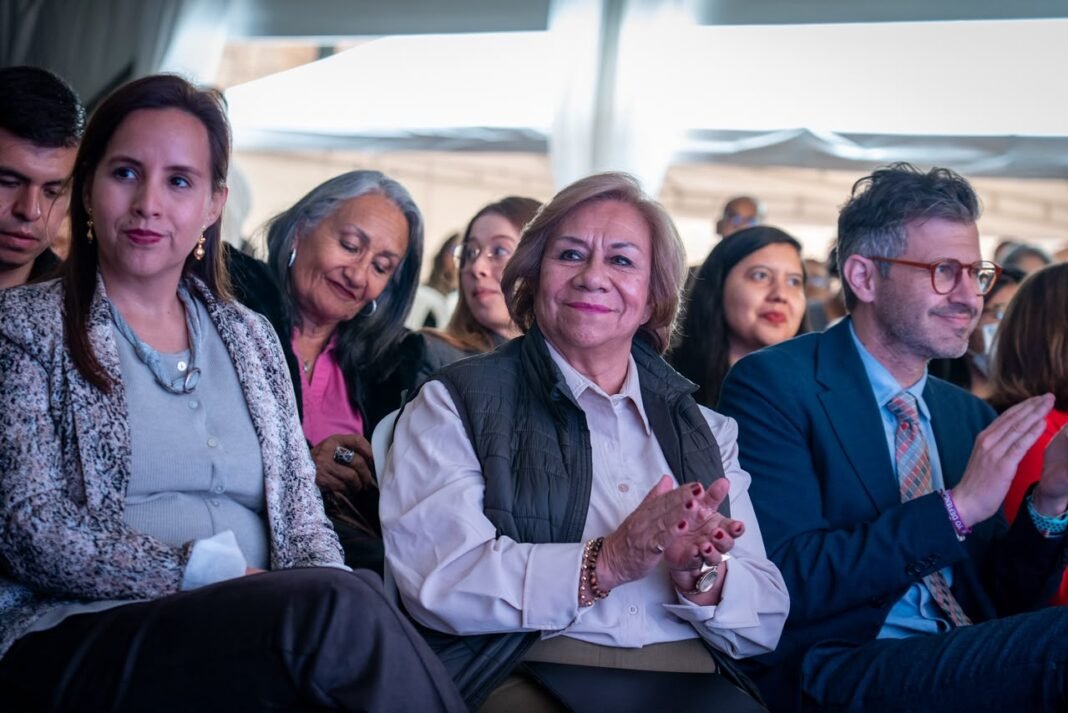
Per the government announcement, The Minister for Foreign Affairs, Rosa Yolanda Villavicencio Mapy, received an homage from the Ministry of Relations with External Powers, senior executives, officials, and collaborators in recognition of her trajectory and leadership at the service of the nation. The event, which included interventions by the Vice-Ministry and executive directives of the institution, highlighted her profound human sense, proximity, and listening to benefit Colombians both within and outside national territory.

Background
The tribute reflected a consolidation of Colombian foreign policy under the government of change – specifically, a shift towards a more humanitarian approach. This was underscored by interventions from the Vice-Ministry and senior institutional figures, indicating an established framework for this renewed emphasis.
Analysis
Villavicencio’s remarks emphasized a collective effort across the Foreign Ministry’s various departments – consular bodies, administrative teams, and the diplomatic corps. She specifically noted that foreign policy under the current administration was built to serve the people, adopting a feminist, peace-oriented, multilateralist, and dignified approach towards migrant communities. The Minister stressed that diplomacy should extend beyond state relations, representing an authentic encounter between peoples, cultures, and historical memories, crucial for tackling global challenges.
Implications
This prioritization of multilateralism suggests a potential willingness to re-engage with international organizations – particularly those focused on humanitarian aid and conflict resolution. The focus on diaspora engagement indicates an effort to leverage Colombian expatriate communities for economic and political influence, likely tied to addressing labor migration flows. Should the visit yield further emphasis on these areas, it could signal a strategic recalibration of Colombia’s regional role.
Outlook
If the Minister’s vision is fully implemented, Colombia may seek to strengthen its partnerships with nations sharing similar geopolitical priorities. Should the visit yield greater support from multilateral actors for Colombian peace initiatives, it could bolster efforts to address persistent armed group activity in rural regions. The statement does not address potential implications for trade agreements or security collaborations within the region.
Conclusion
The farewell of Minister Villavicencio leaves open the question of whether this shift towards a more human-centered foreign policy will translate into concrete diplomatic action and sustainable solutions to Colombia’s complex challenges – particularly regarding regional security and economic integration.