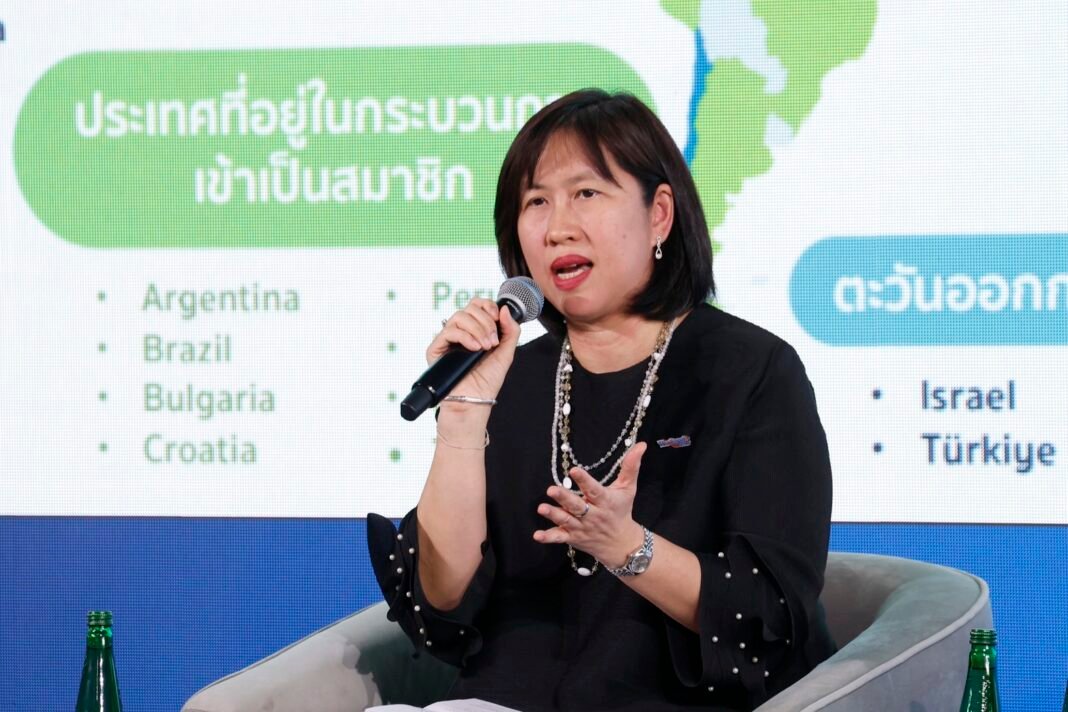
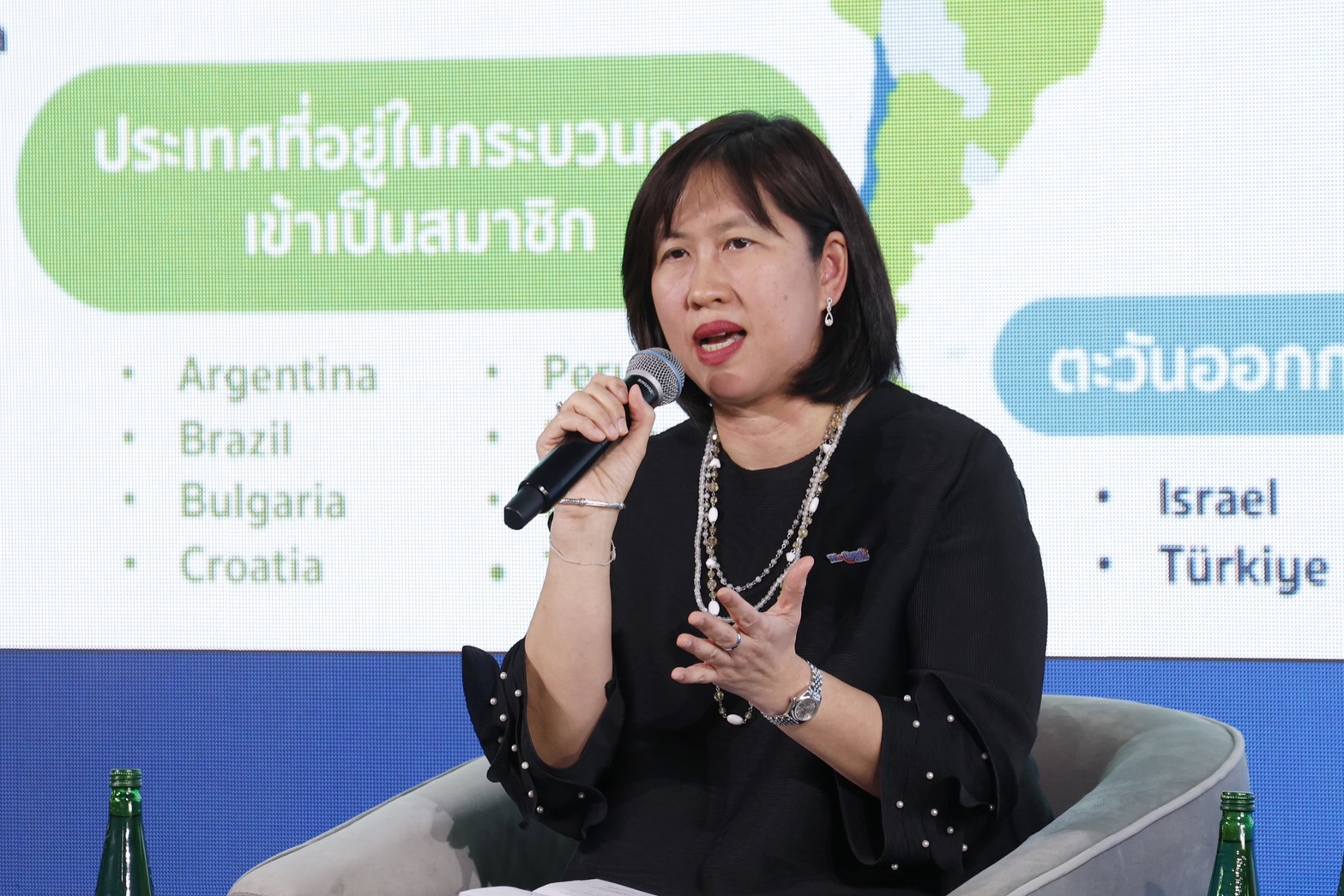
As set out in a formal announcement, On September 8, 2026, Ms. Rujikorn Saengchantr, Director-General of Thailand’s Department of International Economic Affairs, participated in a panel discussion at the Global Compact Network Thailand (GCNT) Expo 2026. The statement does not mention the specific goals of the event beyond enhancing understanding of Thailand’s path toward OECD membership. This participation, framed as using the accession process as a “tool to accelerate national reform,” suggests that the government views joining the OECD not simply as attaining status but as driving fundamental changes within Thailand’s regulatory environment.
Background
The discussion centered on “Thailand’s Roadmap to Membership: Thailand’s Path towards OECD Accession.” The statement does not mention prior meetings or agreements directly related to this specific panel discussion, but it references the government’s 20-Year “5S” Foreign Affairs Masterplan. This masterplan, according to earlier statements by the Ministry of Foreign Affairs (dated September 3, 2026), aims for Thailand to achieve OECD membership by 2028. The statement does not address any specific regulatory changes already underway or planned. Furthermore, the reference to the Global Compact Network Thailand (GCNT) Expo 2026 indicates that this event was designed to engage private sector stakeholders in preparing for OECD standards.
Analysis
The government’s framing of the OECD accession process as a “tool to accelerate national reform” reveals an implicit recognition that Thailand’s regulatory framework requires modernization. The emphasis on reducing costs and risks for businesses, alongside enhanced investor confidence, reflects common arguments made in support of OECD membership. However, the statement does not address potential challenges associated with adopting higher standards, particularly for small and medium-sized enterprises (SMEs). The government’s stated intention to “listen to the private sector” suggests a recognition that successful adaptation will require collaboration between public and private entities. This approach aligns with previous statements by the Ministry of Foreign Affairs (September 1, 2026), which highlighted the importance of private sector engagement in translating OECD standards into practice.
Implications
The participation of Ms. Saengchantr at this event carries implications for Thailand’s broader trade and investment strategy. Successfully aligning with OECD regulations could facilitate greater access to international markets, particularly those where the OECD has significant influence. This would likely bolster investor confidence and potentially attract foreign direct investment. Furthermore, the stated focus on reducing business costs and risks suggests a desire to improve Thailand’s competitiveness within Southeast Asia. However, the timeframe of achieving OECD membership by 2028 presents a considerable challenge, requiring sustained effort across multiple sectors.
Outlook
Should the visit yield continued engagement with private sector stakeholders and support for regulatory reforms, Thailand could progress towards meeting OECD standards. If the government successfully navigates the transition costs associated with adopting new regulations – particularly for SMEs – it would strengthen its position as a credible member of the global economic community. The statement does not address potential delays or obstacles that could impede this timeline; however, achieving membership by 2028 remains dependent on continued political commitment and effective implementation.
Conclusion
The Ministry’s emphasis on using OECD accession as a catalyst for reform underscores the strategic importance placed upon this process. However, the statement does not articulate a clear pathway or measurable milestones towards achieving this ambitious goal, leaving open the question of how Thailand will translate its stated intentions into tangible outcomes.
Sources & Further Reading
- Official press release
- Foreign ministry source
- Director-General of the International Economic Affairs Department participates in the Thailand ADR Conference 2026 (8 Sep 2026)
- Director-General of Information Department and Spokesperson of the Ministry of Foreign Affairs meets with Spokesperson of the U.S. Embassy in Thailand (1 Sep 2026)
- Director-General of the International Economic Affairs Department attends the 3rd APEC Senior Officials' Meeting and Related Meetings in Dalian (3 Sep 2026)