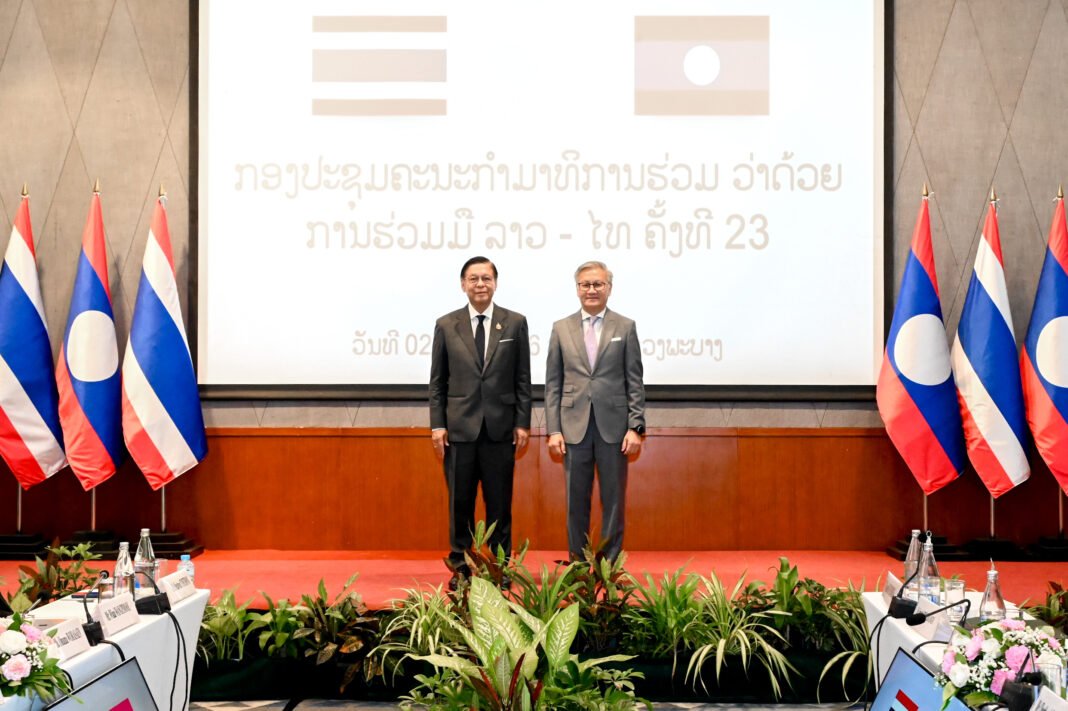
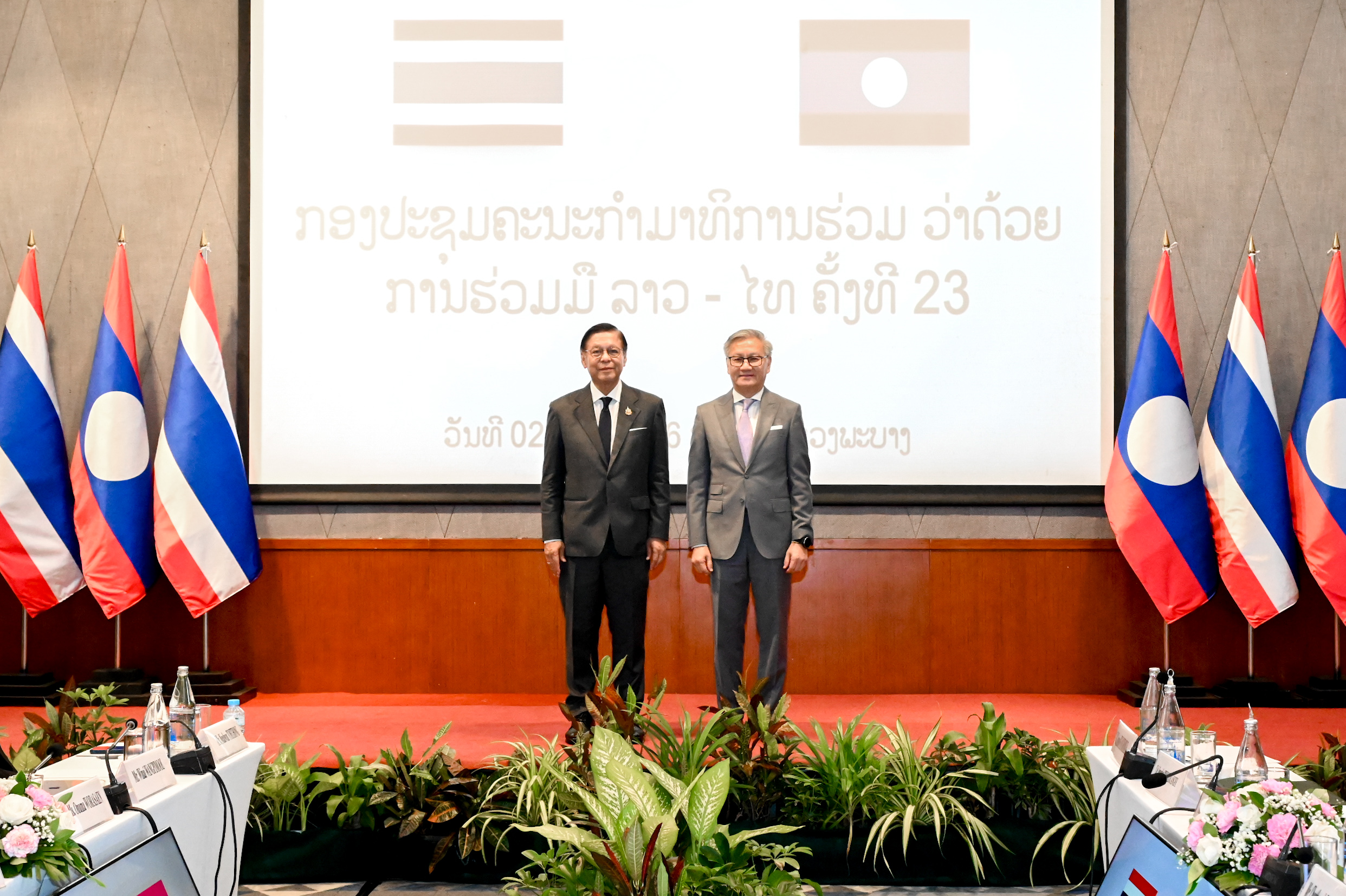
The foreign ministry readout describes The visit by Deputy Prime Minister and Minister of Foreign Affairs Sihasak Phuangketkeow to the Lao People’s Democratic Republic (Lao PDR) on 1–2 October 2026, co-chairing the 23rd Meeting of the Joint Commission (JC) on Bilateral Cooperation, represents a significant shift in Thailand’s regional engagement. The statement does not mention the last JC meeting occurred five years prior. The fact that this meeting occurred after a five-year hiatus, confirmed by the Ministry of Foreign Affairs, underscores a deliberate effort to recalibrate Thailand’s approach to its relationship with Laos. This event, as outlined in the press release, focuses primarily on bolstering trade and security, reflecting a prioritization of practical cooperation over broader geopolitical considerations. The statement does not mention the underlying drivers for this renewed focus.
Background
The 23rd JC between Thailand and Lao PDR marks the first one in five years. The Joint Commission serves as a key mechanism for bilateral cooperation, established to facilitate discussions and coordinate activities across various sectors. The statement does not mention the specific objectives or mandates of the JC. The “5S” Foreign Affairs Masterplan, a 20-year strategic framework, is referenced implicitly through the emphasis on security, trade, and development, suggesting alignment with broader Thai foreign policy goals. The statement does not mention the history of the JC or its previous outputs. The reference to the Deputy Prime Minister and Minister of Foreign Affairs suggests a high-level commitment to the ongoing process. The reference to the Mekong subregional frameworks indicates Thailand’s broader engagement in Southeast Asia.
Analysis
The agreement to further advance bilateral cooperation across three key areas – political and security, economic and connectivity, and social and development – indicates a pragmatic assessment of Thailand’s strategic interests in Laos. The emphasis on maintaining regular exchanges of high-level visits and strengthening border security reflects a heightened awareness of potential vulnerabilities along the shared frontier. The commitment to increase trade and transport facilitation, aiming for a USD 11 billion bilateral trade volume by 2027, is predicated on the belief that economic integration is a catalyst for political stability. The agreement to expedite the implementation of outcomes under the Joint Boundary Commission (JBC) is a key priority, given the ongoing complexities of border demarcation. The support for Laos’s smooth graduation from Least Developed Country (LDC) status in November 2026 demonstrates Thailand’s commitment to regional development, though the statement does not address the potential challenges associated with this transition. The focus on the 3rd Thailand – Lao PDR Development Cooperation Programme (2026 – 2029) highlights a continued investment in people-to-people ties. The inclusion of addressing transboundary haze (PM2.5) demonstrates an acknowledgement of shared environmental challenges.
Implications
For policymakers, the renewed focus on border security and trade facilitation carries implications for Thailand’s domestic policy, particularly in areas related to law enforcement and customs administration. The increased trade volume target will likely necessitate further investment in infrastructure and regulatory reforms. The commitment to supporting Laos’s LDC graduation could trigger increased development assistance and technical support. Regionally, the strengthened Thailand-Laos relationship could influence dynamics within the Mekong subregion, potentially impacting cooperation among other ASEAN members. The increased connectivity, including the Chiangman – Luang Prabang Bridge Project, could have significant implications for regional trade flows and tourism.
Outlook
Should the visit yield a sustained commitment to implementing the agreed-upon initiatives, Thailand could see a measurable increase in bilateral trade and investment. If the border security cooperation proves effective in addressing transnational crime, it could contribute to greater regional stability. Should the LDC graduation process proceed smoothly, it could unlock new opportunities for economic growth and development in Laos. However, the statement does not address potential challenges, such as disagreements over boundary demarcation or the broader geopolitical implications of Thailand’s engagement with China. The success of the bridge project, dependent on securing funding and navigating regulatory hurdles, remains uncertain.
Sources & Further Reading
- Official press release
- Foreign ministry source
- Deputy Prime Minister and Minister of Foreign Affairs co-chairs the 23rd Meeting of the Joint Commission (JC) on Bilateral Cooperation between Thailand and the Lao PDR in Luang Prabang (2 Oct 2026)
- Deputy Prime Minister and Minister of Foreign Affairs to pay official visit to Lao PDR (30 Sep 202)
- Deputy Prime Minister and Minister of Foreign Affairs to pay a working visit to Malaysia (4 Sep 2026)