
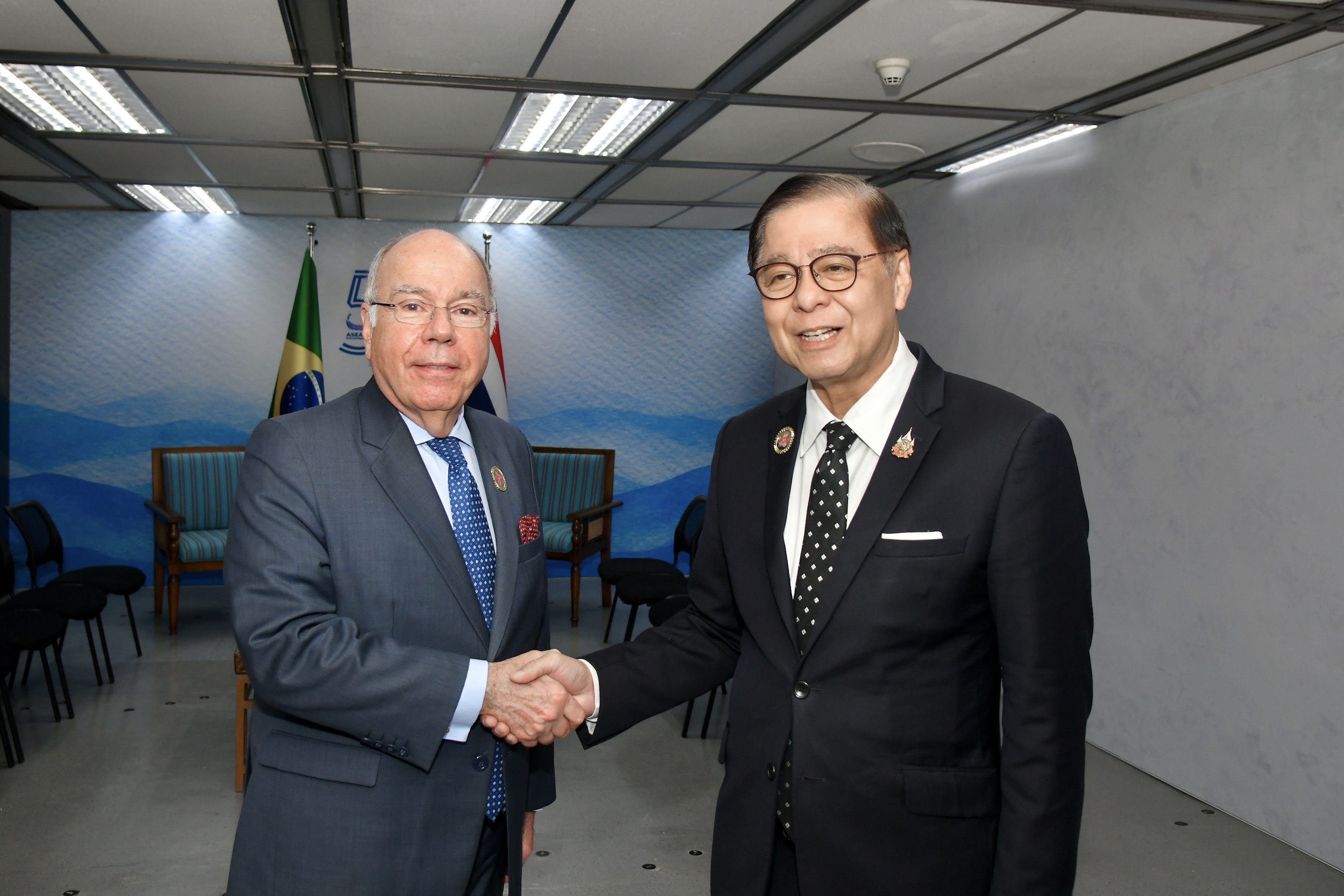
The foreign ministry readout describes On 24 July 2026, Deputy Prime Minister and Minister of Foreign Affairs Sihasak Phuangketkeow held a bilateral meeting with Brazilian Foreign Minister Mauro Luiz Iecker Vieira in Manila, the Philippines. This engagement—occurring on the sidelines of the 59th ASEAN Foreign Ministers’ Meeting—signals Thailand’s intent to bolster economic ties with Brazil, Latin America’s largest economy and Bangkok’s leading trading partner in the region. The stated goal – promoting exchanges of high-level visits and enhancing cooperation – reflects a broader strategic calculation within Thailand’s foreign policy framework.
Background
The meeting occurred during the 59th ASEAN Foreign Ministers’ Meeting and Related Meetings, a significant multilateral forum for Southeast Asian nations. This event provides a platform for countries to address regional security concerns and coordinate diplomatic efforts. The Thai side emphasized Brazil’s role as a “middle power” with the largest economy in Latin America, highlighting its strategic importance within Thailand’s broader network of partnerships. The statement does not mention any prior formal agreements or existing collaborative projects between the two nations beyond trade relations.
Analysis
The bilateral discussions represent a calculated effort by Thailand to diversify its economic relationships beyond traditional partners in Asia. The focus on “political and economic spheres” suggests an awareness of potential vulnerabilities within Thailand’s regional trading arrangements, particularly given Brazil’s position as a major importer. This engagement is predicated on recognizing Brazil’s economic weight—the largest economy in Latin America—and the need to strengthen ties to mitigate risk. The reiteration of commitment to upholding the “rules-based international order” suggests an alignment with Western powers amid evolving geopolitical dynamics, a common theme in Thailand’s foreign policy statements. The inclusion of “people-to-people ties” is a standard diplomatic element, aiming to foster broader engagement beyond purely economic interests.
Implications
For Thailand, the meeting carries implications for its trade strategy and regional influence. Should the visit yield increased investment or preferential access to Brazilian markets, it would represent a significant step in diversifying Bangkok’s export base. However, the statement does not address the persistent imbalance of trade – Thailand is significantly more reliant on exports to Brazil than vice versa. The emphasis on upholding the “rules-based international order” could signal a continued alignment with Western security interests and potentially influence Thailand’s stance on issues such as maritime disputes in Southeast Asia. The strengthening of ties with a major Latin American economy also affects Thailand’s role within ASEAN, particularly regarding coordination on regional trade agreements.
Outlook
If the visit yields a concrete agreement for increased bilateral trade or investment flows, Thailand will need to proactively address the existing trade imbalance. Should this not occur, Thailand risks reinforcing its dependence on Brazilian imports while potentially limiting opportunities for Thai exports. Should the commitment to uphold the “rules-based international order” translate into greater engagement with Western security partners, Bangkok could face increased pressure to align its foreign policy with broader geopolitical trends—a prospect that remains conditional on continued diplomatic efforts.
Conclusion
The meeting in Manila highlights Thailand’s strategic prioritization of Brazil as a key partner. However, the statement offers no specific details regarding concrete outcomes or future collaboration, leaving open the question of whether this engagement will translate into tangible benefits for the Thai economy – or simply represent another diplomatic gesture within a rapidly shifting global order.