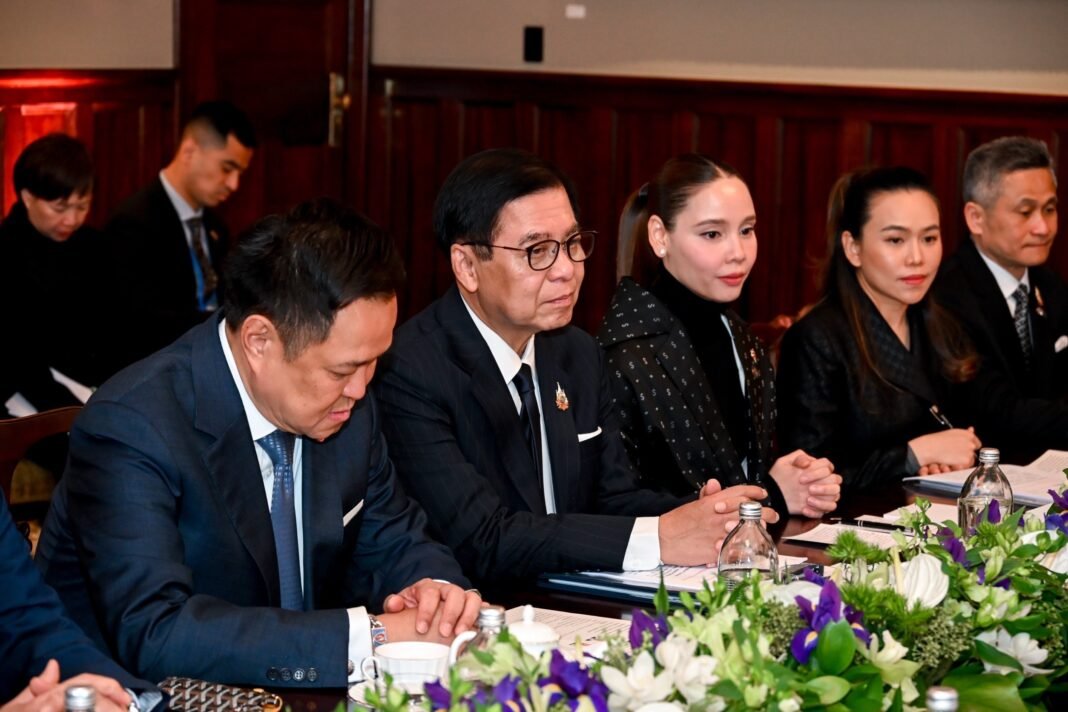

The official readout frames the trip as The Ministry of Foreign Affairs hosted an academic discussion on 20 August 2026 focusing on Promoting Social Cohesion in a Multicultural Society: Best Practices from the Singapore Model – an event that underscores Thailand’s evolving approach to managing its own diverse population. The attendance of Dr. Leong Chan-Hoong, Senior Fellow and Head of the Social Cohesion Research Programme at Nanyang Technological University, signals a willingness to examine externally developed strategies for addressing societal challenges. This initiative matters because it represents a formal, state-sponsored attempt to understand how Singapore has fostered harmonious coexistence within its own multicultural landscape—a context increasingly relevant to Thailand’s internal dynamics.
Background
The Ministry of Foreign Affairs convened this discussion as part of the ongoing “5S Foreign Affairs Masterplan,” outlined in the 20-Year strategy. This plan, according to excerpts from the Council of Ministers’ Policy Statement, prioritizes social cohesion as a fundamental element of national stability. Prior to this event, the MFA had been engaged in broader dialogues concerning Thailand’s multicultural context, particularly following sustained public debates around religious and ethnic relations within the country. The invitation to Dr. Leong reflects a recognition that Singapore’s experience offers potential insights for Thailand’s own efforts to navigate its complex social landscape.
Analysis
The event’s focus on Singapore’s model suggests an implicit acknowledgement of existing challenges within Thailand. The statement does not address specific concerns regarding inter-communal relations or the management of diverse religious and ethnic groups. However, inviting Dr. Leong signals a strategic interest in identifying best practices for promoting social harmony – a delicate balancing act given ongoing sensitivities surrounding national identity and cultural preservation. Mr. Jannarong Takumi Saga’s attendance, as Advisor to Deputy Prime Minister Sihasak Phuangketkeow, suggests the discussion feeds directly into policy formulation at the highest levels. Ms. Marinee Suwanmoli’s role as Assistant Permanent Secretary indicates a commitment to translating these insights into operational strategies within the MFA. The participation of representatives from relevant agencies and academia underscores a desire for a multi-faceted approach to this critical issue.
Implications
The discussion’s outcome, if any concrete recommendations emerge, could have significant implications for Thailand’s foreign policy – particularly regarding ASEAN engagement. Sharing Singaporean experiences might bolster Thailand’s diplomatic efforts within the regional bloc by demonstrating proactive measures towards social cohesion. Should the visit yield insights applicable to Thailand’s multicultural context, it could also influence strategies related to immigration and integration policies. The event does not inherently address broader economic considerations or potential shifts in trade relationships – the statement does not address these topics.
Outlook
If the exchange with Dr. Leong yields a framework of recommended practices, Thailand will likely pursue pilot programs focused on community engagement and interfaith dialogue. Should the Ministry prioritize adaptation of Singapore’s model, this suggests a cautious approach—one that seeks to leverage external expertise without fundamentally altering Thailand’s own cultural heritage. The statement does not address whether this could lead to changes in national education policies or public discourse surrounding diversity.
Conclusion
The MFA’s engagement with Singapore’s social cohesion framework represents a deliberate step towards addressing complex domestic challenges – but it remains unclear if the insights gained will translate into tangible policy adjustments, leaving open the question of how effectively Thailand can adapt external models to its own unique circumstances.