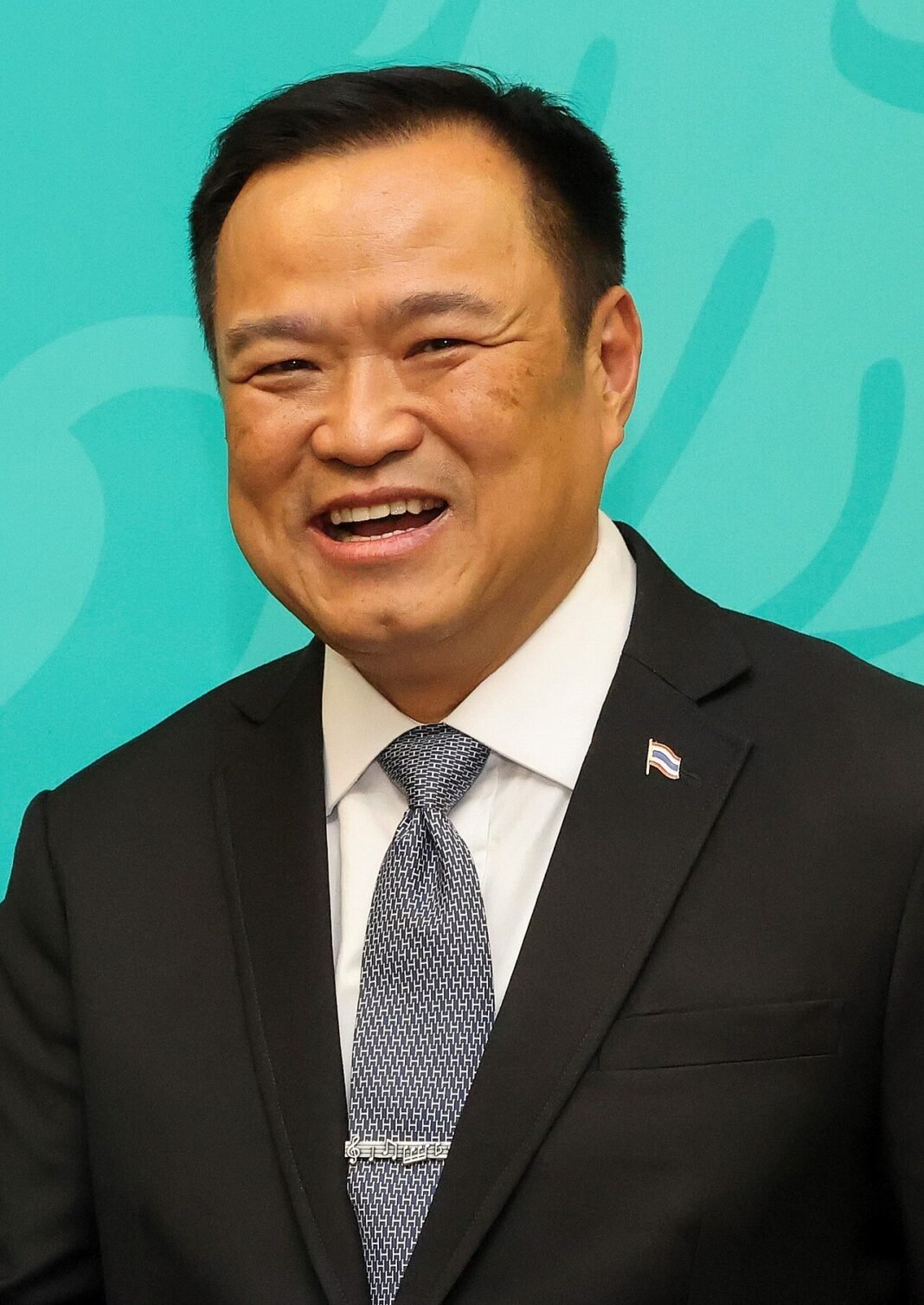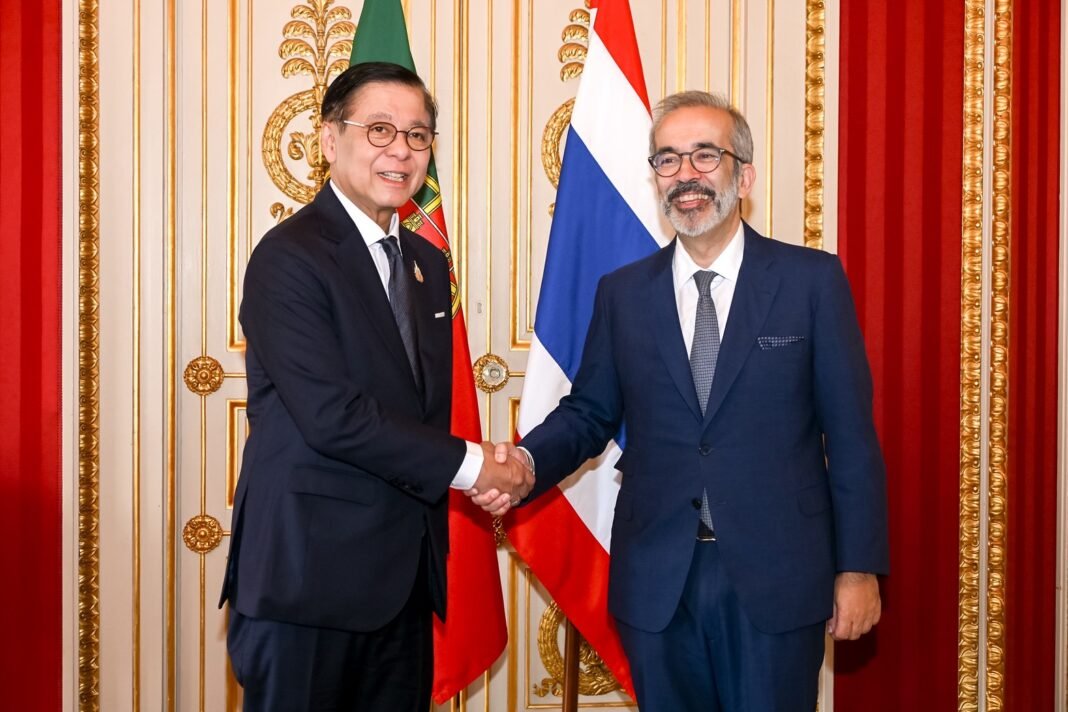
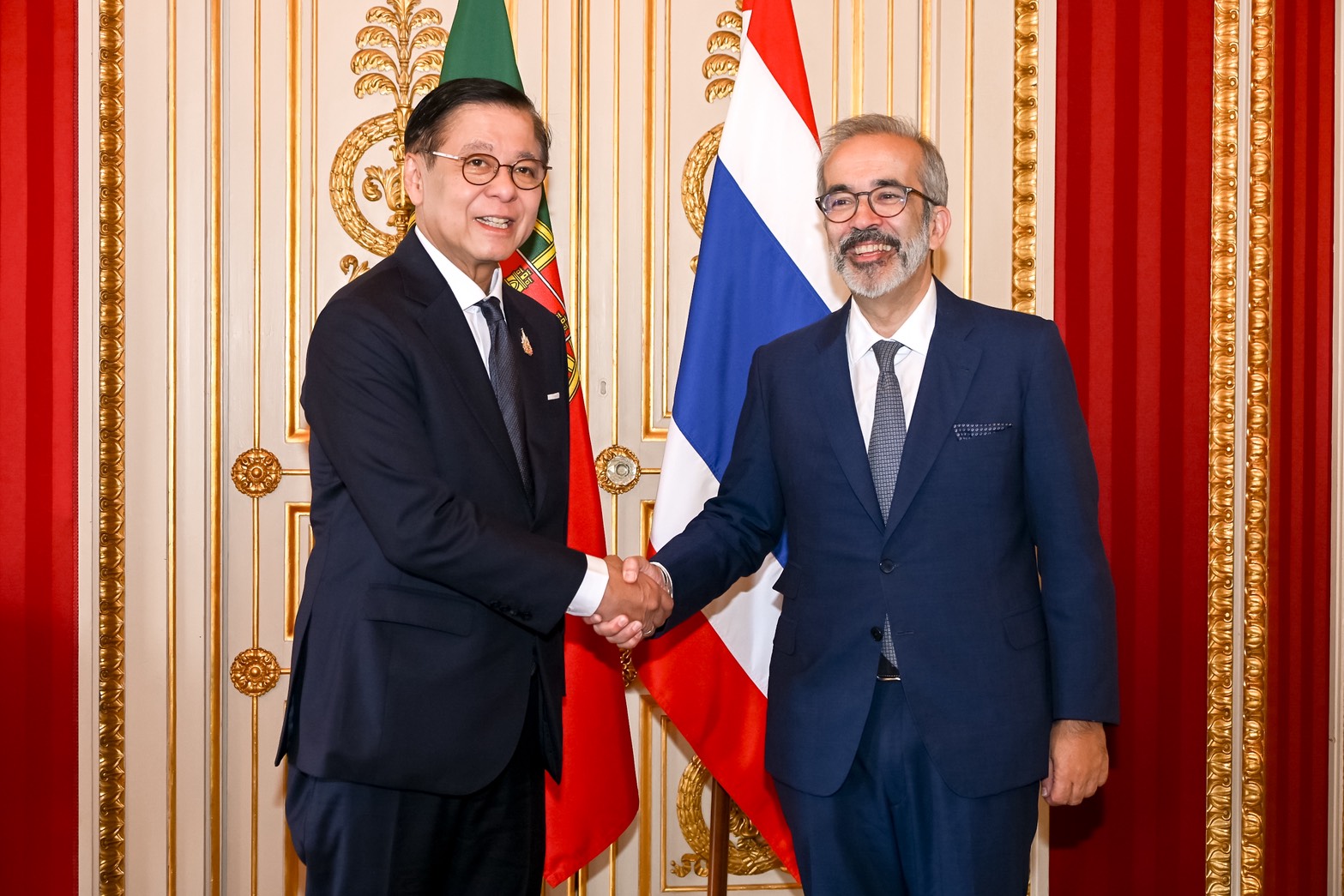
As set out in a formal announcement, On 23 October 2026, the Deputy Prime Minister and Minister of Foreign Affairs of Thailand, Sihasak Phuangketkeow, engaged in discussions with the Minister of State and Foreign Affairs of Portugal, Paulo Rangel, at the Portuguese Ministry of Foreign Affairs in Lisbon. This meeting, focused on strengthening bilateral relations spanning over 515 years, underscored a deliberate shift in Thailand’s foreign policy priorities, according to the statement. The significance lies in the explicit acknowledgement of a ‘positive development’ in Thailand-Portugal relations, a narrative the Ministry has repeatedly emphasized in recent communications.
Background
The development of Thailand-Portugal relations is framed within the context of the Ministry’s “5S” Foreign Affairs Masterplan, a 20-year strategic framework outlined in 2022. This plan prioritizes Security, Stability, Sustainability, and Strategic Partnerships. The current visit follows a telephone discussion held with the Italian Deputy Prime Minister and Minister of Foreign Affairs on 23 October 2026, demonstrating a consistent engagement with key European partners. Furthermore, the Ministry’s September 8, 2026, meeting with the Ambassador of the State of Israel to Thailand highlights a broader diplomatic outreach strategy, focusing on bilateral engagements and multilateral cooperation. The statement does not mention previous discussions regarding Thailand’s accession to the OECD or its visa exemption proposals.
Analysis
The discussions surrounding trade and investment, including business matching opportunities in renewable energy, startups, innovation, and the digital economy, reflect Thailand’s ongoing efforts to diversify its economic partnerships beyond traditional ASEAN routes. The focus on third-country development cooperation under the Thailand-Africa Initiative signals a deepening commitment to Southeast Asia’s broader regional engagement. The explicit mention of Portugal’s support for Thailand’s OECD accession and Schengen visa exemption requests indicates a targeted diplomatic strategy aimed at securing key economic and travel benefits. The inclusion of international developments – the Thailand-Cambodia border situation, Myanmar, the Russia–Ukraine conflict, and the Middle East – suggests a broader, albeit cautiously worded, interest in regional security and geopolitical stability. The statement does not address Thailand’s current diplomatic stance on the situation in Myanmar.
Implications
The signing of the Thailand-Portugal Agreement on Visa Exemption for Holders of Diplomatic and Official Passports has immediate implications for government officials from both countries, facilitating increased travel and fostering deeper engagement. Should the visa exemption be implemented as described, it would significantly reduce bureaucratic hurdles for diplomatic exchanges, potentially accelerating cooperation across various sectors. The discussions regarding trade and investment, particularly in renewable energy and digital economy, could contribute to Thailand’s efforts to attract foreign direct investment and promote technological innovation. The continued support sought from Portugal for OECD accession represents a longer-term strategic goal, potentially unlocking access to international standards and best practices. The inclusion of regional security concerns highlights Thailand’s willingness to engage in multilateral discussions on pressing global issues.
Outlook
If the visa exemption agreement proves successful, as indicated by the Ministry’s commitment to facilitating “further exchanges and bilateral cooperation,” it could serve as a model for similar agreements with other European nations. Should Portugal continue to advocate for Thailand’s OECD membership, the accession process could be expedited. The Ministry’s ongoing engagement with regional security issues, particularly concerning Myanmar and the Middle East, suggests a continued prioritization of stability within its immediate neighborhood. The Ministry’s focus on the Thailand-Cambodia border situation implies a sustained commitment to maintaining peaceful relations and resolving territorial disputes.
Conclusion
The Lisbon discussions, while focused on specific areas of cooperation, ultimately leave open the question of Thailand’s broader role in navigating increasingly complex geopolitical dynamics. The Ministry’s continued emphasis on strategic partnerships, particularly with nations like Portugal, suggests a deliberate, if somewhat cautious, approach to shaping Thailand’s foreign policy agenda in the years to come.
Sources & Further Reading
- Official press release
- Foreign ministry source
- Deputy Prime Minister and Minister of Foreign Affairs holds telephone discussion with Deputy Prime Minister and Minister of Foreign Affairs of Italy (23 Oct 202)
- Deputy Prime Minister and Minister of Foreign Affairs to pay official visit to Lao PDR (30 Sep 202)
- Deputy Prime Minister and Minister of Foreign Affairs meets with Ambassador of the State of Israel to Thailand (8 Sep 2026)