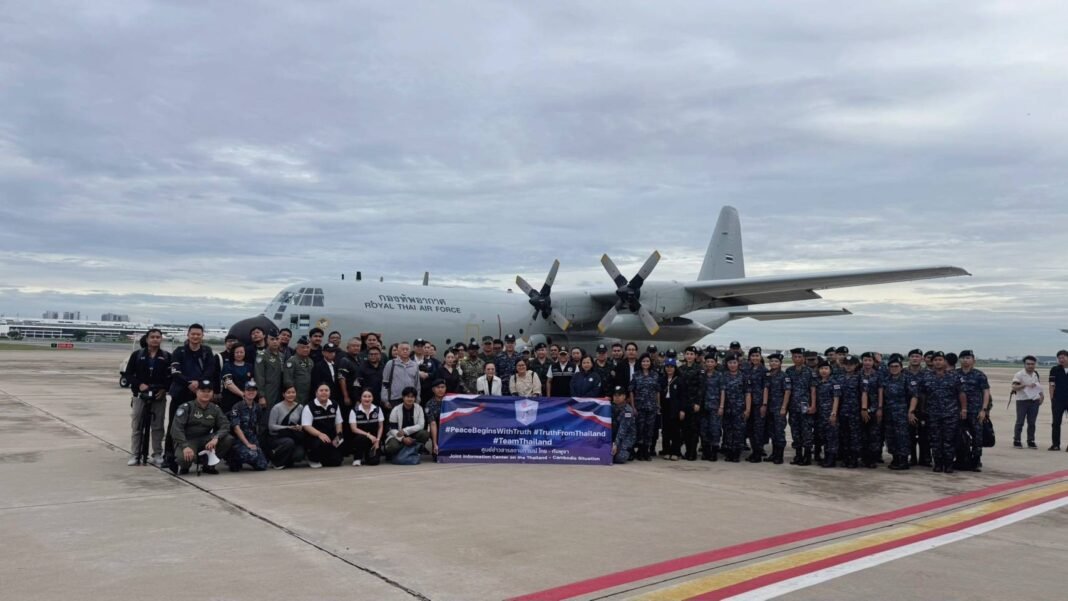
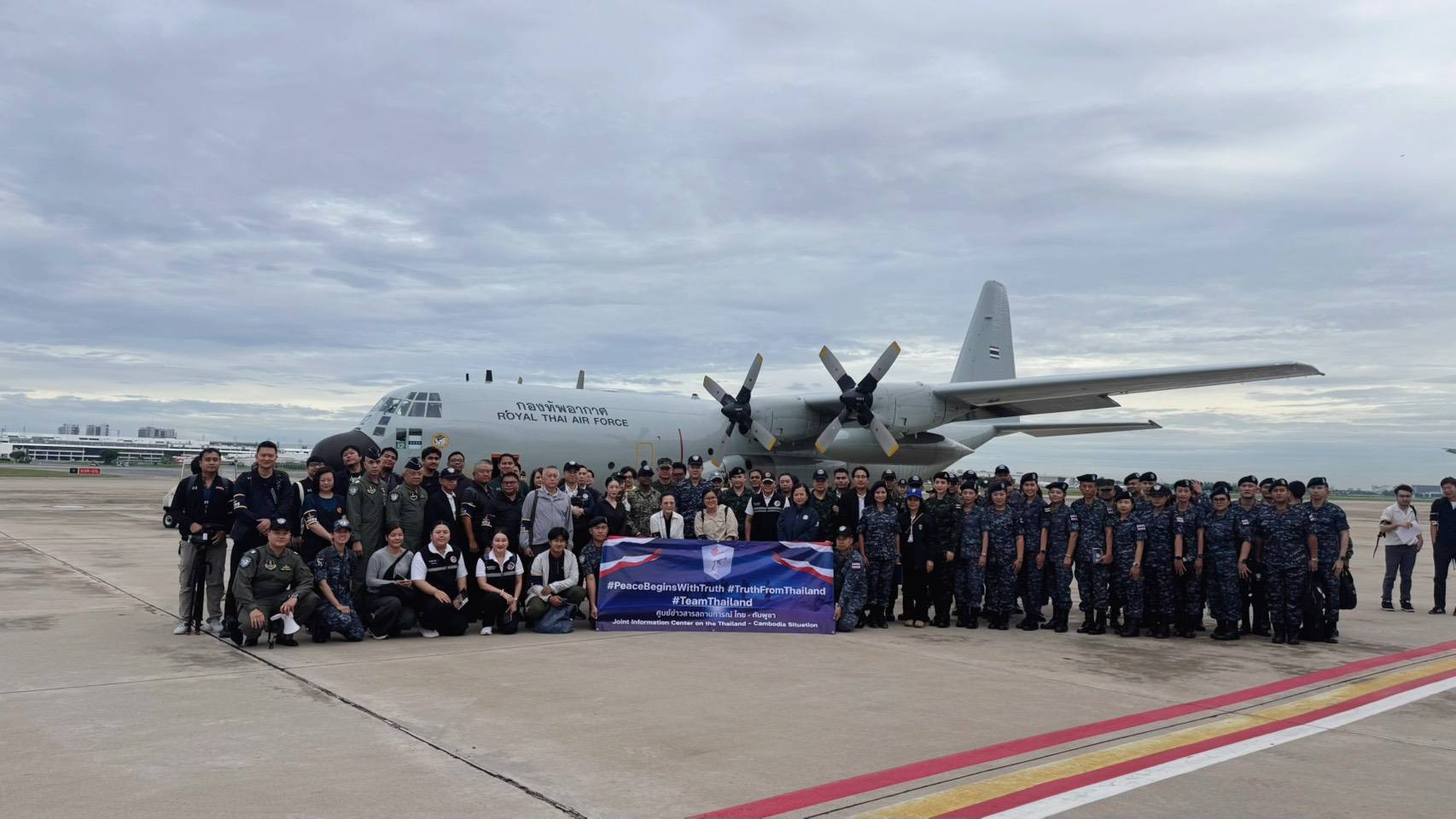
As set out in a formal announcement, The Ministry of Foreign Affairs, joined by the Joint Information Center (JIC) delegation, conducted a site inspection on 7 September 2026 in Surin Province, Thailand. This action follows a briefing regarding the local security situation and a follow-up to the implementation of the 3rd Special Session of the General Border Committee (GBC) Joint Statement issued on 27 December 2025. The statement, focused on collaboration against online scams, remains partially unimplemented. The press release states that representatives from the Ministry of Foreign Affairs joined the JIC delegation to lead 51 Thai and Foreign media and key opinion leaders (KOLs), alongside the ASEAN Observer Team (AOT), on a site visit to Surin Province to receive a briefing on the local security situation and follow up on the implementation of the Joint Statement (JS) of the 3rd Special Session of the General Border Committee (GBC) on 27 December 2025.
Background
The Thai government’s approach to regional security is framed by several ongoing initiatives. The “5S” Foreign Affairs Masterplan, a 20-year strategy announced in 2024, prioritizes stability and security within the region. A previous statement on 1 September 2026 details a meeting between the Director-General of Information Department and Spokesperson of the Ministry of Foreign Affairs and Spokesperson of the U.S. Embassy in Thailand – an event that highlights the continued bilateral engagement sought by Thailand. Furthermore, the Ministry’s commitment to cooperation is underscored by the Vice Minister for Foreign Affairs presiding over the 2026 Fulbright Dialogue on 5 September 2026, demonstrating a broader diplomatic agenda. The statement does not address the specifics of the Joint Statement implementation or prior efforts to combat online scams.
Analysis
The visit’s focus on Chong Chom Permanent Border Checkpoint, repurposed into military operational bases by Cambodian forces, reveals a critical tension within Thailand’s foreign policy. The observed evidence of online scam operations – a violation of international law as indicated in the statement – suggests that collaborative efforts against transnational crime are lagging behind stated intentions. This highlights a potential disconnect between rhetoric and practical outcomes. The delegation’s presence alongside an ASEAN Observer Team (AOT) indicates a desire to demonstrate regional commitment, though the operational realities suggest limitations. If implemented as described, the Joint Statement would require substantial cooperation with Cambodia – something the statement does not address directly. Thailand’s push for international engagement, exemplified by its planned side event during the United Nations Human Rights Council (HRC) session, signals a recognition of this challenge but doesn’t fundamentally alter the core issue.
Implications
The visit carries implications for regional stability and Thailand’s relationship with neighboring countries. The continued presence of illicit activities at the border checkpoint underscores the vulnerability of Thailand to transnational crime, demanding a more robust response than currently apparent. Should the visit yield tangible results in terms of increased surveillance or coordinated enforcement, it could bolster Thailand’s credibility as a security partner within ASEAN. However, the continued lack of full Joint Statement implementation raises questions about Thailand’s ability to effectively leverage its diplomatic influence. The planned side event at the UN HRC session represents an attempt to frame the issue internationally, potentially influencing global norms surrounding online scams – but again, this does not directly address the operational challenges on the ground.
Outlook
Should Thailand’s efforts to drive international action gain traction, contingent upon Cambodia’s willingness to fully implement the Joint Statement, a more coordinated approach against transnational crime could emerge. If the Ministry continues to prioritize bilateral discussions with ASEAN partners and actively seeks support from international organizations, further progress is possible. However, should the visit fail to generate concrete commitments or demonstrate tangible improvements in border security, Thailand’s credibility as a regional security leader will be undermined. The statement does not offer a timeline for anticipated changes.
Conclusion
The delegation’s presence in Surin Province represents a visible acknowledgment of persistent challenges to Thailand’s foreign policy objectives – specifically regarding border security and transnational crime. The visit raises the fundamental question of how effectively Thailand can translate diplomatic engagement into operational results, particularly when confronted with non-compliant neighbors.
Sources & Further Reading
- Official press release
- Foreign ministry source
- Vice Minister for Foreign Affairs presides over the 2026 Fulbright Dialogue (5 Sep 2026)
- Prime Minister of the Republic of Singapore to pay an official visit to Thailand to attend the 5th Thailand – Singapore Leaders’ Retreat (1 Sep 2026)
- Director-General of Information Department and Spokesperson of the Ministry of Foreign Affairs meets with Spokesperson of the U.S. Embassy in Thailand (1 Sep 2026)