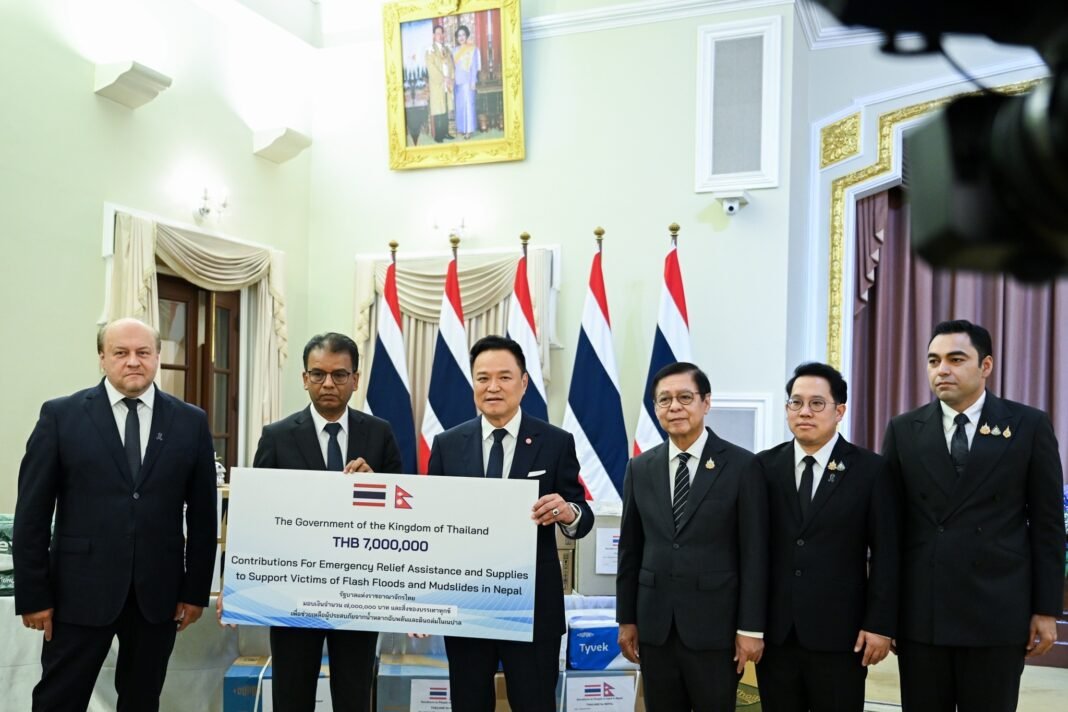
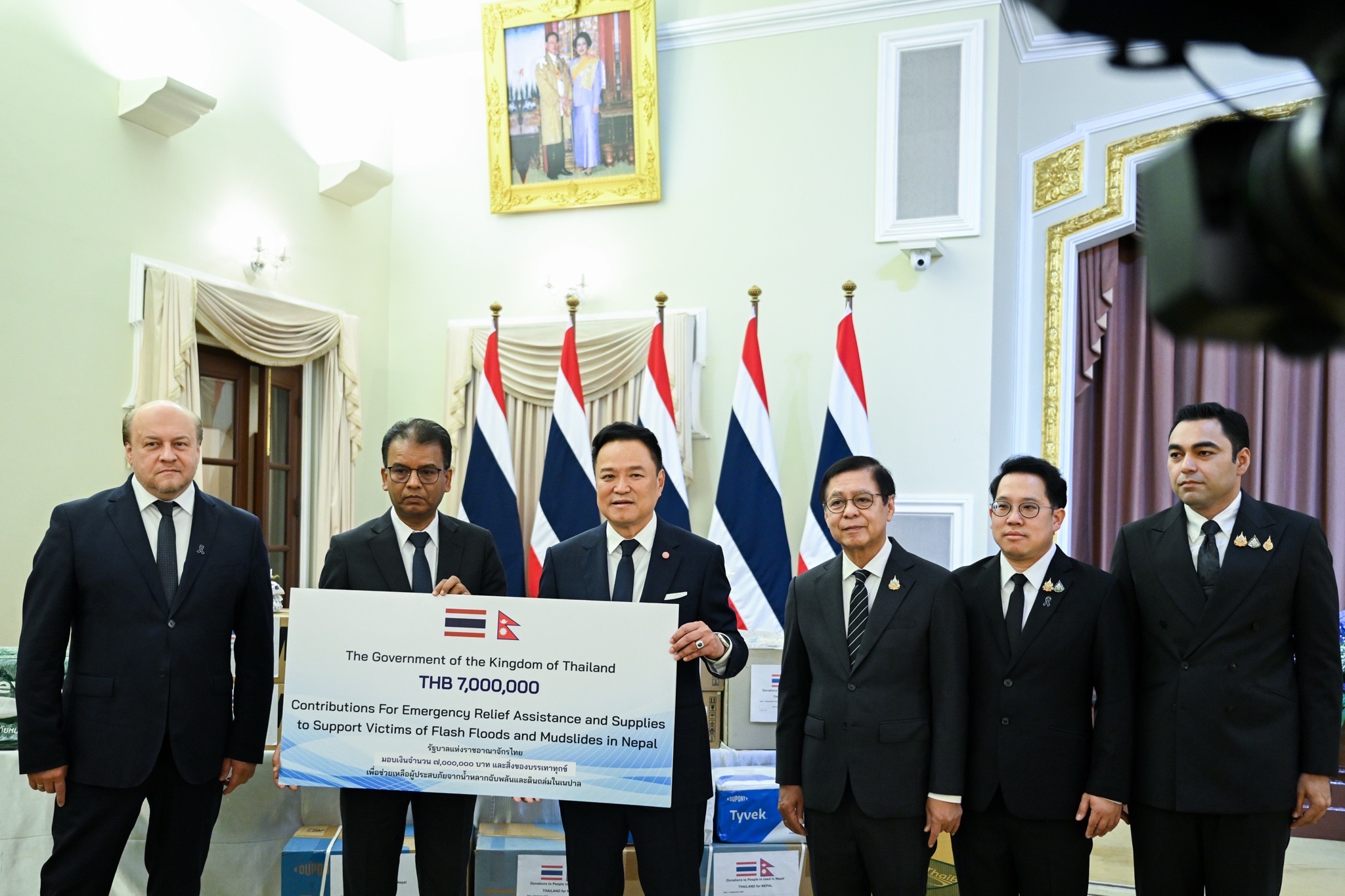
The most consequential concrete detail from the press release is that on 4 September 2026, Deputy Prime Minister and Minister of Foreign Affairs Sihasak Phuangketkeow attended a handover ceremony for financial assistance and emergency relief supplies to Nepal (https://www.mfa.go.th/en/content/handover-assistance-to-nepal-4-sep-2026-en?page=5d5bd3da15e39c306002aaf9&menu=5d5bd3cb15e39c306002a9b0). This assistance, totaling 7 million baht, represents a targeted response to severe flash floods and mudslides that have impacted Nepal. The provision of aid underscores Thailand’s longstanding friendship with Nepal, a relationship consistently reinforced through diplomatic exchanges – as evidenced by recent visits from the Thai Deputy Prime Minister to Malaysia (https://www.mfa.go.th/en/content/dpmfm-working-visit-my-sep-2026-en?page=5d5bd3da15e39c306002aaf9&menu=5d5bd3cb15e39c306002a9b0) and the 5th Thailand – Singapore Leaders’ Retreat (https://www.mfa.go.th/en/content/dpmfm-5th-th-sg-leaders-retreat-sep-2026-en?page=5d5bd3da15e39c306002aaf9&menu=5d5bd3cb15e39c306002a9b0). The statement does not address the scale of the disaster or the specific needs of the affected communities.
Background
The ministry’s actions are situated within the context of Thailand’s 20-Year “5S” Foreign Affairs Masterplan, a strategic framework prioritizing stability, security, and sustainable development. This plan, as outlined in the Ministry’s policy statement, reflects a focus on regional engagement and collaborative partnerships. The handover ceremony itself follows a pattern of Thai diplomatic engagements – including a mobile cabinet meeting in Songkhla Province (https://www.mfa.go.th/en/content/dpmfm-mobile-cabinet-no1-2026-songkhla-en?page=5d5bd3da15e39c306002aaf9&menu=5d5bd3cb15e39c306002a9b0) – demonstrating a commitment to proactive engagement within Southeast Asia. The press release does not specify the timeline for the implementation of this masterplan or its direct relationship to the provision of emergency aid.
Analysis
The delivery of 7 million baht represents a relatively modest contribution given the severity of the flooding in Nepal. This suggests a prioritization of bilateral relations over broader humanitarian obligations, aligning with Thailand’s established diplomatic approach. The involvement of multiple Thai ministries – the Ministry of Foreign Affairs, the Ministry of Public Health, and the Department of Disaster Prevention and Mitigation – indicates a compartmentalized response, potentially reflecting limitations in overall disaster relief capacity. There is no indication within the statement that this aid will be coordinated with international efforts, such as those led by ASEAN or other regional partners.
Implications
For Thailand, the gesture reinforces its image as a reliable partner within Southeast Asia, particularly in times of crisis. However, the scale of the assistance – 7 million baht – is likely to draw scrutiny given Nepal’s significant needs and the broader context of regional disaster relief efforts. The provision of emergency supplies, while welcomed, does not fundamentally alter Thailand’s limited engagement with international humanitarian frameworks. Should the visit yield further diplomatic opportunities, the Thai government will be under pressure to demonstrate a more substantial commitment to addressing global crises.
Outlook
If the assistance is successfully delivered and utilized by Nepali authorities, it will likely solidify Thailand’s standing within the region. Should the visit yield no tangible results in terms of increased aid commitments or collaborative disaster response mechanisms, it could be interpreted as a reflection of Thailand’s continued prioritization of bilateral relationships over broader regional security concerns. The statement does not address whether this contribution is part of a longer-term strategy to support Nepal’s recovery efforts.
Conclusion
The delivery of 7 million baht represents a symbolic gesture, demonstrating Thailand’s continued friendship with Nepal. However, the limited scale of the aid raises fundamental questions about Thailand’s long-term commitment to regional disaster response and its broader role in addressing global humanitarian crises.